
The complete guide
How to Choose a Front Dash Cam That You Will Actually Use
The problem a dash cam solves
Nearly every driving dispute comes down to the same thing. Two people remember the same ten seconds differently, and there is no way to settle it. A car changes lanes without indicating and then insists it did. Someone opens a door into your panel in a shopping centre car park and is gone before you get back. A kerbside scrape appears overnight with no note on the windscreen.
Without footage, you are arguing about memory. With footage, you are showing a file. That is the entire pitch for a front dash cam, and it is why something that costs less than a tank of fuel ends up being one of the more useful things in the car.
The second problem is subtler. Knowing you have a camera running changes how you drive. Most people find they leave a bit more following distance and get into fewer silly situations. The camera is not watching you, but it does make you a slightly more deliberate driver.
How a front dash cam works
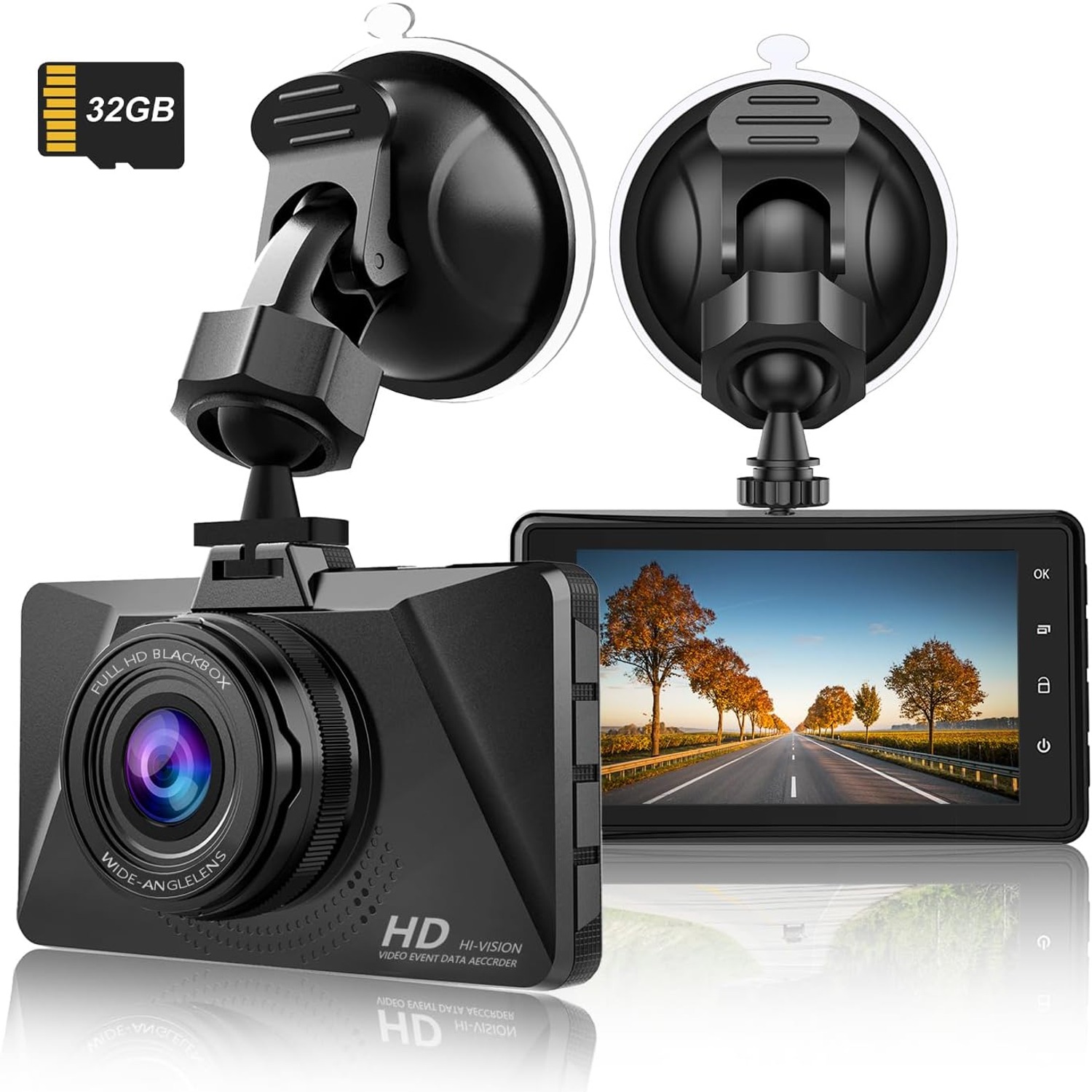
A dash cam is a small camera that mounts to the windscreen, points forward, and records continuously while the car has power. That is the whole concept. What separates a good one from a frustrating one is how it handles the details.
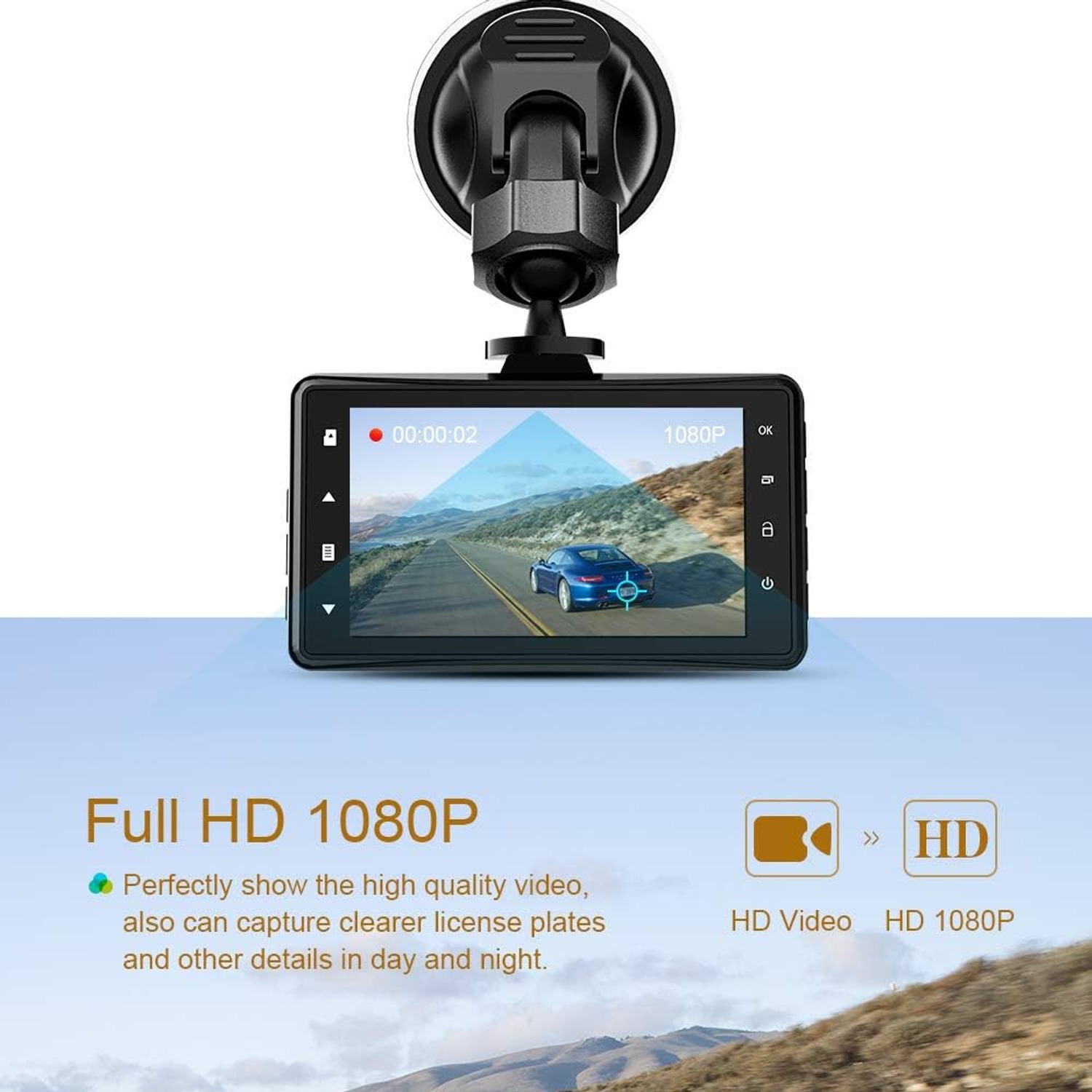
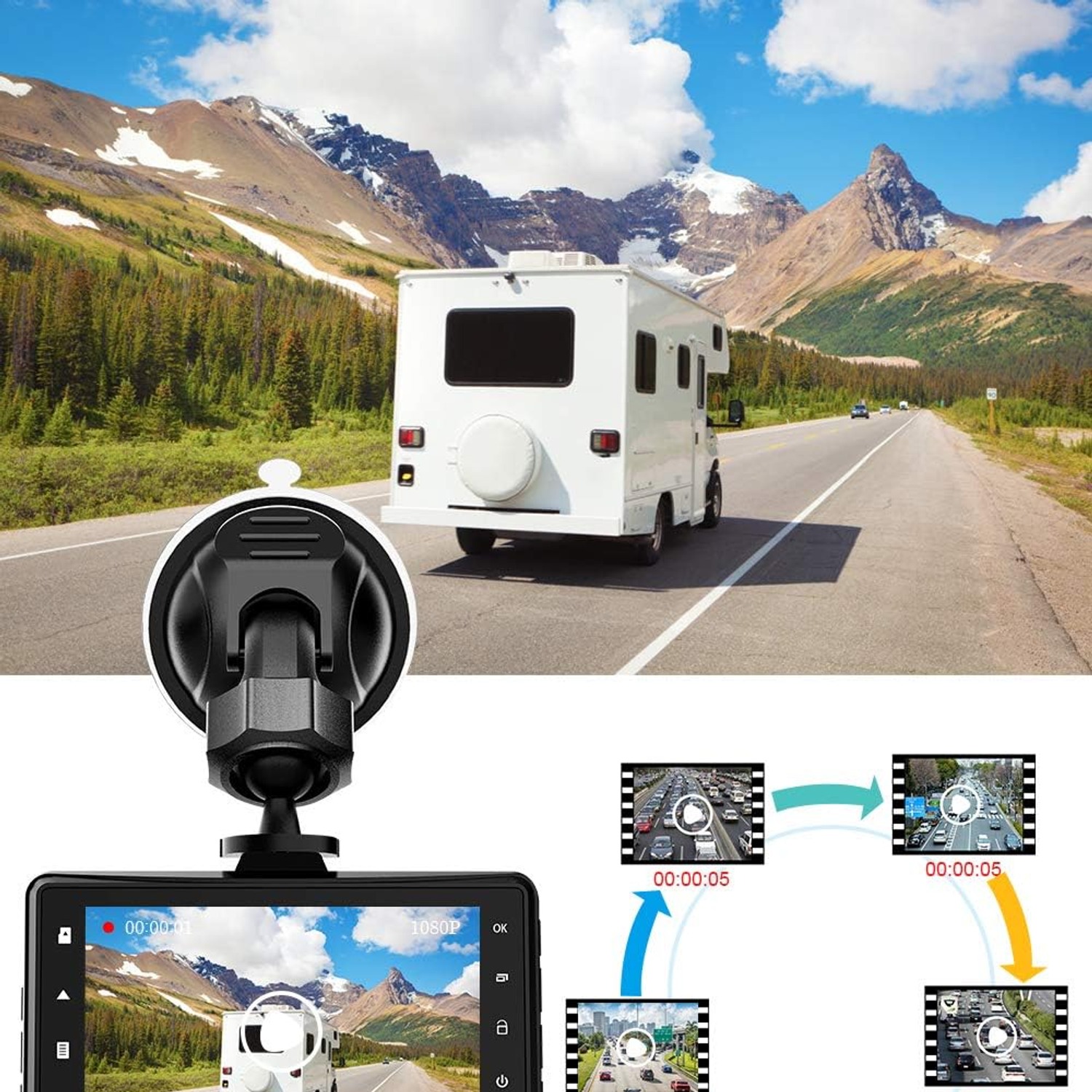
Resolution and frame rate. This camera records at 1080p and 30 frames per second. Resolution determines how much detail is in each frame, which is what you need when you are trying to read a plate. Frame rate determines how smooth motion looks and how clean a single frozen frame is. At 1080p and 30fps you get a readable picture at normal following distances in daylight, which covers the vast majority of incidents.
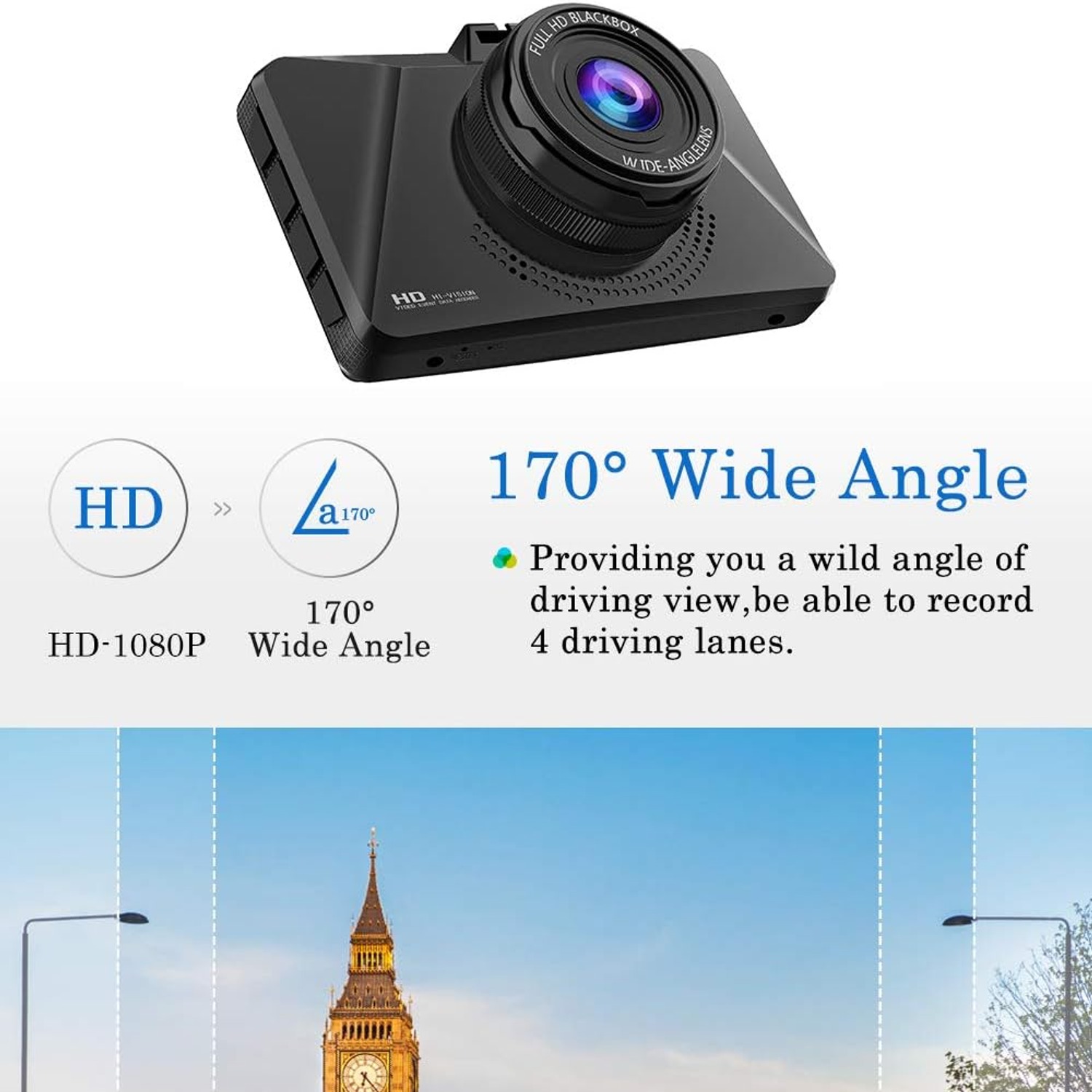
Field of view. The lens here is 170 degrees. A narrow lens shows you the car in front in more detail but misses what is happening either side. A wide lens like this one trades a little per-object detail for coverage of several lanes at once. For most drivers that trade is worth making, because the car that causes the problem is usually the one coming in from the side. If you are comparing the best wide angle dash cam options, anything from roughly 140 to 170 degrees is in sensible territory.
Loop recording. The camera writes video in short segments. When the card fills, it starts overwriting the oldest segment. You never have to delete anything or worry that recording stopped three weeks ago. This is the single feature that makes a dash cam something you can install and ignore.
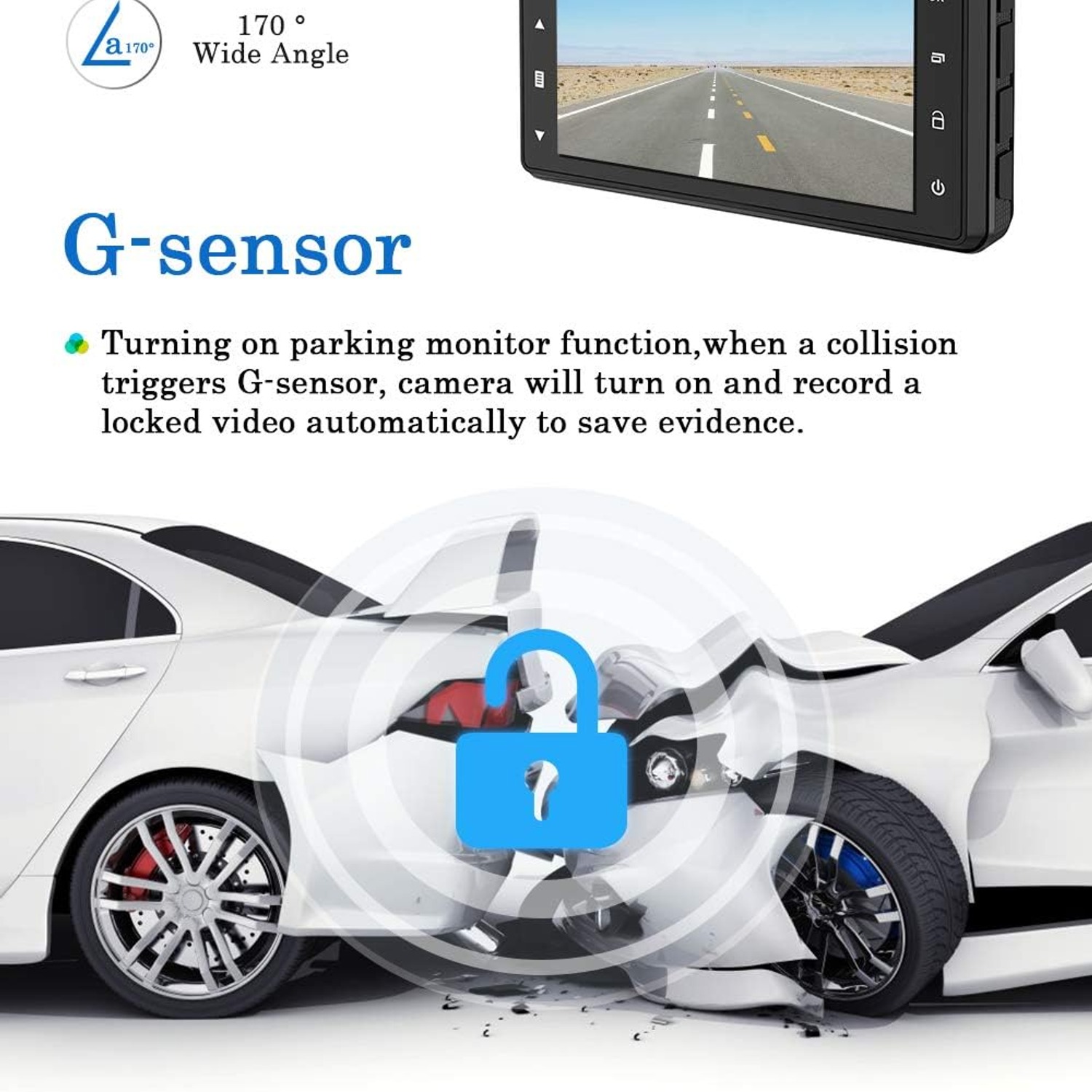
The G-sensor. This is an accelerometer. When it detects a sudden jolt, such as an impact or very hard braking, it marks the current clip as protected so loop recording skips it. If you have a collision, the relevant footage is still there a week later even if you forgot to save it.
Parking monitor and motion detection. These extend the camera's usefulness to a stationary car. Motion in front of the lens triggers recording. This is where car park dings and driveway incidents get caught.
The screen. A 3-inch display sounds like a small thing until you install a camera without one. The screen shows you exactly what the lens sees, so you can angle the mount properly instead of guessing and discovering a week later that you have been filming your own bonnet. It also lets you replay a clip at the roadside, with sound through the built-in speaker.
Who this suits
Daily commuters get the most out of a front camera, because most incidents happen on routine trips at modest speeds. Parents handing a car to a young driver often fit one for the same reason insurers like them, there is a record if something happens. People who park on the street or in shared car parks value the parking monitor more than the driving footage.
It also works for tradespeople and anyone running a van or a minivan. The suction mount goes on any flat windscreen, so a work vehicle is no harder to fit than a hatchback. Rideshare and delivery drivers often start with a forward camera like this and add a cabin-facing unit later if they want it.
If you want rear coverage, this is not the product. It is a front camera. Being clear about that up front saves disappointment.
How to choose
Start with what you are trying to capture. If it is road incidents, a forward camera at 1080p with a wide lens does the job. If it is passengers or rear impacts, you need a different configuration.
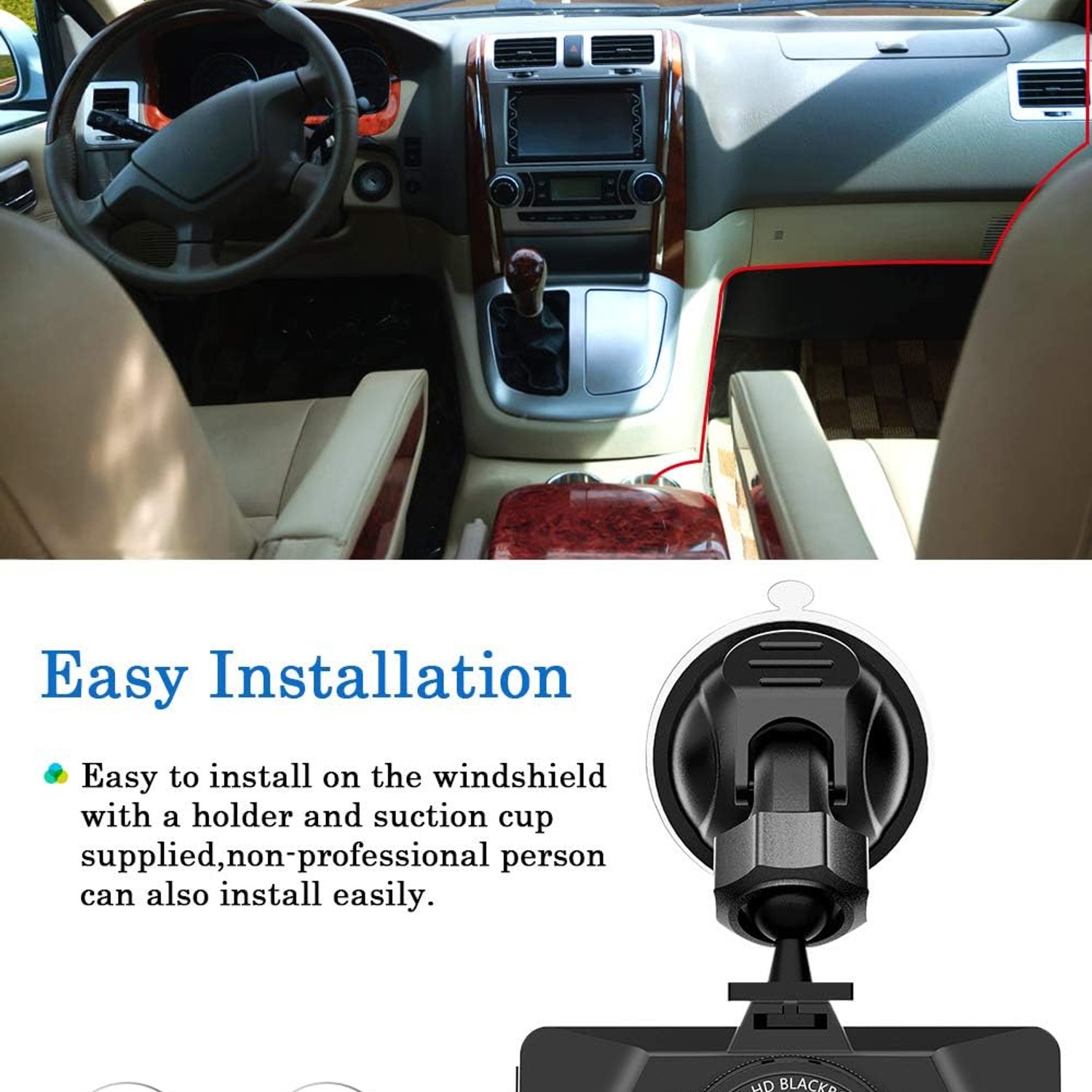
Then think about mounting. Suction mounts are removable and move between cars easily. Adhesive mounts are more permanent and a bit tidier but commit you to one vehicle and one position. For most buyers the removable option wins, particularly if you ever park somewhere you would rather not leave a camera visible.
Check the physical size against your windscreen. This unit is roughly 5 x 10 x 5 cm, which sits comfortably beside a rear-view mirror in most cars. Before you commit to a position, check your local rules about what can sit in the swept area of the windscreen. They vary by country and sometimes by state.
Finally, budget for a memory card. A card is not specified by the maker, so plan on buying a high-endurance microSD card designed for continuous video. Standard cards are built for occasional photo storage and wear out quickly under the constant rewriting a dash cam does. This is the single most common reason a cheap dash cam setup fails after a few months, and it has nothing to do with the camera.
Installing it properly
Clean the glass first. A dry, dust-free windscreen is what the suction cup needs to hold. Wipe the cup itself too.
Mount the camera high, roughly centred, and ideally tucked behind the rear-view mirror so it sits outside your main view. Switch it on and use the screen to set the angle. You want the horizon around the middle of the frame, with a bit of bonnet visible at the bottom for reference. Too high and you record sky, too low and you record your own paintwork.
Run the power cable along the headlining, down the A-pillar, and across to the 12V socket. Tuck it into the trim gaps with your fingers or a plastic trim tool. It takes a few extra minutes and the result looks fitted rather than draped.
Then format the card in the camera, drive around the block, and watch the clip back. Thirty seconds of checking now saves you discovering a problem at the worst possible moment.
Looking after it
Wipe the lens with a dry microfibre cloth when you notice haze. Do not use glass cleaner or solvents on it, since the coating does not appreciate them. A smeary lens is the main reason night footage looks worse than it should, because every light source turns into a starburst.
Format the card in the camera every few weeks. Continuous writing fragments a card over time, and a quick format keeps it writing cleanly. Copy off anything important first, because formatting erases everything including protected files.
In very hot weather, taking the camera down when you park for the day is a kind thing to do for it. A closed car in summer sun gets hotter than any electronics would choose.
The short version
This is a straightforward front dash cam that does the things most people actually want. It records in 1080p at 30fps through a 170 degree lens, loops so it never fills up, locks clips automatically when the G-sensor fires, and keeps watch with motion detection while you are parked. The 3-inch screen makes setup and playback easy. The suction mount means you can fit it in a minute and move it whenever you like.
Add a high-endurance memory card, spend five minutes getting the angle right, and then forget about it. That is exactly how a dash cam should work.