
The complete guide
How to Choose a Phone Tripod and Selfie Stick That You Will Actually Use
The problem with holding your own camera
Think about the last few photos you took with friends. Someone held the phone at arm's length, the arm crept into the corner of the frame, and one person got cropped out. Or you handed the phone to a stranger who took three photos, all of them slightly blurry and all of them from waist height.
Video is worse. A phone held by hand drifts. It tilts. It wobbles every time you shift your weight. You do not notice while you are filming, but you notice when you watch it back.
A phone tripod and selfie stick fixes this by taking your hands out of the equation. The phone sits still, the frame stays where you put it, and you can be in the shot instead of behind it. That single change makes a bigger difference to your photos than any new phone would.
What this one actually does
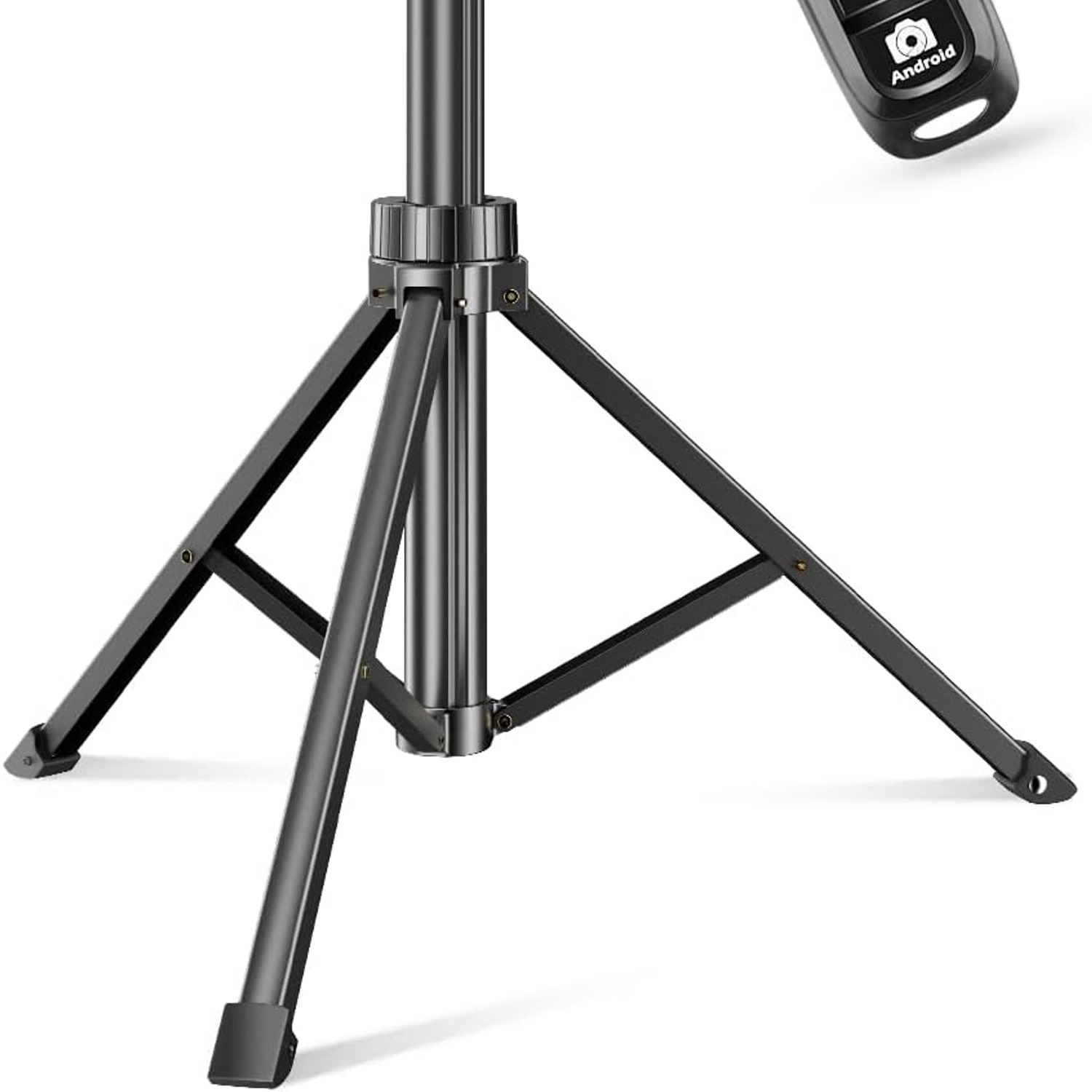
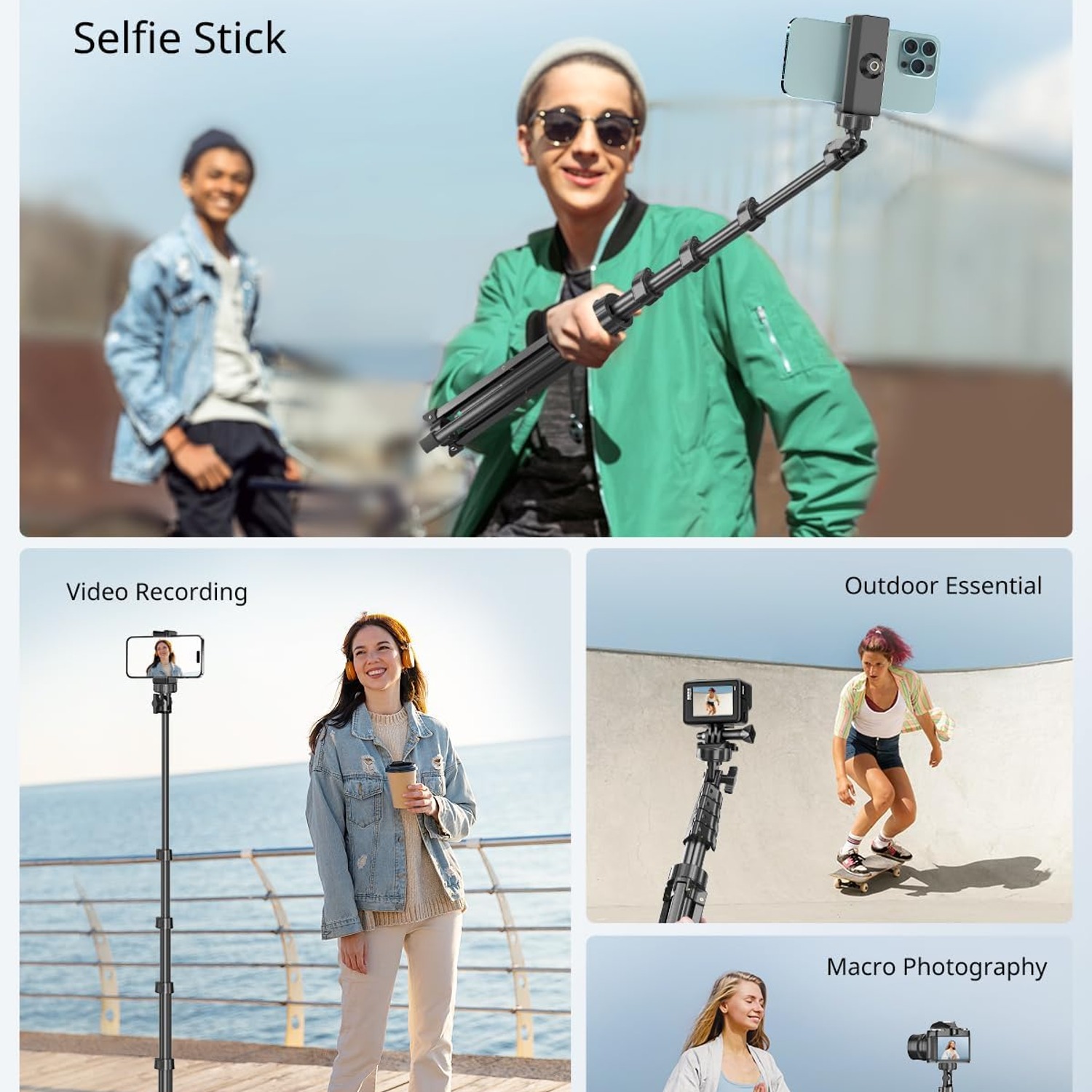
This is a two-in-one piece of kit. Fold the legs in and it is a selfie stick you hold. Spread the legs and it is a tripod that stands by itself. Both modes use the same shaft and the same head, so there is nothing to swap or reassemble.
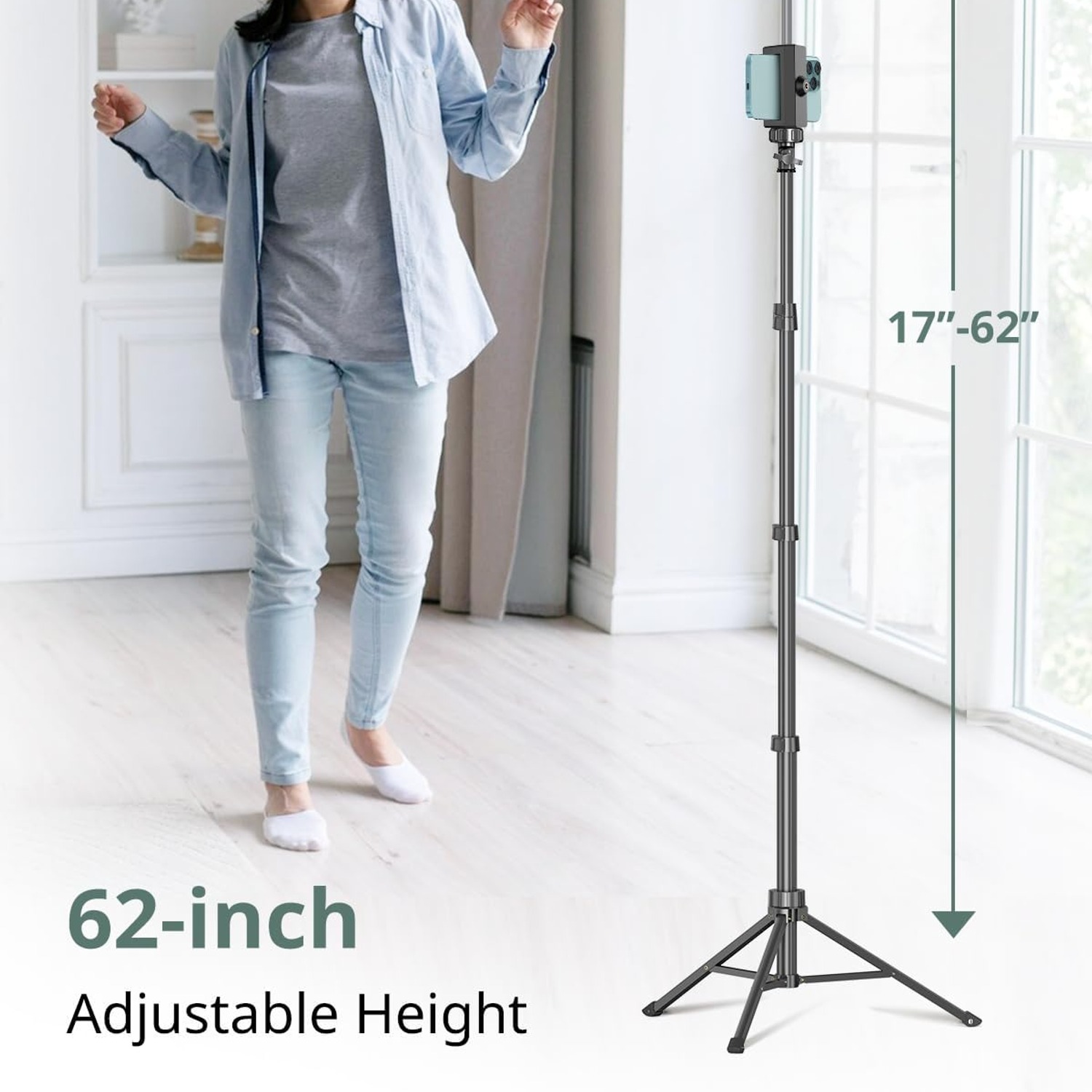
The aluminium legs extend out to 157.5cm, which is 62 inches. That is roughly eye level for most adults, so a standing portrait looks like it was taken by another person rather than by a short robot. The lower setting is around 127cm (50 inches), which suits seated subjects, desk filming and anything where you want a flatter angle. Folded, it is about 12.7cm long and the whole kit weighs 650 g.
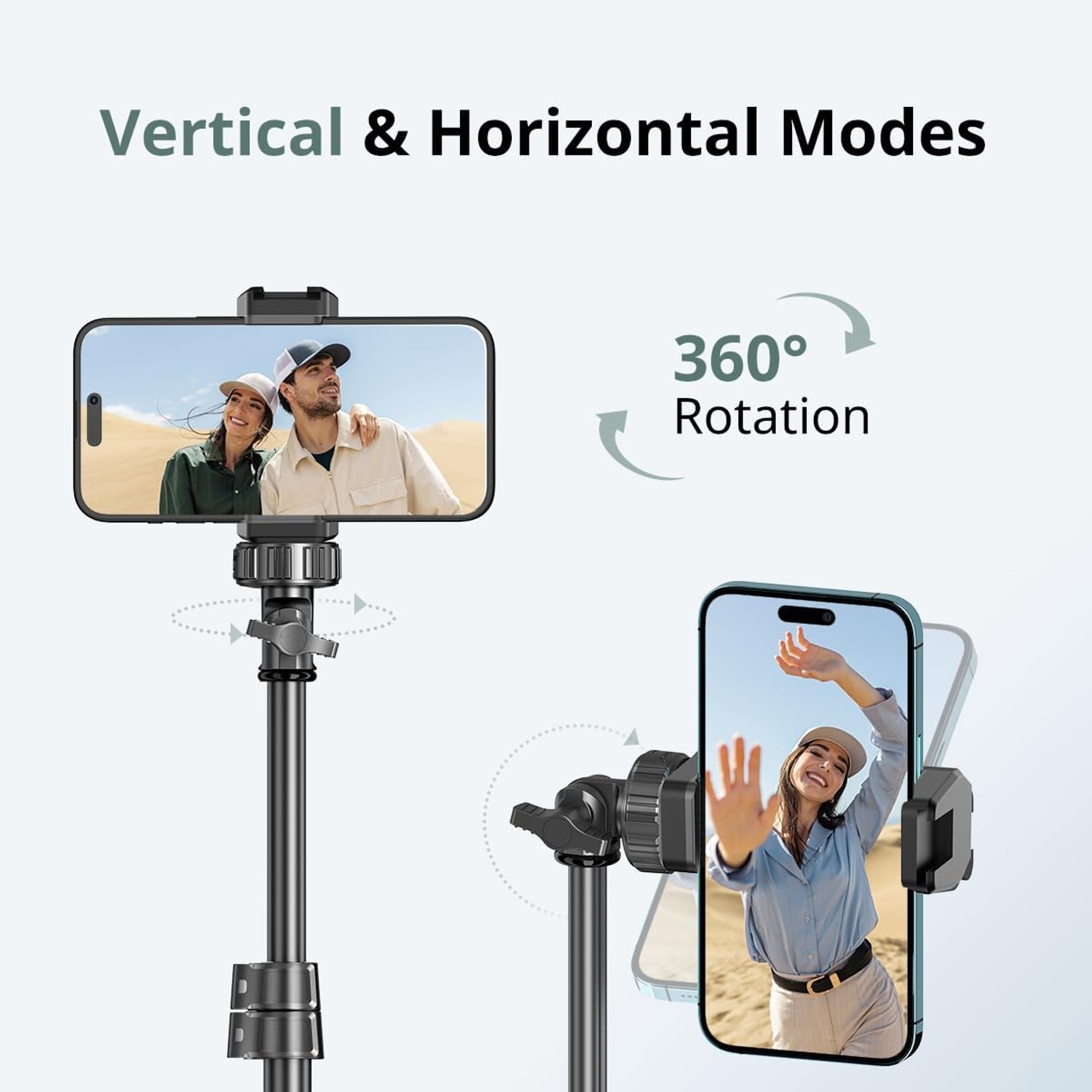
On top is a pan-tilt head that rotates a full 360 degrees. You use that to switch between landscape and portrait, and to tilt the phone up or down. The clamp holds phones with screens between 2.8 and 5.7 inches. Under the clamp sits a 1/4 inch screw thread, the universal camera standard, so a compact camera, an action camera, a webcam or a camcorder can go on instead. The load limit is 3kg (6.6 lb).
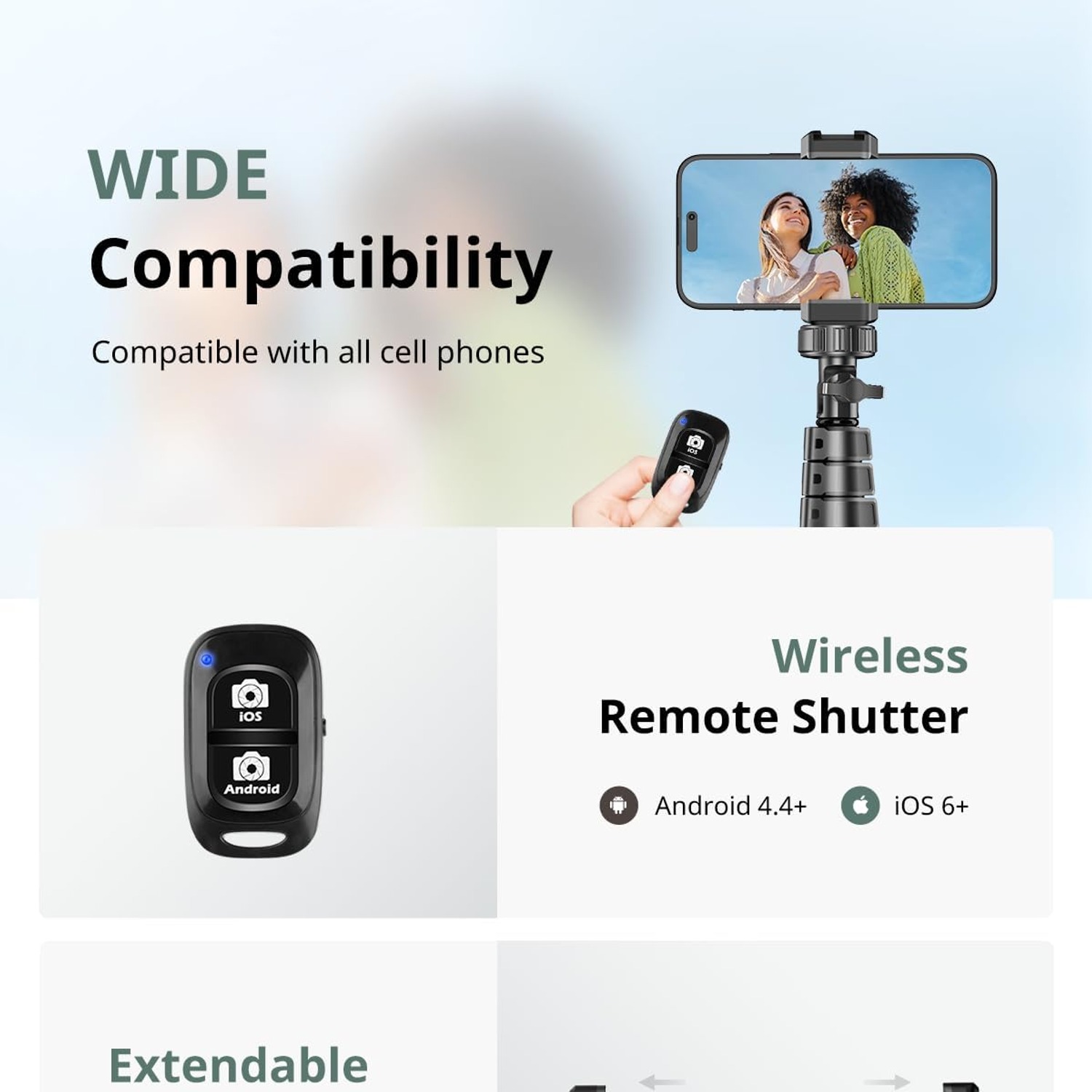
The Bluetooth remote is the quiet hero. Pair it once with your phone, then press the button from a few metres away to fire the shutter. No countdown timer, no jogging back into position, no awkward mid-stride expression.
Who gets the most out of it
People who travel. At 650 g and 12.7cm folded, this is small enough that you will actually bring it. The best travel tripod for phone use is the one that fits in the bag you already packed, not the one that stays at home because it is bulky.
Anyone filming themselves. Vlogs, fitness clips, cooking videos, tutorials. Set the height, frame it, hit record on the remote and go. The best tripod for YouTube filming at this size is really just a stable mount plus a way to trigger it from a distance.
Short-form video creators. The 360 degree head means vertical framing takes a second. That matters when nearly everything you post is upright.
Home office workers. Drop it to the lower setting next to your desk and you have the best phone stand for video calls without buying a separate desk mount. Your camera sits at eye level instead of pointing up at the ceiling.
Families and groups. Full height, remote in hand, everyone in the frame. No more asking a passer-by.
How to choose between tripods like this
Start with height. A lot of cheap phone tripods top out around 100cm, which puts the camera at chest height. Faces look odd from there. 157.5cm is close to eye level for most people and that is why it is the number worth paying attention to.
Then check the folded size. A tripod that extends tall but folds to 50cm is a different product with a different use. Roughly 12.7cm folded is pocket or side-pocket territory.
Look at the mount. A phone-only clamp locks you in. A 1/4 inch screw underneath means the tripod still works if you buy a camera later, or if you want to run a webcam for streaming. That one thread is the difference between a single-use gadget and something you keep.
Weigh the remote properly. A self-timer works, but it is clumsy. A Bluetooth remote changes how you shoot, because you stop thinking about the countdown and start thinking about the photo. If you are comparing options for the best tripod with remote shutter, check that one is actually included rather than sold separately.
Be honest about load. A 3kg limit is plenty for a phone and fine for most compact cameras. It is not for a heavy DSLR with a long lens. Match the tripod to what you own.
Getting good results from it
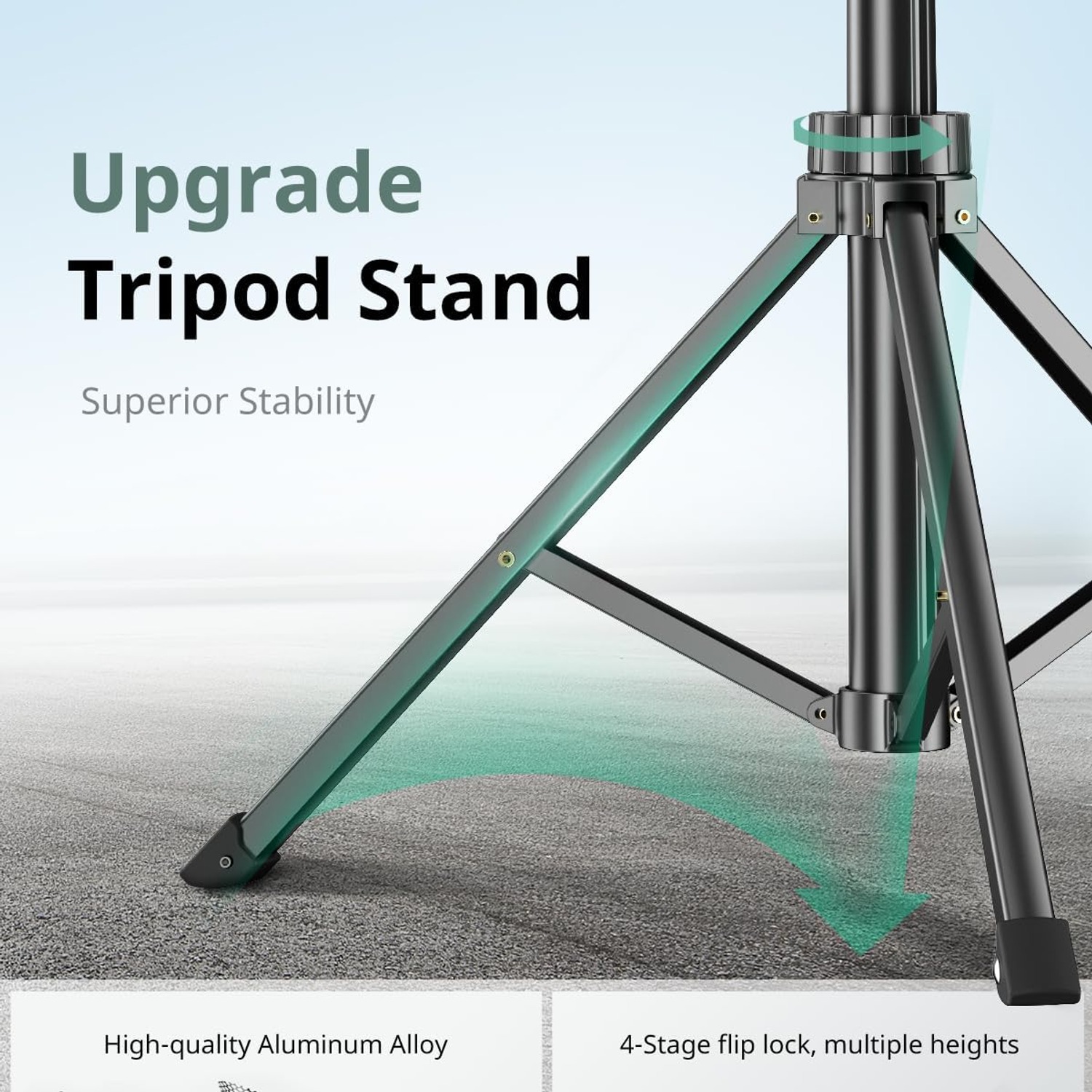
Extend the thick leg sections before the thin ones. The wider tubes are stronger, so if you only need 120cm, leave the narrow bottom sections tucked away. The whole setup will be noticeably steadier.
Spread the legs wide. A narrow stance is tall but tippy. A wide stance lowers the centre of gravity and gives you a much more forgiving base, especially on uneven ground.
In wind, go lower. Dropping from 157cm to 127cm makes a real difference outdoors. If it is gusty, hang a bag from the centre of the tripod to add weight, or simply hold a leg.
Set the frame before you walk away. Use the phone's screen to check the edges, then move into position. Most "bad" tripod shots are really just badly framed ones.
Lock the phone's exposure if the light is tricky. A phone that refocuses every time someone moves will give you inconsistent shots across a burst.
Looking after it
The sliding leg sections are what wear out on any telescopic tripod, and the culprit is almost always grit. Sand and dust get inside the tubes, then grind away at the surface every time you extend them. So wipe the legs down after a beach day or a dusty hike, and let everything dry before you fold it up.
This tripod is not water resistant. That means no rain, no pool edges, no sea spray. If it does get wet, extend the legs, wipe them dry and leave them open until the moisture is gone.
Store it collapsed, in a dry spot, away from heat. If the remote is going into a drawer for a few months, take the battery out so it cannot leak onto the contacts.
Do not force anything. If a leg section will not retract, something is caught in the tube. Wipe it, check it and try again rather than pushing hard.
The short version
This is a 157.5cm aluminium phone tripod that also works as a selfie stick, with a 360 degree pan-tilt head, a universal holder for phones with 2.8 to 5.7 inch screens, a 1/4 inch camera mount, and a Bluetooth remote in the box. It weighs 650 g, folds to about 12.7cm, holds up to 3kg and comes in black.
It suits anyone who wants to be in their own photos, film themselves without a helper, or just stop holding the phone while recording. It is not waterproof and it is not built for heavy camera bodies.
If you want one piece of kit that covers selfies, group shots, vertical video, streaming and video calls, this covers all of it without taking up much room in your bag.