Camera Company
Company
Shop By Category
T&Cs
Shop Online
  • The maker's specifications on every page
  • Free tracked Australia-wide delivery over $150
  • 14-day returns

2K Dual Dash Cam | Front and rear dash cam | Car dash camera recorder

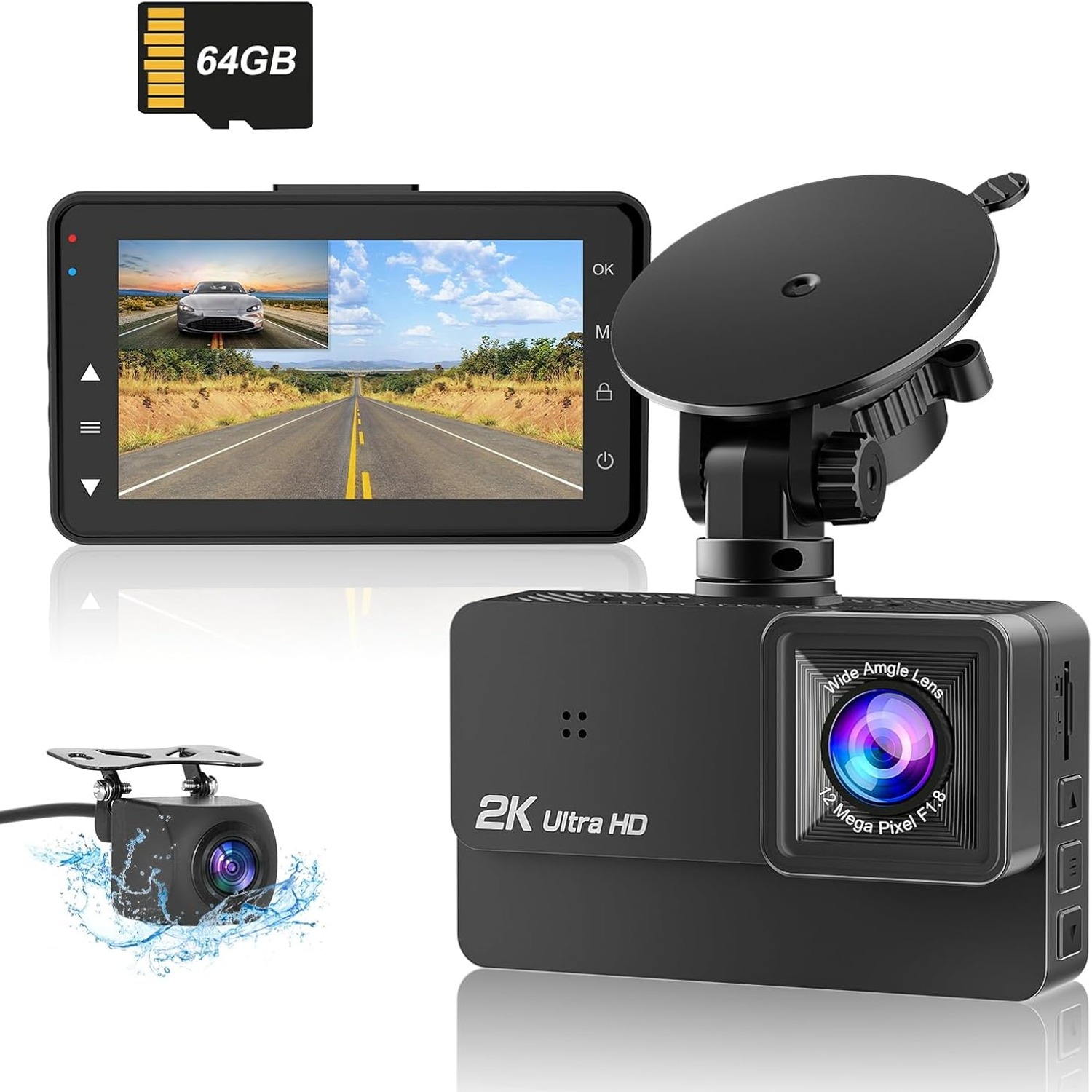
CHORTAU 2K Dual Dash Cam with 3-Inch Screen

$171.99 $205.99 Save $34
  • Two Cameras, One Unit
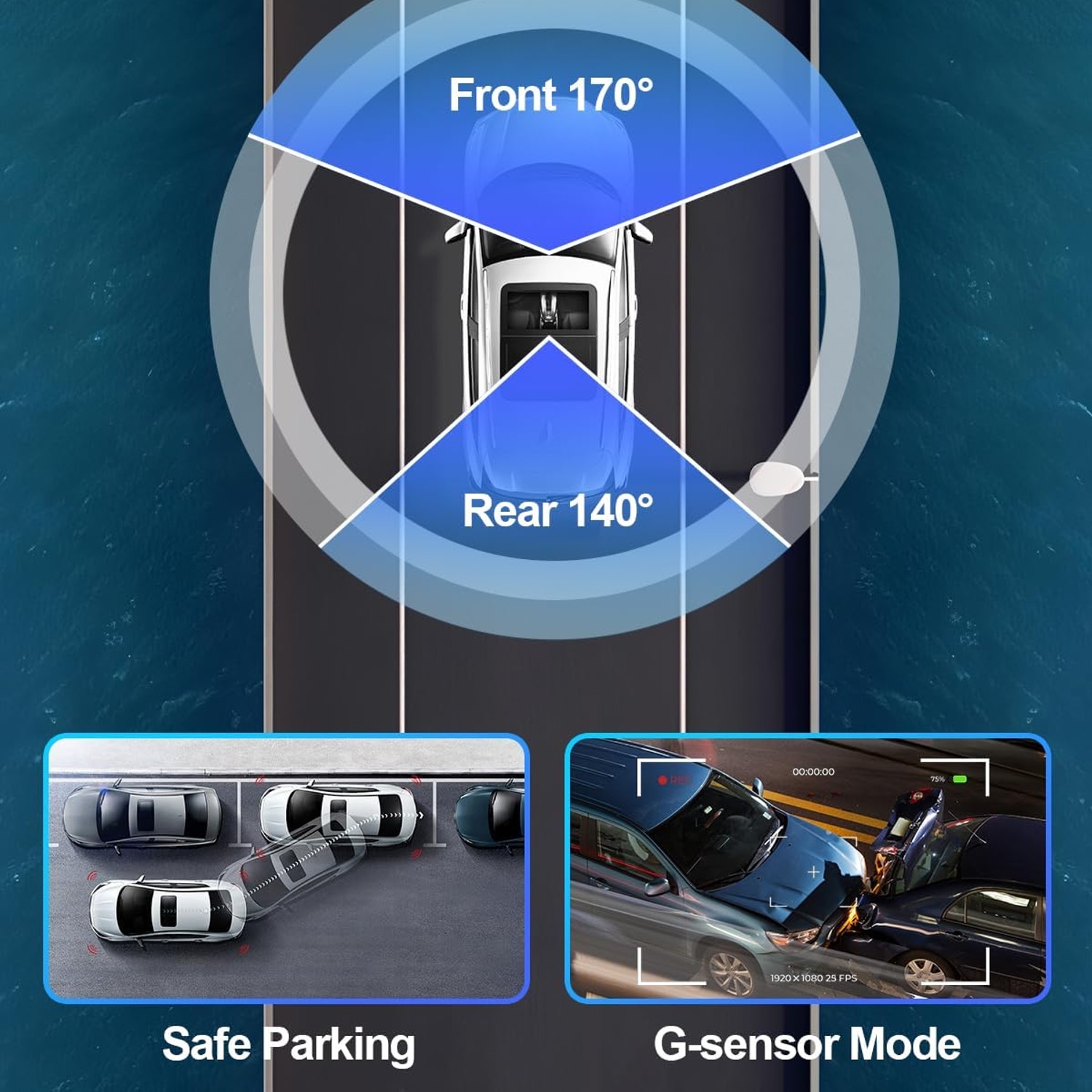
  • 170 Degree View
  • G-Sensor Lock
  • Parking Monitor

Price: $171.99 $205.99

  • Free tracked Australia-wide delivery on orders $150+, otherwise a flat $15
  • Pay by card or PayPal, handled by the payment provider
  • 14 days to change your mind, plus your statutory rights
Product specifications
BrandCHORTAU
Model Number2K+1080P
Video Capture Resolution2K front, 1080P rear
Field Of View170 degrees
Display TypeLCD
Mounting TypeSuction mount
ConnectivityWired
Special FeaturesLoop recording, motion sensing, night vision, parking monitor, built-in microphone, built-in speaker, G-sensor
Camera PositionFront
Compatible VehiclesBus, car, minivan
ColourBlack
Item Dimensions5 cm D x 10 cm W x 5 cm H
Shipping & returns

Tracked delivery anywhere in Australia. It is free on orders of $150 or more, and a flat $15 below that.

If it is not right for you, send it back within 14 days of delivery in resaleable condition and we refund the price you paid, including standard delivery. That is a voluntary policy we offer on top of your legal rights. You cover the cost of returning it unless the item is faulty.

If it arrives faulty, damaged or not as described, we put it right at no cost to you under the Australian Consumer Law and the Competition and Consumer Act 2010, return postage included.

Shipping details · Refunds and returns

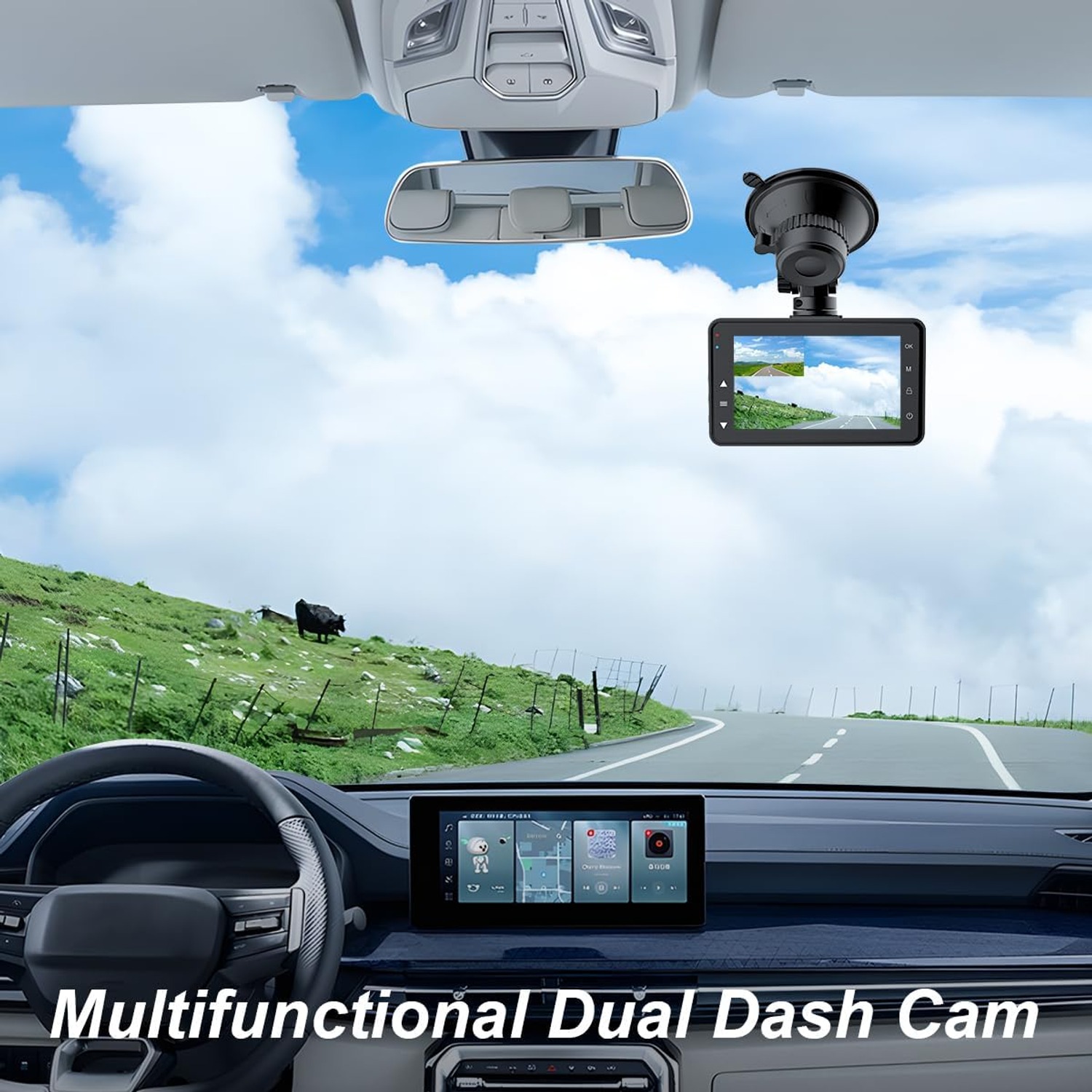
Two Cameras, One UnitFront records in 2K while the rear camera records in 1080P.
170 Degree ViewA wide front angle takes in several lanes of traffic at once.
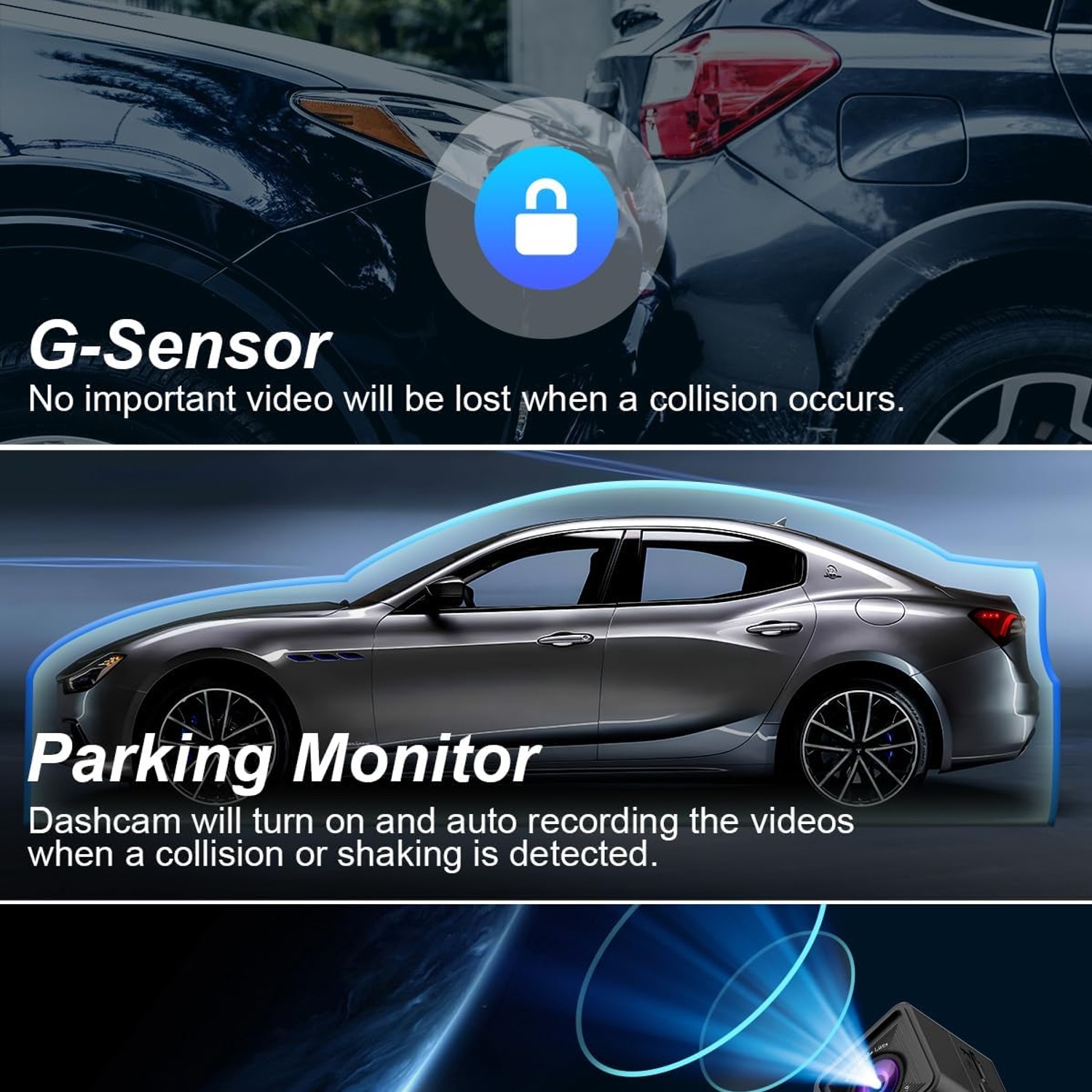
G-Sensor LockSudden impact saves and locks the clip so loop recording cannot erase it.
Parking MonitorKeeps watch over the car when it is parked, with constant power connected.

Drive with a quiet kind of confidence, because this 2K dual dash cam is watching the road ahead and the traffic behind.

Records 2K at the front and 1080P at the rear across a 170 degree view, with loop recording, a G-sensor that locks crash clips, parking monitoring and night vision on a clear LCD screen.

A 2K dual dash cam that covers the road in front and the traffic behind from a single windscreen unit.

The front lens records at 2K with a 170 degree field of view, wide enough to take in number plates and signs across several lanes.

Loop recording keeps writing over the oldest files, so the camera never stops for a full card.

A built-in G-sensor detects a sudden jolt and locks that clip away from the loop, which is exactly what you want after a collision.

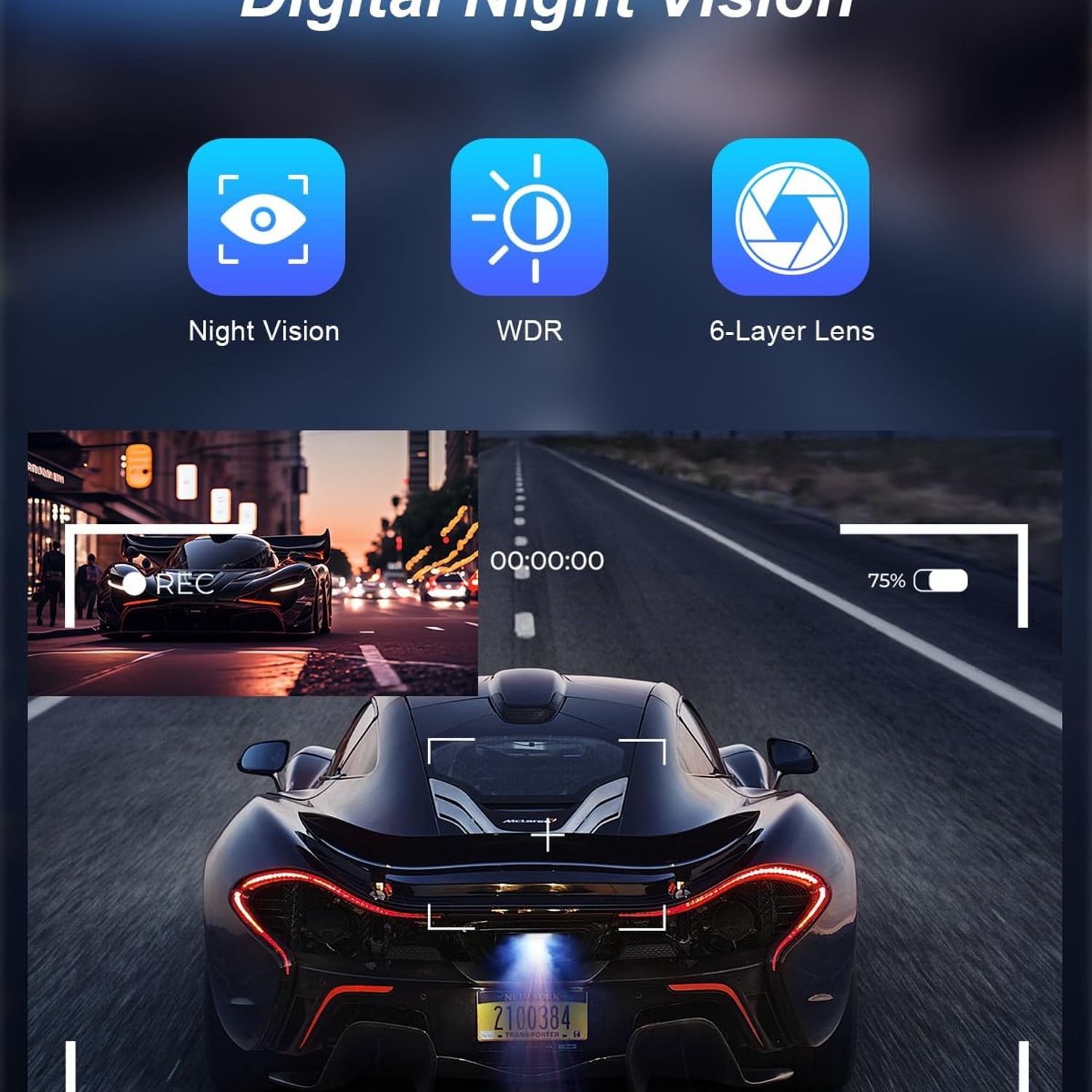
Parking monitor, night vision, a built-in microphone and speaker, and a clear LCD screen round out the feature set.

CHORTAU 2K Dual Dash Cam with 3-Inch Screen

Most of the time a dash cam does nothing at all. It sits on the glass, records quietly, and writes over yesterday. Then one afternoon somebody changes lanes without looking, and that boring little box becomes the only neutral witness you have. This CHORTAU unit covers both directions, with a 2K front camera and a 1080P rear camera working together, so you are not left arguing about who hit whom from the back.

CHORTAU 2K Dual Dash Cam with 3-Inch Screen

The front lens sees across 170 degrees. In practice that means a stretch of road several lanes wide, not just the bumper directly ahead. Resolution matters here more than people expect. A number plate that is a grey smudge at lower resolution can be readable at 2K, and that single detail is often the difference between a useful file and a useless one.

CHORTAU 2K Dual Dash Cam with 3-Inch Screen

Loop recording handles storage without you thinking about it. When the memory card fills, the camera writes over the oldest footage and carries on. The G-sensor sits underneath that system as a safety net. If it detects a sharp jolt, it locks the current clip so the loop skips over it, and that file stays on the card until you remove it yourself. Sensitivity is adjustable, which is worth tuning if your usual roads are rough.

CHORTAU 2K Dual Dash Cam with 3-Inch Screen

Parking monitor extends the coverage to when you are not in the car. If the camera detects a bump while parked, it powers up, records and saves the clip. This mode needs a constant power source, so it runs from a hardwire kit or an external battery pack rather than the standard cigarette lighter socket, which cuts out when the ignition is off.

CHORTAU 2K Dual Dash Cam with 3-Inch Screen

Setup is deliberately simple. The suction mount presses onto the windscreen, you insert a memory card, and you connect the power lead. The camera starts recording when the engine starts and saves the file when you shut the car down. A built-in microphone and speaker let you capture or mute cabin audio and hear the camera's prompts, and the LCD screen means you can frame the shot properly rather than guessing.

Not sure yet? That is fine.

A camera has to suit the job you bought it for, and you cannot always judge that from a photograph. If it is not right for you, send it back within 14 days of delivery in resaleable condition and we refund the price you paid, including standard delivery. That is on top of your Australian Consumer Law rights if anything arrives faulty.

If it turns up faulty, damaged or not as described, that is on us. The Australian Consumer Law and the Competition and Consumer Act 2010 covers you, and we pay the return postage. Read the full detail on our refunds and returns page, or ask us anything before you order.

Frequently Asked Questions

What exactly is included in this product?

This is a dual-channel dash cam system built around a front unit with an LCD screen and a separate rear camera. The front camera records in 2K and the rear in 1080P. A suction mount is supplied for the windscreen.

Does it record the front and the back at the same time?

Yes. Both cameras run together, so you get footage of the road ahead and the traffic behind in the same session. That dual coverage is the main reason people choose a front and rear dash cam over a single-lens unit.

What resolution does it record at?

The front camera records at 2K and the rear camera at 1080P. Higher front resolution is helpful because that is where most incidents happen and where number plates need to be readable.

How wide is the camera view?

The front lens covers 170 degrees. That is wide enough to take in multiple lanes of traffic rather than only the car directly in front of you.

What is loop recording and why does it matter?

Loop recording means the camera keeps writing over the oldest footage once the memory card is full, so it never stops for lack of space. You do not have to manage files or clear the card manually. Any clip locked by the G-sensor is skipped by the loop.

How does the G-sensor work?

The G-sensor detects a sudden change in motion, like a collision or a hard brake. When it triggers, the camera saves and locks the current clip so loop recording cannot overwrite it. Sensitivity is adjustable, so you can reduce false triggers on rough roads.

Does it have a parking mode?

Yes. In parking monitor mode the camera powers up and records if it detects a bump while the car is parked, then saves and locks that footage. This gives you evidence of car park knocks you would otherwise never see.

Does parking mode work on its own?

No, it needs a constant power supply. The standard socket in most cars cuts power when the ignition is off, so parking mode requires a hardwire kit or an external battery pack. Without constant power the camera simply shuts down with the engine.

Can it record at night?

Night vision is listed among the features, so the camera is designed to keep producing usable footage after dark. Street lighting and headlights help considerably. As with any dash camera recorder, low light footage is never as sharp as daylight footage.

What size memory card do I need?

A memory card is required and the capacity supported is not specified by the maker. As a general rule, a larger card gives you a longer loop before older footage is overwritten. Use a card rated for continuous video recording.

Is a memory card included?

The maker does not state that a card is included, so plan to supply your own. Buying a card at the same time saves a second trip and gets the camera working on day one.

How is it mounted?

It uses a suction mount that presses onto the inside of the windscreen. Clean the glass first and press firmly, because dust is the main reason suction mounts loosen.

Where should I position the front camera?

Behind the rear-view mirror is the usual spot. It keeps the unit out of your sightline while giving the lens a clear, central view of the road. Check your local rules on windscreen obstruction before you fix the position.

Where does the rear camera go?

Most people mount a rear camera on the inside of the back windscreen, facing out. The cable then runs along the headlining and down a pillar to the front unit. Tucking the cable into trim edges keeps it tidy.

Does it have a screen?

Yes, it has an LCD display. The screen lets you line up the camera angle properly during setup and review footage on the spot without a computer.

Does it record sound?

There is a built-in microphone and a built-in speaker. That means cabin audio can be captured alongside the video, and you can hear the camera's prompts. Audio recording can usually be switched off if you prefer.

What vehicles does it suit?

It is listed as compatible with cars, minivans and buses. Any vehicle with a suitable windscreen area and a 12V power source should work. It is a practical pick for a dash camera for taxi drivers and rideshare work too.

Is it hard to install?

Not really. Attach the suction mount, insert a memory card, and plug in the power lead. The longest part of the job is routing the rear camera cable neatly, and that is patience rather than skill.

Does it start recording automatically?

Yes. The camera powers up and begins recording when you start the engine, then saves the file and shuts down when you turn the car off. You do not need to press anything on a normal drive.

Is it wired or wireless?

Connectivity is listed as wired. Power runs through a cable, and the rear camera connects to the front unit with its own lead.

What colour is it?

Black. A dark housing is less distracting in your peripheral vision and blends into the glass line better than a light-coloured unit.

How big is the unit?

The item dimensions are listed as 5 cm deep by 10 cm wide by 5 cm high. That is small enough to sit behind the mirror without blocking much of the view.

Can I take footage off the camera?

Yes. The standard method is to remove the memory card and read it on a computer with a card reader. Keep a copy of any incident clip somewhere safe before the card goes back in the camera.

What does motion sensing do?

Motion sensing lets the camera react to movement in frame rather than recording continuously in certain modes. It is mainly useful alongside parking monitoring, where constant recording would waste card space.

How do I look after it?

Wipe the lens and screen with a dry microfibre cloth and keep the suction cup clean. Format the card in the camera every few weeks so file writing stays reliable, and avoid leaving the unit baking in direct sun when the car is parked for a long time.

Will it drain my car battery?

Running from the ignition socket, it draws power only when the engine is on. If you hardwire it for parking mode, use a kit with low-voltage cut-off so the camera stops before your battery drops too far.

Does it work in hot or cold weather?

Dash cams live on the windscreen and are built for cabin conditions, but extremes shorten the life of any electronics. Park in shade where you can, and in very hot climates consider removing the unit on long stays.

Does it come with a warranty?

The maker does not state warranty term. Your statutory consumer rights still apply, and we will help you sort out any fault.

Would this make a good gift?

It is a genuinely useful gift for a new driver, a commuter, or anyone who spends long hours behind the wheel. It arrives in retail packaging, and the setup is simple enough that the recipient will not need help.

How quickly will it be delivered?

Orders are picked up as soon as they are confirmed and dispatched from our fulfilment partner. You will get tracking by email once the parcel moves. Delivery times vary by country and address.

What if it is not right for me?

Get in touch with our team and we will sort it. If the camera does not suit your vehicle or does not perform as described, we will arrange a return or replacement within our returns window, provided the unit is in resaleable condition with its accessories. Tell us what went wrong and we will often be able to fix it with a setting change first.

How to Choose a Front and Rear Dash Cam That Actually Helps You

6 min read Camera Company

The problem nobody thinks about until it happens

You are stopped at lights. Someone taps your rear bumper. You get out, they get out, and within thirty seconds the story has changed. They were barely moving. You rolled back. There is no damage anyway, until the claim arrives three weeks later.

That is the moment people wish they had a camera. Not for dramatic crash footage, but for the small, murky, two-versions-of-events incidents that make up most road disputes. Insurers deal with these every day, and without footage they fall back on split liability, which costs you an excess and a no-claims discount you spent years building.

A dash camera recorder solves a narrow problem very well. It gives you a timestamped, uninterested account of what happened. That is all. It will not stop the collision. It will stop the argument afterwards.

Why two cameras instead of one

Single-lens dash cams are cheaper and simpler, and for a lot of drivers they are enough. But look at where incidents actually happen. Rear-end collisions are one of the most common claim types on the road, and a forward-facing camera records none of it. You get a nice view of the empty road ahead while someone drives into the back of you.

A front and rear dash cam closes that gap. This CHORTAU unit pairs a 2K front camera with a 1080P rear camera, both running at the same time from the one system. The front gets the higher resolution because that is where the most detail is needed, with number plates, signals and lane positions all mattering. The rear camera's job is simpler, showing you who was behind, how close, and how fast.

If you park on the street, drive in heavy city traffic, or spend time in car parks, that second camera earns its keep quickly.

What the 170 degree view actually gives you

Field of view is one of the most misunderstood numbers in this category. A narrow lens gives you a sharp, detailed view of a small slice of road. A very wide lens takes in everything but stretches objects at the edges and shrinks distant detail.

At 170 degrees, the front lens here sits in the useful range. It covers multiple lanes, which matters at intersections and on multi-lane roads where the car that causes the problem is not the one in front of you. It also picks up the kerb, pedestrians stepping off, and vehicles merging from the side.

Pair that width with 2K resolution and you keep enough pixels in the middle of the frame to read a plate at a reasonable distance. Width without resolution is just a blurry panorama.

Loop recording, G-sensors and why files disappear

Every dash cam uses loop recording. The camera chops footage into short clips, and when the memory card fills, it starts writing over the oldest clip. This is a feature, not a flaw. It means the camera never stops because the card is full, and you never have to manage files.

The catch is obvious. If an incident happens and you do nothing, that footage will eventually be overwritten. How long you have depends on your card size and resolution, but it can be a matter of hours on a small card.

The G-sensor is the answer. It watches for sudden motion changes. When something crosses the threshold, the camera locks the current clip and the loop skips over it permanently. Locked files stay until you delete them yourself.

Two practical notes. First, sensitivity is adjustable on this model, and that matters. Set it too high and speed bumps and potholes will fill your card with locked clips. Set it too low and a light knock might not trigger at all. Start in the middle and adjust after a week of normal driving.

Second, always copy an incident clip off the card as soon as you can. A locked file is safe, but a card can fail, and the only truly safe copy is the one on your computer or in cloud storage.

Parking monitor and the power question

Parking mode is where a lot of buyers get caught out, so it is worth being clear.

When parking monitor is active, the camera wakes up and records if it detects an impact while the car is off. That covers trolley dents, door knocks and hit-and-runs in car parks, which is footage you otherwise have no way of getting.

But the camera needs power to do this. In almost every car, the 12V socket dies when the ignition is off. So parking mode needs one of two things. Either a hardwire kit, which taps a permanently live circuit in your fuse box, or an external battery pack that powers the camera independently.

Hardwiring is the tidier option and most auto electricians will do it quickly. Use a kit with a low-voltage cut-off so the camera shuts down before it flattens your starter battery. A battery pack avoids any wiring at all and takes no power from the car, but you have to remember to charge it.

If you only ever park in a secure garage, you may decide parking mode is not worth the extra step. If you park on a street or in a shared car park, it is probably the single most valuable feature here.

Who this suits

Commuters who drive the same congested route daily get the most out of a dual camera. So do parents sharing a car with a new driver, where a record of what happened is useful for more than insurance.

Rideshare and taxi drivers are another natural fit. Long hours, unfamiliar passengers and constant stop-start traffic all raise the odds of an incident, and a built-in microphone means cabin audio can be captured as well, where local law allows.

Fleet and minivan drivers are covered too. The listing names cars, minivans and buses as compatible vehicle types, and the suction mount works on any flat windscreen area.

If you drive rarely, on quiet roads, and park off-street, a single front camera may be all you need. There is no shame in buying less camera than the maximum.

Setting it up properly

Clean the glass first. Not a quick wipe, a proper clean with glass cleaner and a dry cloth. Suction mounts fail because of dust, almost never because of the cup itself.

Position the front unit behind the rear-view mirror. It stays out of your eyeline and gets a central view. Check your local rules on how much of the windscreen can be obstructed, because these vary.

Use the LCD screen to set the angle before you drive off. A common mistake is aiming too high, giving you a beautiful record of the sky and only a sliver of road. You want the horizon roughly in the upper third of the frame.

For the rear camera, run the cable along the headlining and down a pillar, tucking it into the trim edges with a plastic trim tool or even a credit card. Avoid routing anything near airbag locations. Take your time here, because a neat install is the difference between a camera you keep and one you take down after a month.

Then insert the card, plug in the power, and start the engine. The camera begins recording automatically and saves the file when you shut down.

Keeping it working

Memory cards are the weak point in every dash cam, because continuous recording is hard on them. Format the card in the camera every few weeks. This clears fragmented files and keeps write speeds steady. Set a reminder if you will not remember.

Wipe the lens with a dry microfibre cloth. Skip solvents and alcohol, which can damage lens coatings. Check the suction mount every so often and re-seat it if it feels soft.

Heat is the other enemy. A windscreen in summer sun gets brutally hot. Park in shade when you can, and if you are leaving the car for days in a hot climate, take the unit down.

The short version

A 2K dual dash cam does one job, which is to produce a clear, neutral record of what happened on the road. This one records 2K at the front and 1080P at the rear across a 170 degree view, loops its own storage, locks crash clips with an adjustable G-sensor, and can watch over the car when parked if you give it constant power.

Install it carefully, set the angle with the screen, format the card now and then, and copy anything important off straight away. Do that and you will probably forget it is there, which is exactly the point, right up until the day you need it.

Browse the shop

Not sure if two cameras are worth it?

Tell us what you drive and how you use it, and we will tell you straight whether a dual-channel unit is the right call.

Ask us a question

Page summary

The CHORTAU 2K Dual Dash Cam is a wired front and rear car camera recorder for cars, minivans and buses. The front camera records at 2K and the rear at 1080P, with a 170 degree field of view and an LCD display. Features include loop recording, an adjustable G-sensor that locks collision clips, motion sensing, night vision, parking monitor mode, and a built-in microphone and speaker. It attaches with a suction mount and is listed in black, model number 2K+1080P, item dimensions 5 cm by 10 cm by 5 cm. Parking mode requires constant power from a hardwire kit or battery pack. Memory card capacity, weight and country of origin are not specified by the maker.