Camera Company
Company
Shop By Category
T&Cs
Shop Online
  • The maker's specifications on every page
  • Free tracked Australia-wide delivery over $150
  • 14-day returns

Endoscope Inspection Camera | Borescope camera 1920p | Snake camera for phone

Ferdiiz 1920P Endoscope Inspection Camera with 5m Semi-Rigid Cable

$56.99 $67.99 Save $11
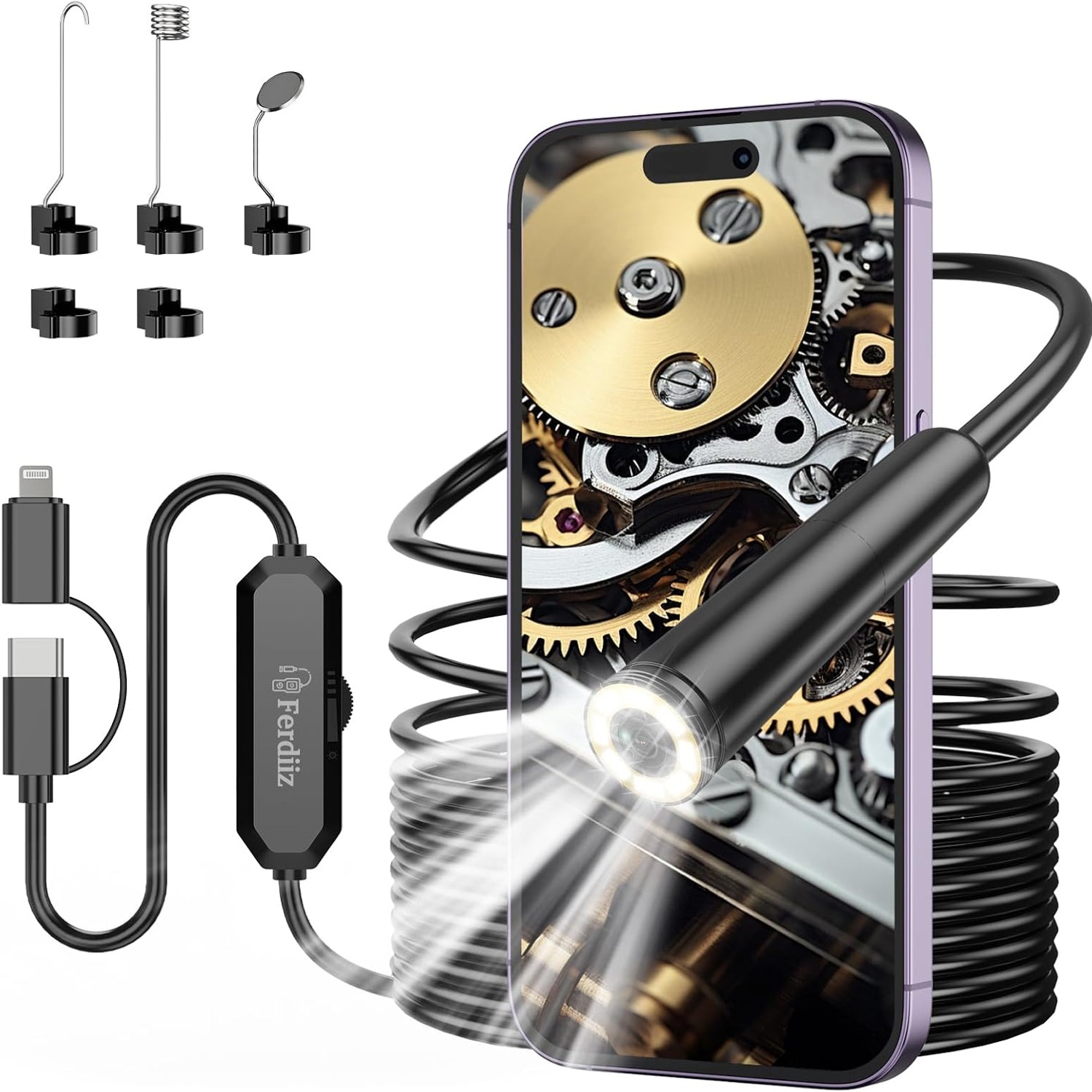
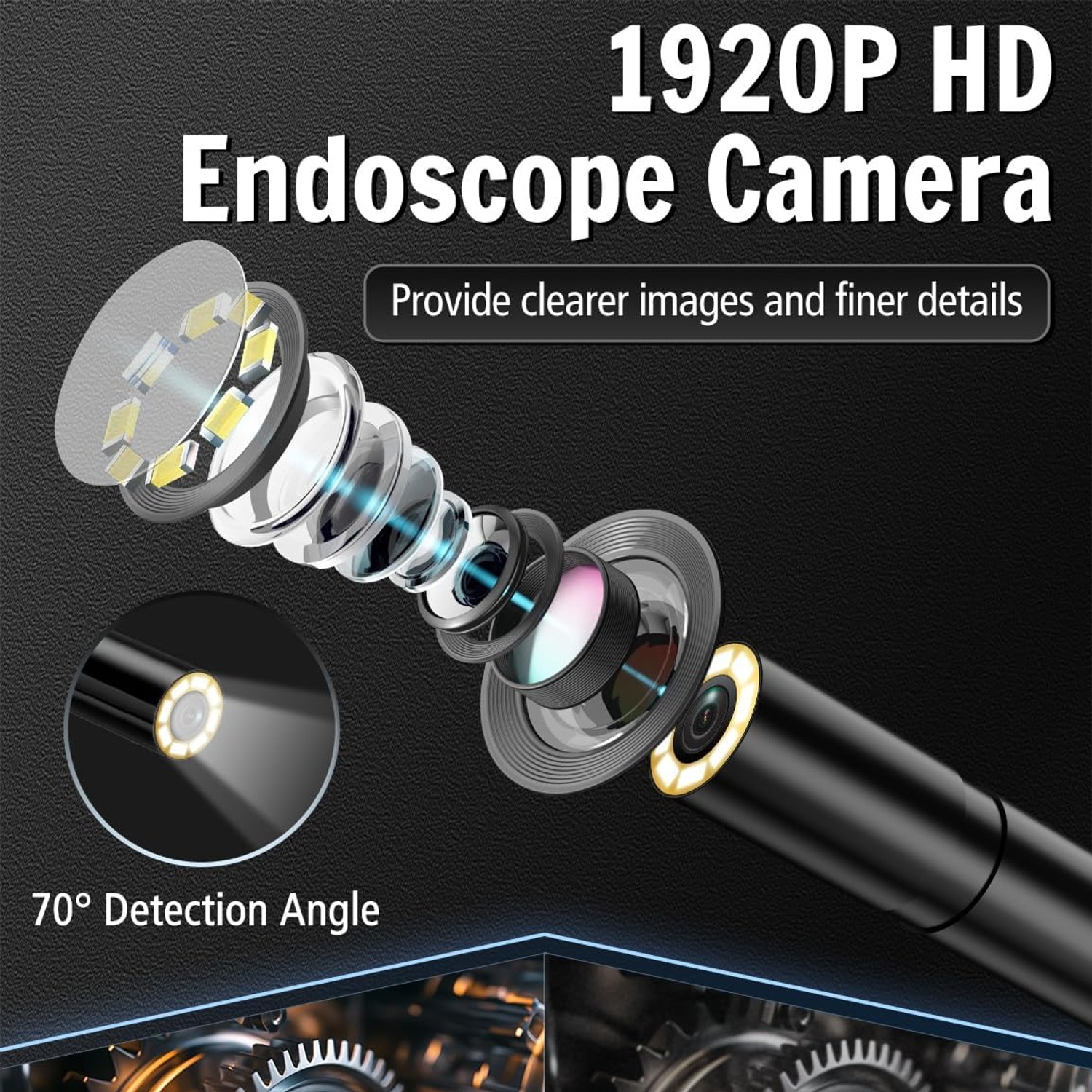
  • 1920P Clear View
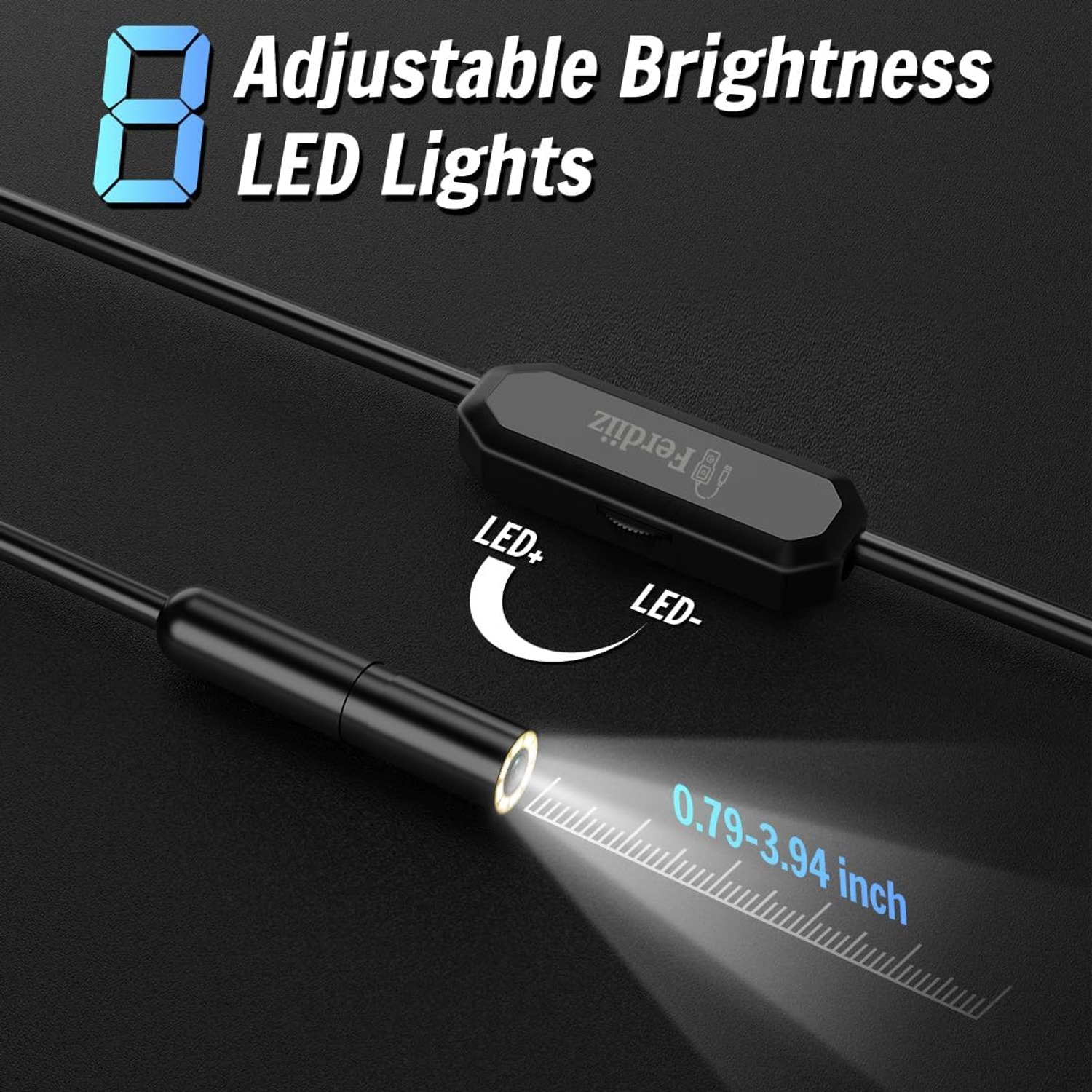
  • 8 Adjustable LEDs
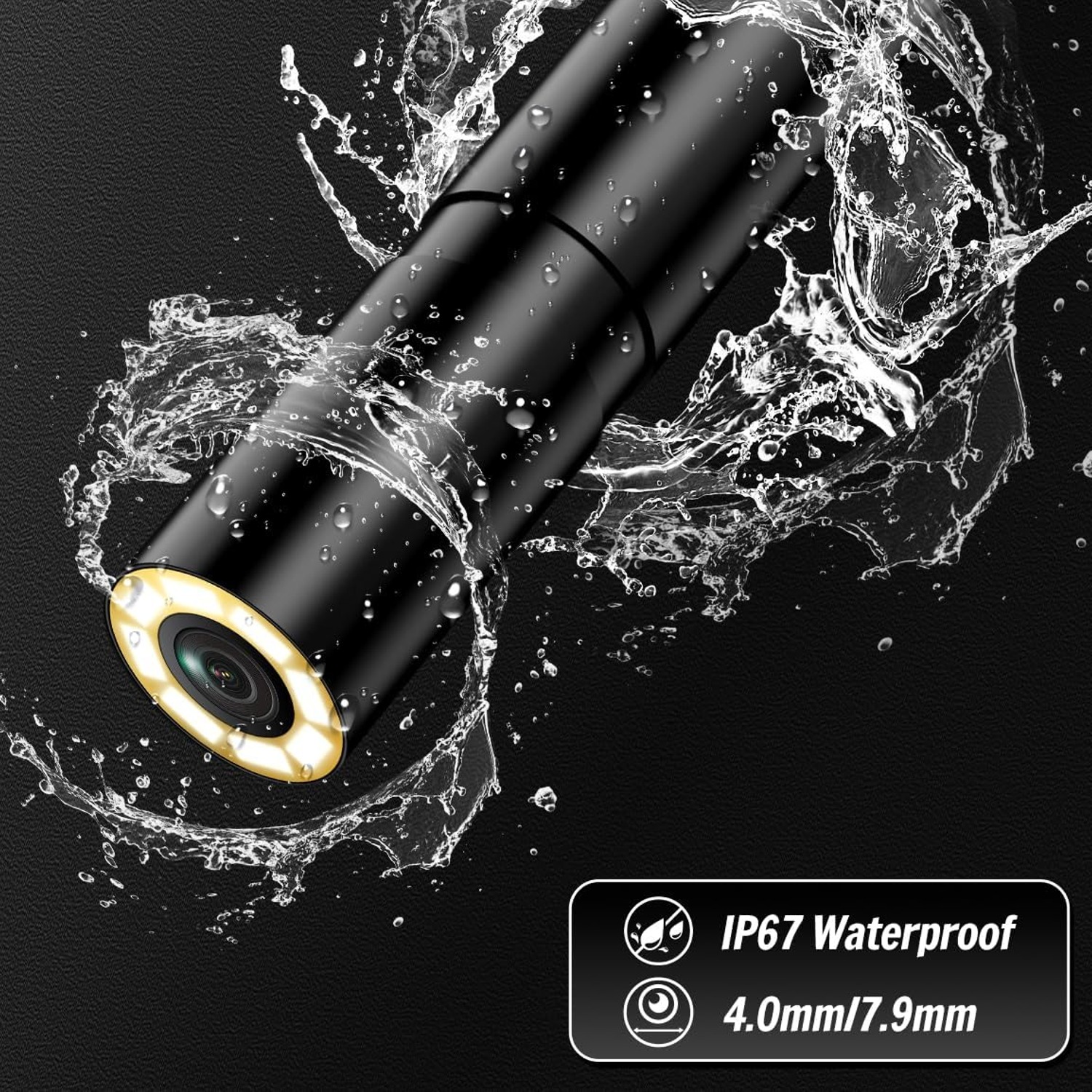
  • IP67 Waterproof Probe
  • Plug And Play

Price: $56.99 $67.99

  • Free tracked Australia-wide delivery on orders $150+, otherwise a flat $15
  • Pay by card or PayPal, handled by the payment provider
  • 14 days to change your mind, plus your statutory rights
Product specifications
BrandFerdiiz
Model NameStandard Lens
Model NumberSingle Lens
ColourBlack
Video Capture Resolution1080p
Video Capture FormatMP4
File FormatsJPEG, MP4
Effective Still Resolution2 MP
Photo Sensor Resolution3 MP
Sensor TypeCMOS
Focus TypeFixed focus
AutofocusNo
Focal Length Description2 cm to 10 cm
Maximum Focal Length10 cm
Macro Focus Range10
Zoom TypeNo zoom
Viewfinder TypeLCD display
Shooting ModesNight, submarine
Exposure ControlAutomatic
ISO Range100 to 6400
Light Sensitivity100 to 6400
Flash TypeInternal
Media TypeSD card
Water Resistance LevelWaterproof
Shipping & returns

Tracked delivery anywhere in Australia. It is free on orders of $150 or more, and a flat $15 below that.

If it is not right for you, send it back within 14 days of delivery in resaleable condition and we refund the price you paid, including standard delivery. That is a voluntary policy we offer on top of your legal rights. You cover the cost of returning it unless the item is faulty.

If it arrives faulty, damaged or not as described, we put it right at no cost to you under the Australian Consumer Law and the Competition and Consumer Act 2010, return postage included.

Shipping details · Refunds and returns

1920P Clear ViewHigh resolution footage so you can actually tell what you are looking at.
8 Adjustable LEDsDial the brightness up or down inside pipes, cavities and engine bays.
IP67 Waterproof ProbeThe 7.9 mm camera head handles damp drains and standing water.
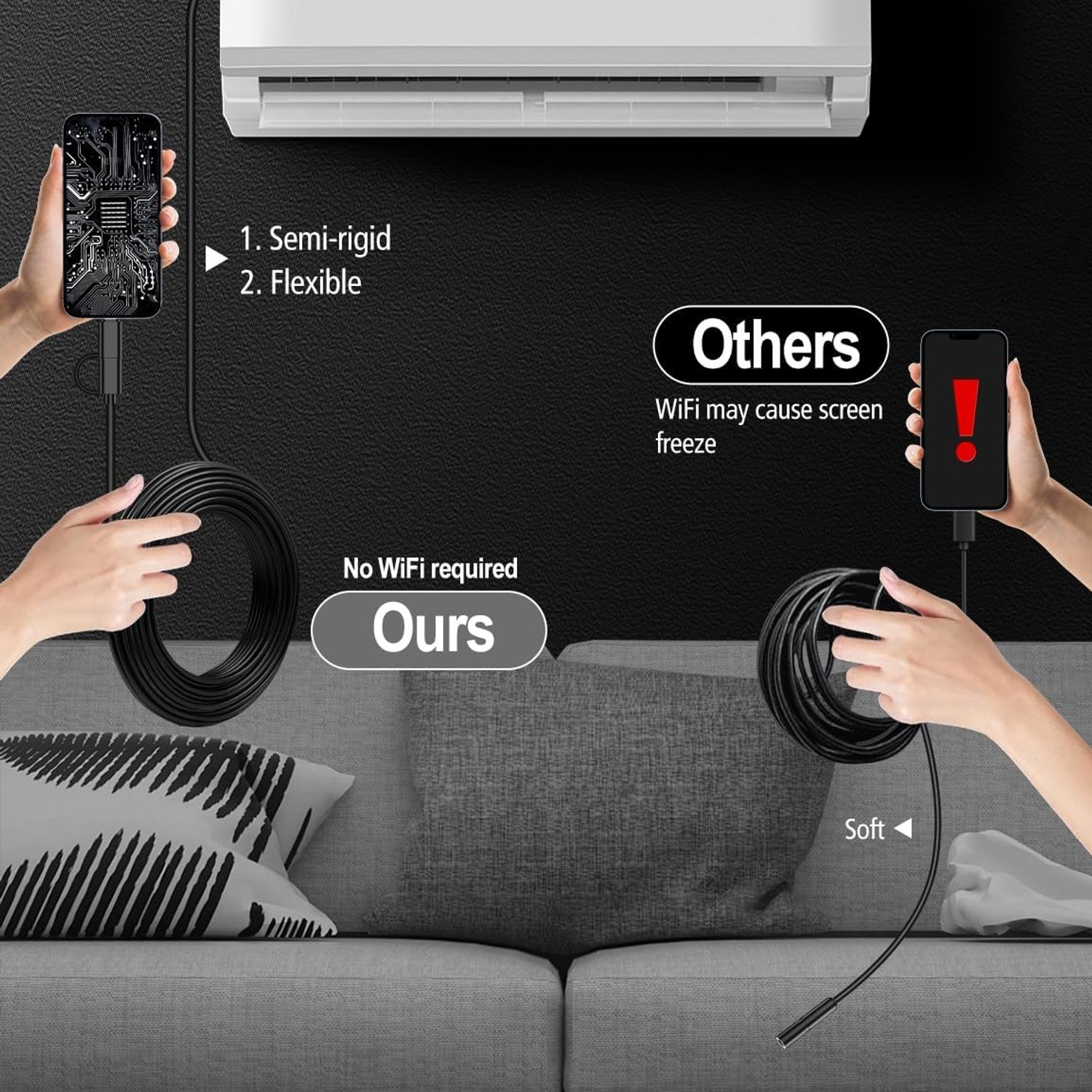
Plug And PlayNo WiFi, no pairing and no charging, just connect and open the app.

See inside walls, drains and engine bays with an endoscope inspection camera that turns your phone into a working inspection screen.

A 7.9 mm probe on a 5 metre semi-rigid cable, 8 adjustable LEDs and an IP67 waterproof head, plugging straight into your phone with no WiFi, no pairing and no battery to charge.

Turns the phone already in your pocket into a working inspection screen, so you can look inside drains, walls, vents and engine bays without pulling anything apart.

The 7.9 mm probe slips through small access holes and gaps that a torch and a mirror will never reach.

Eight adjustable LEDs around the lens let you match the light to the space, which stops dark corners going black and shiny metal blowing out.

A 5 metre semi-rigid cable holds the shape you bend it into, so the camera stays pointed where you put it instead of flopping over.

The IP67 waterproof camera head copes with wet drains, gutters and submerged checks, making it a practical snake camera for phone based inspections around the house or workshop.

Ferdiiz 1920P Endoscope Inspection Camera with 5m Semi-Rigid Cable

Most small jobs go sideways for the same reason. You cannot see the thing you are trying to fix. A blocked waste pipe, a rattle behind a dashboard, a dropped ring under the floorboards, a damp patch in a wall cavity. You end up guessing, and guessing usually means cutting, lifting or dismantling something that did not need to be touched. An endoscope inspection camera takes that guesswork out of it. You feed a thin probe into the gap, look at your phone screen, and you know.

Ferdiiz 1920P Endoscope Inspection Camera with 5m Semi-Rigid Cable

This Ferdiiz model is built around a 7.9 mm camera head on a 5 metre semi-rigid cable. The cable matters more than people expect. A fully floppy cable will not push around a bend, and a stiff one will not go around it at all. Semi-rigid sits in the middle. You can bend a hook into the last 20 cm, push the cable in, and it will hold the shape rather than sagging and pointing at the pipe wall. That one detail is the difference between finding the blockage and staring at a brown blur.

Ferdiiz 1920P Endoscope Inspection Camera with 5m Semi-Rigid Cable

Lighting is handled by eight LEDs set around the lens, with adjustable brightness. In a dark drain you want all of it. Against a shiny engine block or a chrome fitting at close range you want far less, because too much light bounces straight back and washes out the picture. Being able to turn it down is what makes close work usable. The sweet spot for focus sits roughly between 2 cm and 10 cm from the lens, which is the working range for most pipe, cavity and panel inspections.

Ferdiiz 1920P Endoscope Inspection Camera with 5m Semi-Rigid Cable

Setup is deliberately plain. There is no WiFi hotspot to join, no Bluetooth pairing and no internal battery to keep charged. You install the Usee Plus app from the App Store or Google Play, plug the camera into your phone using the supplied iPhone or micro USB adapter, and the feed appears. It draws its power from the phone. The app supports split-screen picture comparison, which is handy when you want a before and after shot of the same joint, or when you are trying to work out which of two similar fittings is the one that is leaking.

Ferdiiz 1920P Endoscope Inspection Camera with 5m Semi-Rigid Cable

The camera head is rated IP67, so wet work is fine. Standing water in a drain, a flooded gutter, a sump, a fish tank, a check under a boat trailer after a wash. What is not waterproof is the phone and the plug at the other end, so keep that end dry and clean. Treated sensibly, this is the sort of tool that sits in a drawer for months and then saves you a plumber call-out in a single afternoon.

Not sure yet? That is fine.

A camera has to suit the job you bought it for, and you cannot always judge that from a photograph. If it is not right for you, send it back within 14 days of delivery in resaleable condition and we refund the price you paid, including standard delivery. That is on top of your Australian Consumer Law rights if anything arrives faulty.

If it turns up faulty, damaged or not as described, that is on us. The Australian Consumer Law and the Competition and Consumer Act 2010 covers you, and we pay the return postage. Read the full detail on our refunds and returns page, or ask us anything before you order.

Frequently Asked Questions

What exactly is an endoscope inspection camera?

It is a small camera on the end of a long, thin cable that sends a live picture to a screen. This one uses your phone as the screen. It lets you look inside places you cannot get your head or a torch into, like pipes, wall cavities and engine bays.

How does it connect to my phone?

By cable, not wirelessly. The camera comes with an iPhone and micro USB adapter, so you plug it into the phone's charging port and open the app. There is no WiFi network to join and no Bluetooth pairing step.

Which app do I need?

Usee Plus. iPhone and iPad users download it from the Apple App Store, and Android users get it from Google Play. You can also scan the QR code printed in the product images and manual.

Does it work with my phone?

It is listed as compatible with Android 6 and above and iOS 9 and above, using the supplied adapters. Compatibility lists are updated over time, so if your handset is unusual it is worth asking before you order.

Does it need charging?

No. It draws power from the phone through the cable, so there is no internal battery to flatten and nothing to remember to charge the night before. That also means it is always ready in a drawer.

How long is the cable?

Five metres. That is enough for most household drain runs, wall cavities, under-floor checks and vehicle work without the cable becoming unmanageable.

What does semi-rigid mean?

It means the cable holds the shape you bend it into instead of flopping about. You can put a gentle hook in the end to steer the camera around a bend, and it will stay pointed where you aimed it.

How thick is the probe?

The camera head is 7.9 mm. That fits through most standard access points, small drilled holes and the gaps around fittings, which is a large part of what makes it a practical snake camera for drains.

What resolution does it record at?

Video is captured at 1080p in MP4 format. Stills are saved as JPEG, with an effective still resolution of 2 MP from a 3 MP sensor.

Can I save photos and videos?

Yes. The app lets you capture stills and record video, and files are stored so you can review or share them later. That is useful if you want to show a tradesperson what you found before they visit.

What is the focus range?

It is a fixed focus lens with an optimal observation range of about 2 cm to 10 cm from the subject. Closer or further than that and the image softens, so you work by moving the probe rather than adjusting a focus ring.

Is there a zoom?

No optical zoom. You get closer by physically moving the probe, which is usually more effective in tight spaces anyway since the lighting travels with the lens.

How bright are the lights?

There are eight LEDs around the lens with adjustable brightness. In a dark pipe you will want them high, and on shiny close-up surfaces you will want them low to avoid glare washing out the picture.

Is it waterproof?

The camera head and cable are rated IP67, so they handle standing water, wet drains and submerged checks. The phone and the USB plug at the other end are not waterproof and must be kept dry.

Can I use it in a fish tank or pond?

The probe end is rated for submersion, so a tank or shallow pond check is within what it is designed for. Rinse the probe in clean water afterwards and dry it before storing.

Will it work for blocked drains?

That is one of its main uses. You feed the probe down the pipe and look for the obstruction, the root intrusion or the collapsed section. The split-screen comparison in the app makes it easier to compare two points along the same run.

Is it any good for car work?

Yes. Mechanics use this style of camera to look at cylinder bores through the spark plug hole, behind dashboards, inside chassis rails and down the back of engines where a hand will not fit. It is one of the more useful cheap tools for engine inspection.

Can I use it to look inside walls?

Yes, once you have a small access hole. It is commonly used to check for insulation gaps, pests, damp, old wiring runs and blockages before drilling or cutting further, which is why a wall cavity inspection camera pays for itself quickly.

Will it help me find something I dropped?

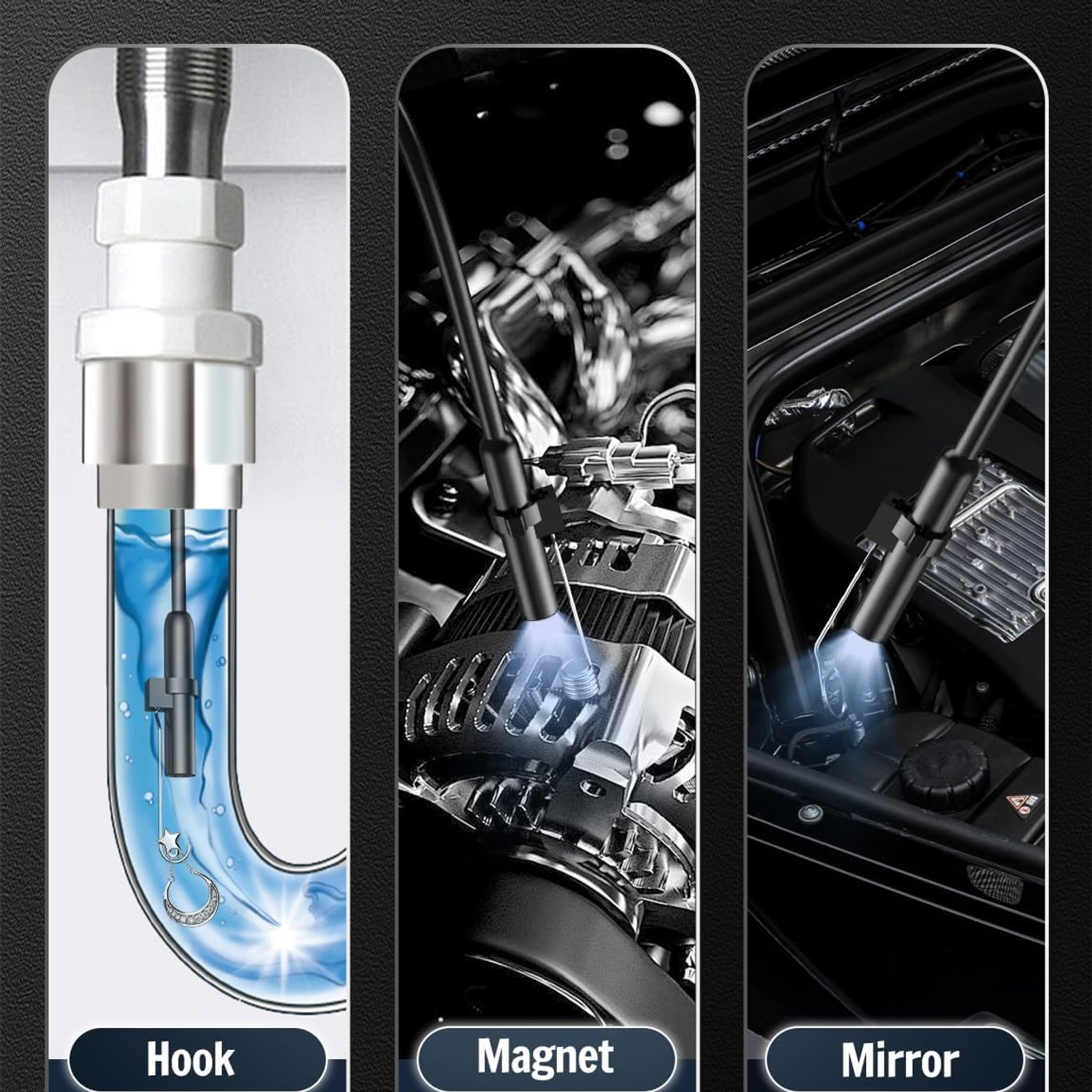
Often, yes. People use it to find rings down drains, keys behind cabinets, screws in engine bays and toys under floors. The included clip accessories can help with retrieval in some situations.

What is in the box?

One 5 metre endoscope camera, five clip accessories and a user manual, with an iPhone and micro USB adapter included for connecting to your phone.

What are the clip accessories for?

They attach near the camera head and help with simple tasks like hooking, deflecting the probe or marking position. They are basic add-ons rather than precision tools, so treat them as a bonus.

Does it have night mode?

The listed shooting modes are night and submarine, alongside automatic exposure and an ISO range of 100 to 6400. In practice, the LED lighting does most of the work in dark spaces.

Can two people watch at once?

Only one phone can be plugged in at a time, since this is a wired camera. You can record the footage and play it back for someone else, or simply hold the phone so both of you can see the screen.

How do I clean it after use?

Wipe the probe and cable with a damp cloth, paying attention to the lens, then dry it fully. After drain work a rinse of the probe end in clean water first is sensible. Keep moisture away from the connector.

How should I store it?

Coil it loosely rather than winding it tight, and avoid creasing the semi-rigid section in the same spot every time. Repeated sharp kinks in one place are the most common way these cables fail.

Will it damage my phone?

No, it is a low-draw accessory that plugs into the standard charging port. Just make sure the plug and port are dry and clean before connecting, and never let water run down the cable to the connector.

How quickly will it ship?

Orders are picked and dispatched as soon as they are processed, and you will get tracking by email once the parcel is on its way. Delivery timing then depends on your address and the carrier.

Do you deliver to my country?

We ship through a network of country storefronts, and prices are shown in your local currency at checkout. Available delivery options for your address are confirmed before you pay.

Would this make a good gift?

It is a popular present for anyone who tinkers, whether that is cars, plumbing, home renovation or model building. It is a tool most people would not buy for themselves but use constantly once they have one.

What if it is not right for me?

If it arrives faulty, damaged or not as described, contact us with your order number and a photo or short video of the problem and we will sort out a replacement or a refund. If you simply find it is not the right tool for your job, get in touch within the returns window and we will walk you through sending it back in its original condition.

How To Choose And Use An Endoscope Inspection Camera

6 min read Camera Company

The problem with not being able to see

Almost every awkward home or workshop job comes down to the same thing. There is a space you cannot see into, and the only way to find out what is happening in there is to take something apart.

So you take it apart. You lift the floorboard, cut the plasterboard, pull the dashboard trim, remove the trap under the sink. Half the time you find nothing, and now you have a repair on top of the original problem. The other half you find the fault, but you have already spent an hour getting there.

An endoscope inspection camera skips that step. You push a thin probe through a gap, a drain, a vent or a drilled hole the size of a pencil, and you look at your phone. If the answer is "nothing is wrong in there", you have saved yourself the dismantling. If the answer is "there is a tree root through the pipe at about two metres", you now know exactly what you are dealing with before you call anyone.

How a phone borescope actually works

The parts are simple. There is a tiny camera sensor in a head at the end of a cable, a ring of LEDs around that lens so the camera has something to see by, and a plug at the other end that connects to a screen. On this one the screen is your phone, which is why it is cheap compared to the handheld units with their own display.

This model uses a CMOS sensor recording 1080p video as MP4 and stills as JPEG. There is no autofocus and no zoom. That sounds like a limitation until you use one. In a pipe or a cavity you are working at close range, and a fixed focus lens tuned to a set distance gives you a more consistent picture than a cheap autofocus hunting back and forth in low light. The working range here is roughly 2 cm to 10 cm. You frame the shot by moving the probe, not by tapping the screen.

The eight LEDs are adjustable, and that adjustment is more important than the total brightness. Point a bright light at a wet pipe wall from 3 cm away and most of it bounces straight back into the lens. Turn it down and detail appears. Anyone who has used a fixed-brightness borescope knows the frustration of a picture that is simultaneously too bright in the middle and black at the edges.

Connection is wired. No WiFi hotspot to join, no pairing, nothing to charge. You install Usee Plus, plug in with the supplied iPhone or micro USB adapter, and the live feed opens. For a tool you use occasionally that matters a lot, because wireless inspection cameras have a habit of being flat or refusing to pair on the one day you need them.

Why the cable type matters more than the pixels

People shop these cameras on resolution. In practice the cable decides whether you get a usable result.

A soft, fully flexible cable is easy to coil but useless for pushing. Feed it into a horizontal pipe and it concertinas. Point it at a ceiling cavity and it droops. A fully rigid rod goes where you push it but will not turn a corner, so it is only good for straight shots.

Semi-rigid is the compromise, and it is what you want for general use. You can bend a hook into the last stretch of cable so the lens looks sideways at the pipe wall rather than straight down the middle of it, and that bend stays put. You can push two or three metres into a drain and the cable transmits that push instead of folding. You can also straighten it out again afterwards.

Five metres is a sensible length for domestic work. It covers a kitchen waste run to the stack, most gutter and downpipe checks, a full wall cavity from the top plate, under a floor between joists, and the length of a car's chassis rail. Much longer and you need a reel and a proper feed system to stop the cable fighting you.

Probe diameter is the other number to look at. At 7.9 mm this head goes through a 10 mm drilled hole, down a standard sink waste, through a spark plug hole on many engines, and between most trim panels. Thinner probes exist but they generally carry smaller sensors and weaker lights, so you trade picture quality for access.

Who gets the most out of one

Homeowners use these mostly for water and pests. Finding where a drain is blocked before calling a plumber, checking for damp or rot inside a cavity, looking behind a washing machine without dragging it out, tracing a bad smell to a dead mouse under the floor. Knowing what the problem is changes the conversation with a tradesperson and usually the price too.

Home mechanics get even more use out of it. Cylinder bore checks, looking for a dropped bolt on top of a gearbox, inspecting behind the dash before pulling the whole thing out, checking for rust inside sills and chassis rails. A good mechanic borescope is one of those tools that stays in the toolbox for years.

Renovators use them before cutting. Checking what is behind a wall before a drill goes in is a cheap habit. So is confirming the insulation actually reached the top of the cavity.

Then there is the odd job category. Fishing something out of a drain, checking a chimney, looking inside a hive, inspecting a water tank, checking a gutter without climbing a ladder twice. People buy it for one job and then use it for ten.

Choosing the right one for you

Work backwards from the job. Ask how far in you need to reach, how wide the entry point is, and whether the space will be wet.

If your reach is under five metres and your access points are 10 mm or wider, a 7.9 mm probe on a 5 metre semi-rigid cable covers it. If you need to inspect sewer mains fifteen metres out, you need a different class of equipment entirely, with a reel and a self-levelling head.

Check the waterproofing rating against your use. IP67 on the camera head means it handles immersion, so standing water and wet drains are fine. Remember the rating applies to the probe end, not the phone and not the plug.

Think about the display. A phone-based camera is cheaper, the screen is bigger and better than most built-in displays, and you already know how to use it. The trade-off is that your phone is tied up during the inspection and you have one more cable to manage. If you work in conditions where you would rather not have your phone out at all, a self-contained unit may suit you better.

Finally, be realistic about lighting. Any claim of great low-light performance from a sensor this size is really a claim about the LEDs. Adjustable brightness is the feature that matters, and this one has it.

Looking after it

These cameras are not fragile, but they do have two weak points.

The first is the cable where it meets the camera head. Do not use the camera as a hook or pull it out of a pipe by yanking the lead. Feed it in and draw it out gently, and if it snags, back off and try a different angle rather than forcing it.

The second is the same bend repeated in the same spot. Semi-rigid cable tolerates a lot of shaping, but working it hard in one place over and over will eventually tire it. Vary where you bend it, and store it in a loose coil rather than wound tight around your hand.

Clean the lens after every job. A smear of drain grease or oil on the glass will ruin the picture and you will blame the camera. A damp cloth and a dry-off is all it takes. Keep the connector end clean and dry, and never let water track down the cable to the plug while it is connected to your phone.

The short version

This is a wired, phone-powered inspection camera with a 7.9 mm head, 5 metres of semi-rigid cable, eight adjustable LEDs and an IP67 waterproof probe. It records 1080p MP4 video and JPEG stills through the Usee Plus app on Android 6 or later and iOS 9 or later, with no charging and no pairing.

It is the right tool if you want to see inside a drain, a wall, a vent or an engine without taking anything apart first, and if your access points are around a centimetre or wider. It is the wrong tool if you need long sewer runs, micro-diameter access or a fully self-contained handheld unit.

For most people the test is simple. Think of the last time you had to cut, lift or dismantle something just to look at it. That is the job this would have saved you.

Browse the shop

Not sure if it will reach?

Tell us the job you have in mind and we will tell you honestly whether a 5 metre, 7.9 mm probe is the right tool for it.

Ask us a question

Page summary

The Ferdiiz endoscope inspection camera is a plug-in borescope that uses a smartphone as its display. It has a 7.9 mm camera head on a 5 metre semi-rigid cable, eight adjustable LEDs, a CMOS sensor, fixed focus with an optimal working range of roughly 2 cm to 10 cm, and an IP67 waterproof probe. It records MP4 video at 1080p and JPEG stills, with automatic exposure, an ISO range of 100 to 6400, night and submarine shooting modes and an internal flash. It connects by cable using the supplied iPhone or micro USB adapter and runs through the Usee Plus app on Android 6 or later and iOS 9 or later. No WiFi, Bluetooth pairing or charging is required. Model number Single Lens, colour black. Weight and packaged dimensions are not specified by the maker.