Camera Company
Company
Shop By Category
T&Cs
Shop Online
  • The maker's specifications on every page
  • Free tracked Australia-wide delivery over $150
  • 14-day returns

4K Dual Dash Cam with WiFi | Front and rear dash cam 4k | Dash cam with sd card

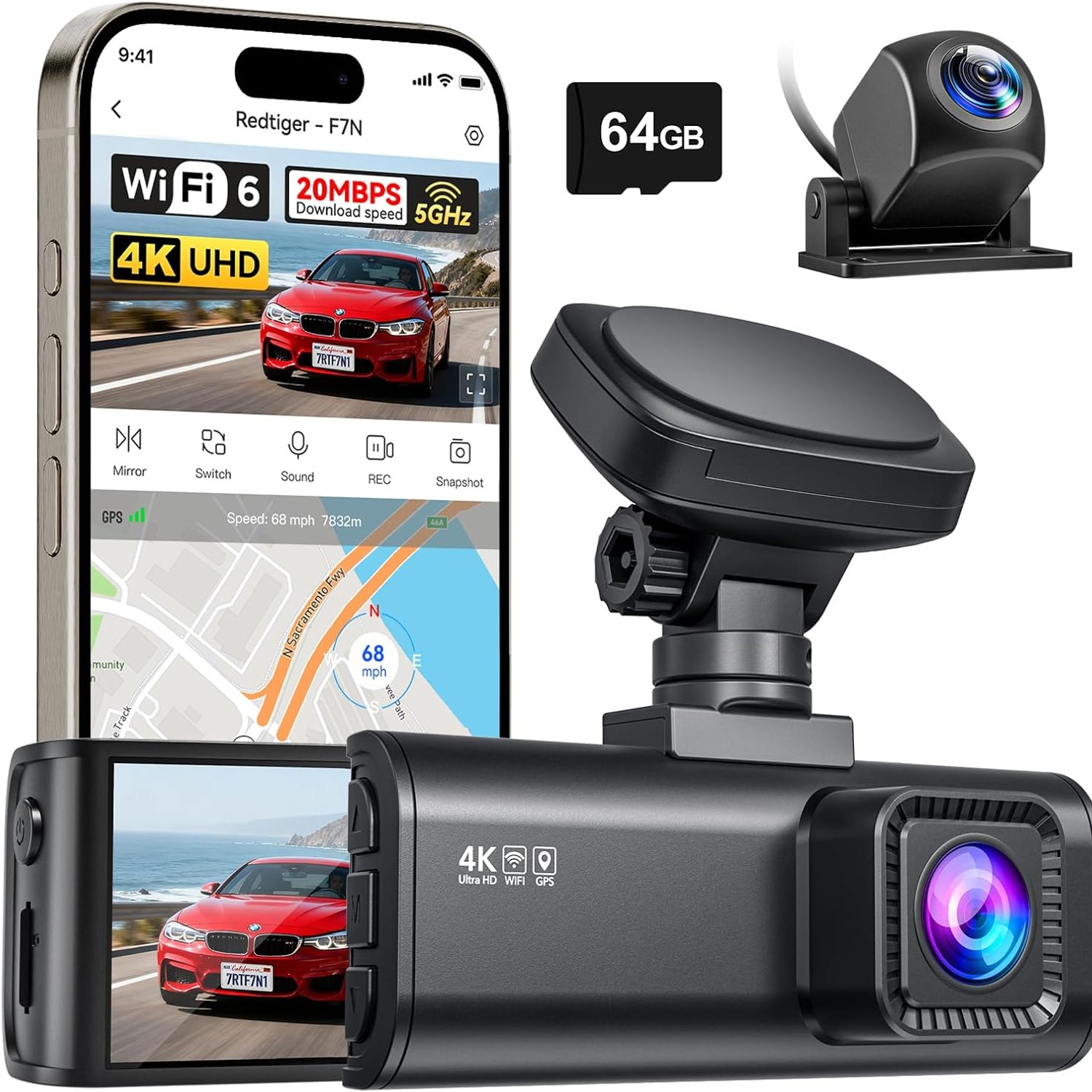
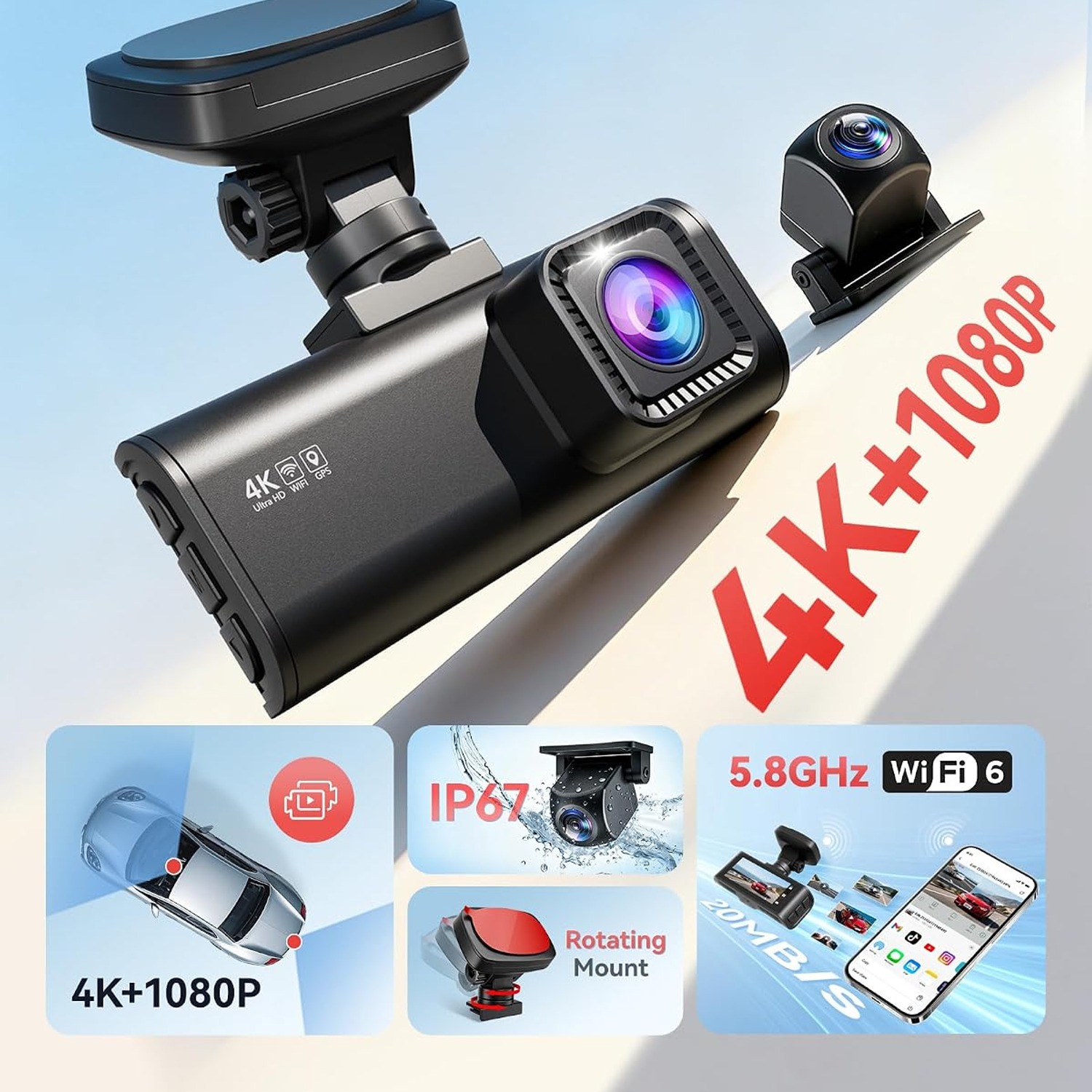
REDTIGER F7N 4K Dual Dash Cam with WiFi, GPS and 64GB Card

$319.99 $383.99 Save $64
  • 4K Front View
  • Dual Camera Setup
  • Phone App Control
  • 64GB Card Included

Price: $319.99 $383.99

  • Free tracked Australia-wide delivery on orders $150+, otherwise a flat $15
  • Pay by card or PayPal, handled by the payment provider
  • 14 days to change your mind, plus your statutory rights
Product specifications
ModelREDTIGER F7N
BrandREDTIGER
Video Capture Resolution2160p front, 1440p supported
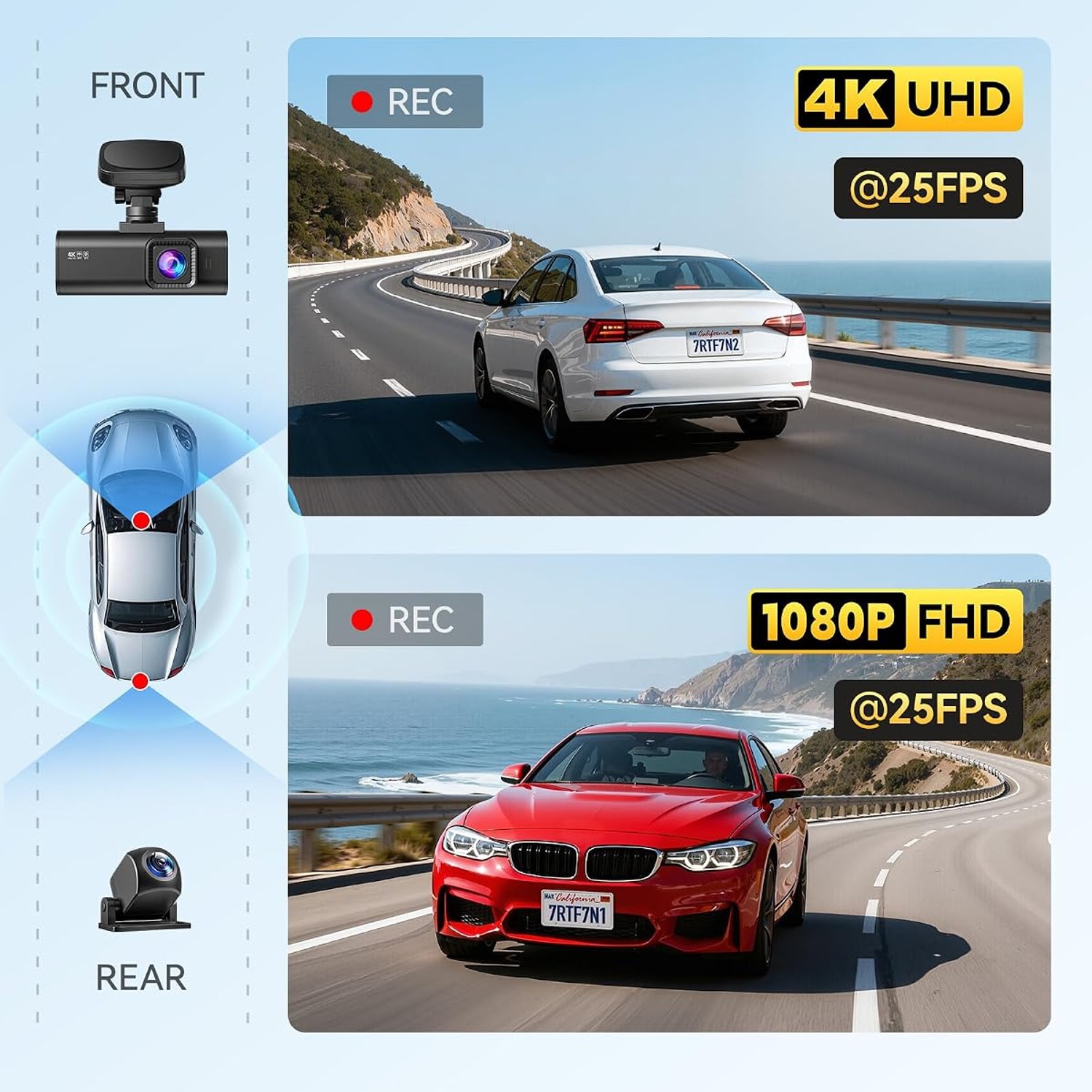
Camera Configuration4K front and 1080p rear dual cameras
Field Of View170 degrees
Maximum Aperturef/1.5
Screen Size3.18 inch
Display TypeLCD
ConnectivityWi-Fi
Control MethodApp
Included Memory Card64 GB
Maximum Card Supported256 GB
Flash Memory TypeMemory card
Mounting TypeDashboard mount
Mounting PositionFront inside
Compatible VehiclesBus, car, minivan, RV, truck
Compatible DevicesLaptop, smartphone
Special FeaturesAutomatic incident detection, loop recording, G-sensor, time-lapse parking monitor, built-in display, built-in GPS and WiFi
Batteries IncludedNo
ColourBlack
Item Weight0.11 kg
Weight0.11 kg
Shipping & returns

Tracked delivery anywhere in Australia. It is free on orders of $150 or more, and a flat $15 below that.

If it is not right for you, send it back within 14 days of delivery in resaleable condition and we refund the price you paid, including standard delivery. That is a voluntary policy we offer on top of your legal rights. You cover the cost of returning it unless the item is faulty.

If it arrives faulty, damaged or not as described, we put it right at no cost to you under the Australian Consumer Law and the Competition and Consumer Act 2010, return postage included.

Shipping details · Refunds and returns

4K Front ViewRecords at 2160p so plates and signs stay readable.
Dual Camera SetupA 1080p rear camera covers what happens behind you.
Phone App ControlBuilt-in WiFi lets you view and download clips on your phone.
64GB Card IncludedReady to record out of the box, with support up to 256GB.

Drive with a quiet kind of confidence, because this 4K dual dash cam with WiFi is watching the road in front and behind you every single trip.

A 4K front camera, 1080p rear camera, built-in GPS and WiFi, a 3.18 inch LCD screen, 170 degree field of view and a 64GB card included, all controlled from your phone.

This 4K dual dash cam with WiFi pairs a 2160p front camera with a 1080p rear camera, so both directions are covered on every drive.

Built-in GPS records your location and route alongside the video, which gives any clip proper context if you ever need it.

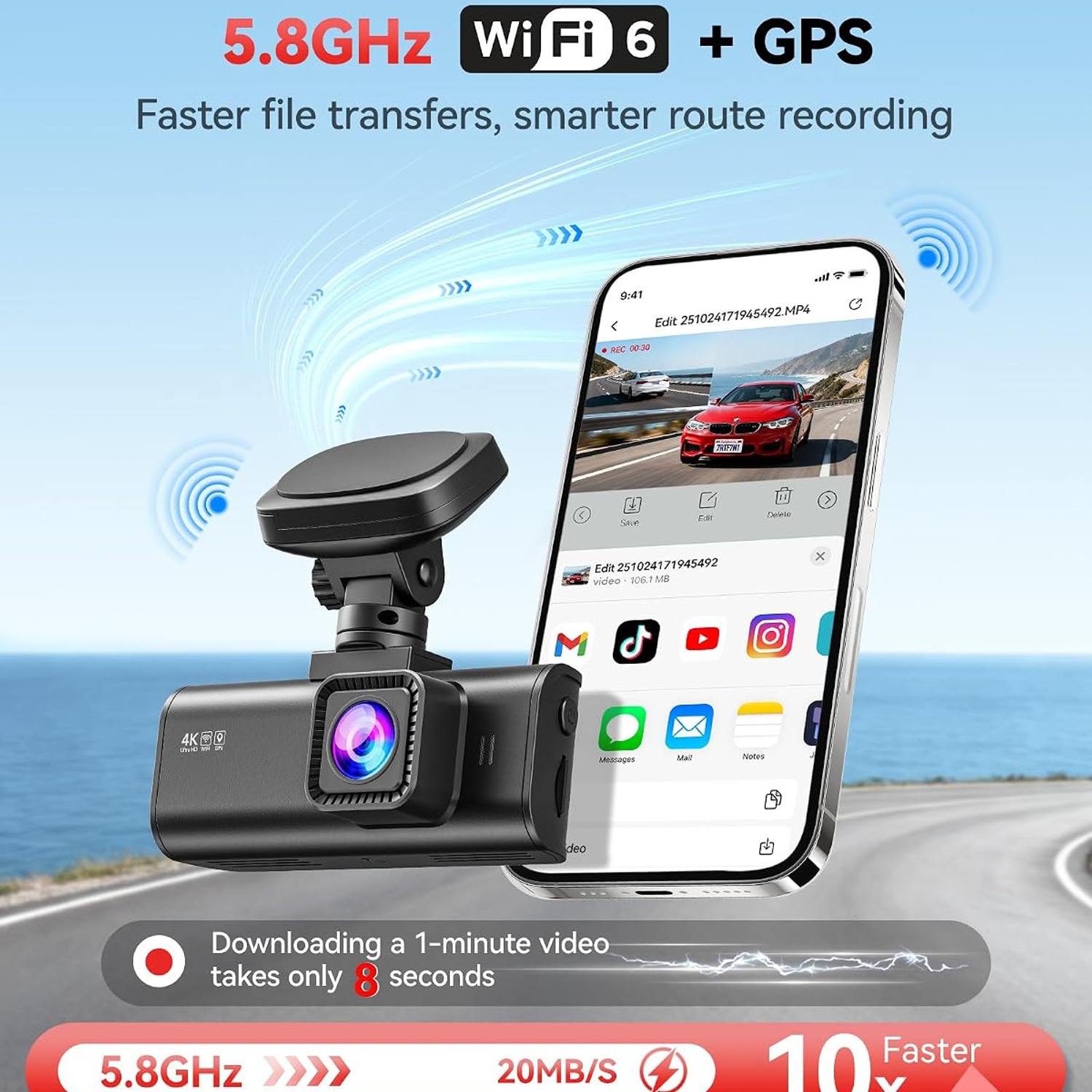
The built-in WiFi connects to the REDTIGER app on your phone, letting you change settings, watch footage and save clips without pulling the card.

A 170 degree field of view and an f/1.5 maximum aperture help the camera see wide and cope with low light.

A 64GB memory card is included and the camera supports cards up to 256GB, with loop recording, a G-sensor and time-lapse parking monitor built in.

REDTIGER F7N 4K Dual Dash Cam with WiFi, GPS and 64GB Card

Most of us drive for years without needing footage, and then one morning somebody changes lanes without looking and it becomes the only thing that matters. A dash cam is cheap insurance against he-said-she-said. The REDTIGER F7N takes that idea and covers both ends of the car, with a 4K front camera watching the road ahead and a 1080p rear camera watching the traffic behind. Rear-end knocks and tailgaters are no longer a blind spot in your story.

REDTIGER F7N 4K Dual Dash Cam with WiFi, GPS and 64GB Card

Resolution matters more than people expect. A plate that looks like a grey smudge at 1080p is often legible at 2160p, and that difference decides whether footage is useful or just interesting. The front camera here records at 4K with a 170 degree field of view, which is wide enough to take in the adjacent lanes and the kerb without pushing everything into the distance. The f/1.5 maximum aperture lets in plenty of light, which helps at dusk and under street lighting.

REDTIGER F7N 4K Dual Dash Cam with WiFi, GPS and 64GB Card

Built-in GPS quietly does a lot of work. It stamps your location and route onto the recording, so a clip is not just a picture of a car, it is a picture of a car at a known place, at a known speed, at a known time. If you are making an insurance claim or handing something to the police, that context is worth having. You can view the route on a map through the REDTIGER app on your phone.

REDTIGER F7N 4K Dual Dash Cam with WiFi, GPS and 64GB Card

The WiFi link is the feature you will use most often. Instead of unplugging the camera and hunting for a card reader, you connect your phone, scroll the recordings, watch the one you want and save it. Settings are easier to change on a phone screen than on a small LCD too, although the 3.18 inch built-in display is there when you want to line up the view or check a clip on the spot.

REDTIGER F7N 4K Dual Dash Cam with WiFi, GPS and 64GB Card

Day to day the camera manages itself. Loop recording writes over the oldest footage once the card is full, so you never have to think about free space. The G-sensor notices a sudden jolt and locks that clip so it does not get overwritten. With the dedicated hardwire kit fitted, the parking monitor keeps watching in time-lapse while the car is off. A 64GB card is included, and the camera accepts cards up to 256GB if you want a longer rolling history.

Not sure yet? That is fine.

A camera has to suit the job you bought it for, and you cannot always judge that from a photograph. If it is not right for you, send it back within 14 days of delivery in resaleable condition and we refund the price you paid, including standard delivery. That is on top of your Australian Consumer Law rights if anything arrives faulty.

If it turns up faulty, damaged or not as described, that is on us. The Australian Consumer Law and the Competition and Consumer Act 2010 covers you, and we pay the return postage. Read the full detail on our refunds and returns page, or ask us anything before you order.

Frequently Asked Questions

What exactly do I get with this dash cam?

You get the REDTIGER F7N camera unit with its 3.18 inch LCD screen, the 1080p rear camera, and a 64GB memory card so you can start recording straight away. The camera mounts to the dashboard or windscreen area in the front interior position. Batteries are not included, as the unit runs from the car's power.

Is this really a 4K dash cam?

Yes, the front camera records at 2160p, which is the standard 4K resolution for dash cams. The listed capture resolutions are 1440p and 2160p, so you can step down if you want smaller files. For most people the best 4k dash cam setting is simply the highest one the card can keep up with.

What resolution is the rear camera?

The rear camera records at 1080p. That is enough to identify vehicles and read plates at close range, which is what matters for rear-end incidents. Combining a 4K front with a 1080p rear is the usual balance on a dual-channel system.

How wide is the field of view?

The field of view is 170 degrees, listed as the real angle of view rather than a diagonal marketing figure. That takes in the lane you are in plus the lanes either side and a good amount of kerb. A wide view like this is one of the things that makes the best dual dash cam worth having over a single front unit.

Does it have GPS?

Yes, GPS is built in. It records your location and route alongside the footage, which you can view on a map through the app. If you are shopping for the best dash cam with gps, having the module inside the camera rather than in a separate add-on keeps the install simpler.

How does the WiFi work?

The camera creates its own WiFi connection that your phone joins, then the REDTIGER app talks to the camera over that link. You can browse recordings, watch them, download the ones you want and change settings. No internet connection is needed, since the phone talks directly to the camera.

Do I need a phone to use it?

No. The camera has a built-in 3.18 inch LCD display and physical controls, so it works fine on its own. The app just makes reviewing and sharing footage a lot faster, which is why most people treat a best wifi dash cam feature set as close to essential now.

What size memory card comes with it?

A 64GB card is included in the box. That is a decent starting point for dual-channel 4K recording and gives you a useful rolling window before loop recording starts overwriting. It is one of the reasons people search for a dash cam with sd card already supplied.

What is the largest card it supports?

The camera supports cards up to 256GB. If you drive long hours or want a longer history before footage is overwritten, upgrading the card is the cheapest improvement you can make. Look for a high-endurance card rated for continuous video writing when choosing the best dash cam memory card.

What is loop recording?

Loop recording means the camera records in short segments and automatically overwrites the oldest ones when the card fills. You never have to delete anything manually. Any clip locked by the G-sensor is protected from being overwritten.

What does the G-sensor do?

The G-sensor detects a sudden jolt, such as a collision or a hard brake, and locks the clip covering that moment. Locked clips sit outside the loop recording cycle so they stay on the card until you remove them. For anyone comparing the best dash cam with g-sensor options, this automatic locking is the core benefit.

Can it record while the car is parked?

Yes, the parking monitor records in time-lapse mode while the vehicle is off, and the G-sensor can trigger an incident recording. This requires the dedicated hardware kit to be plugged in so the camera keeps receiving power. Without that kit, the camera stops when the car does.

Why do I need a hardwire kit for parking mode?

A standard cigarette socket usually cuts power when the ignition goes off, so the camera shuts down. A hardwire kit draws from a constant circuit with low-voltage protection so the camera can keep watching without flattening the battery. That kit is sold separately.

How does it perform at night?

The f/1.5 maximum aperture is wide, which means more light reaches the sensor in dim conditions. Combined with 4K capture, that generally gives usable footage under street lighting and headlights. Night performance is the main reason people shortlist a best dash cam for night driving rather than buying on resolution alone.

What vehicles is it suitable for?

It is listed as compatible with buses, cars, minivans, RVs and trucks. The dashboard mount works on most windscreen shapes, and the rear camera cable needs routing to the back of the vehicle. Longer vehicles may need an extension cable for the rear camera, which is worth checking before you buy if you drive a big rig.

Is it suitable for rideshare or delivery driving?

Yes, the combination of front and rear coverage, GPS logging and automatic incident detection suits people who spend long hours on the road. Loop recording means you do not have to manage storage between shifts. Many drivers looking for the best dash cam for rideshare drivers want exactly this dual-channel plus GPS combination.

Does it record audio?

Dash cams of this type typically include a microphone with an option to turn audio recording on or off in the settings. If you carry passengers, check your local rules on recording conversations. The setting can be changed through the app or on the camera menu.

Where should I mount it?

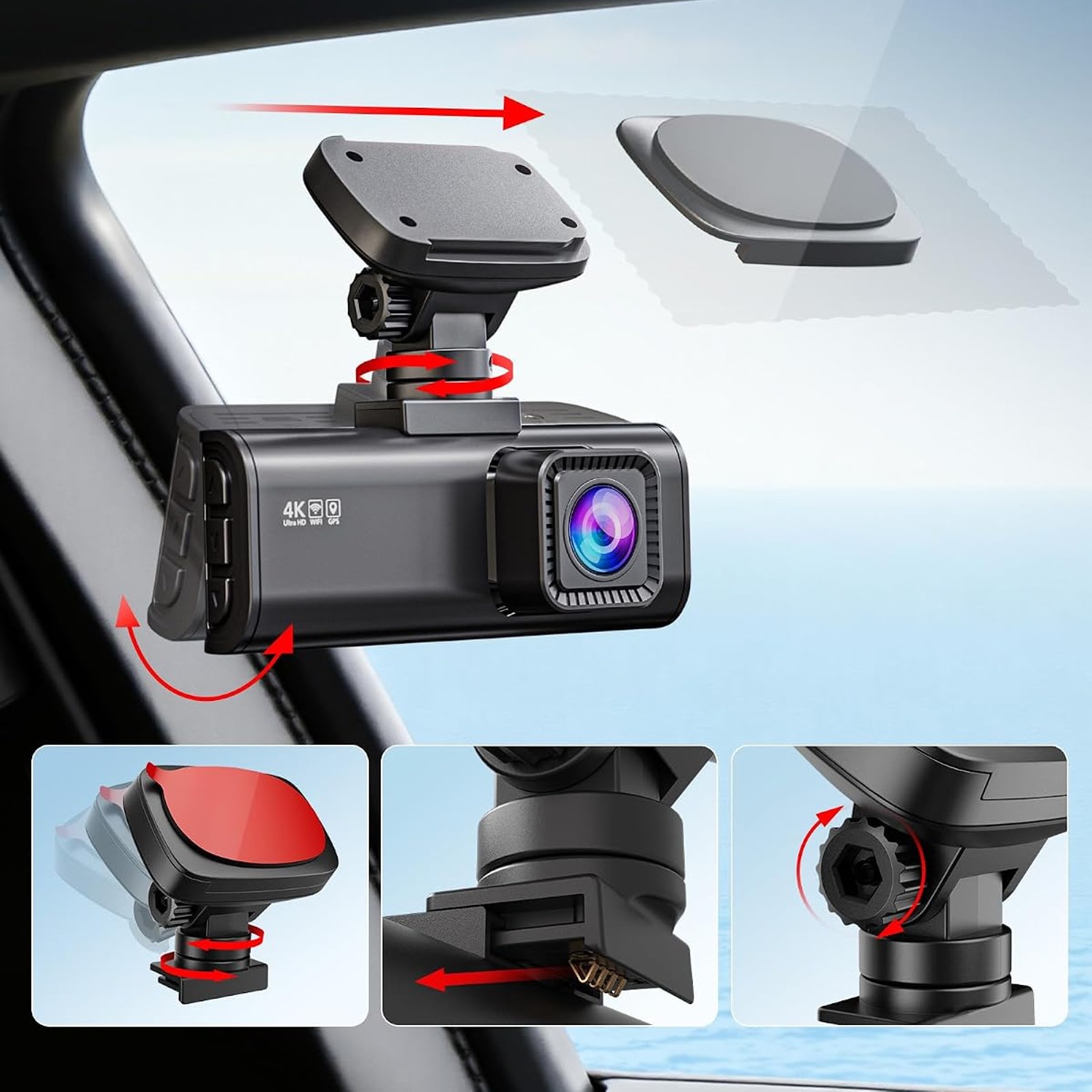
The listed position is front inside, usually behind the rear-view mirror where it has a clear view and does not block your line of sight. Keep it within the area swept by the wipers so rain does not blur the footage. Check your local windscreen obstruction rules before fitting.

Where does the rear camera go?

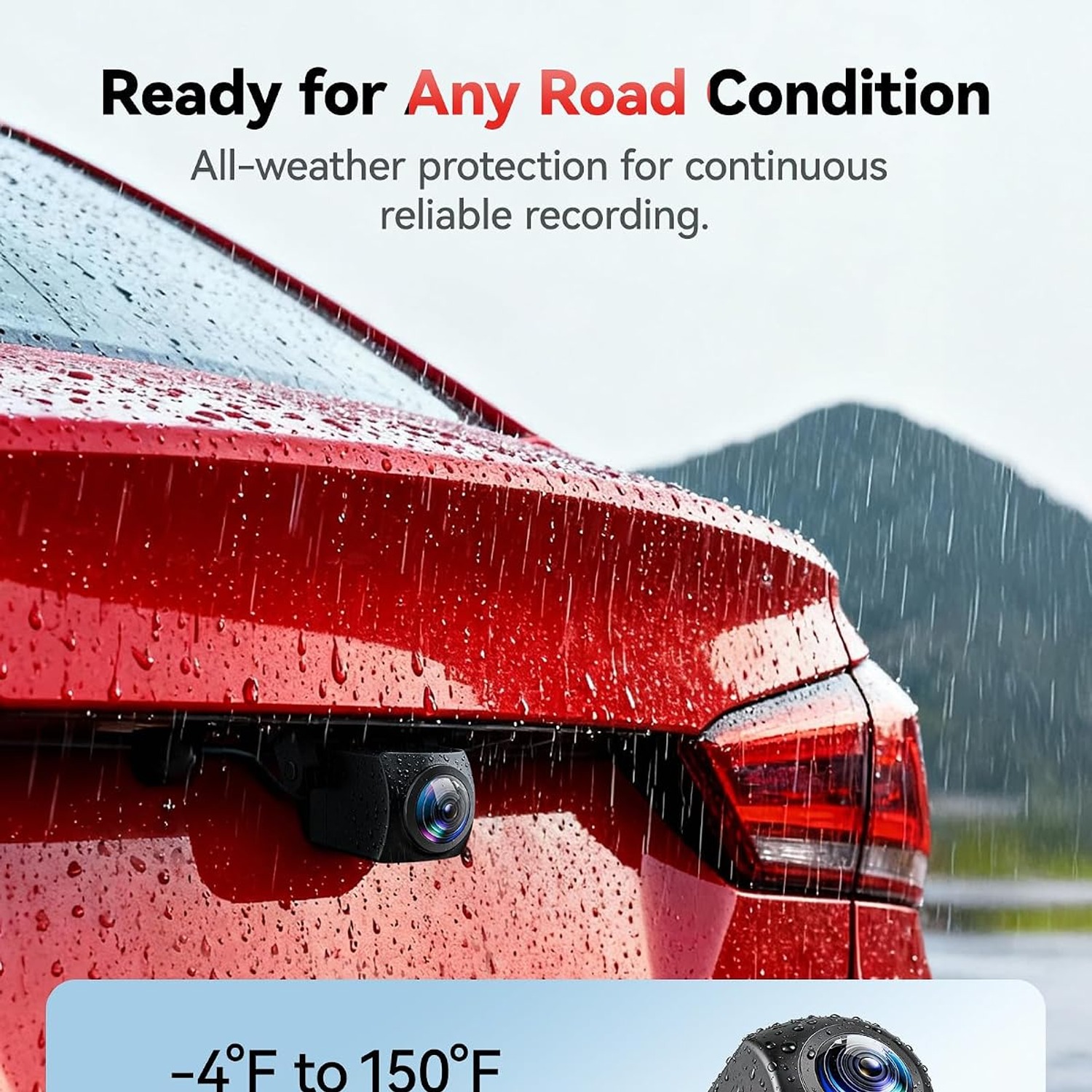
Most people mount the rear camera on the inside of the rear windscreen, high and central, then tuck the cable along the headlining and down the trim. On vehicles with heavy window tint or a van bulkhead, an exterior or cabin-facing position may work better. Take your time with cable routing, it is the longest part of the install.

Does it need to be professionally installed?

No, a basic install using the supplied power lead takes most people under an hour, with cable tucking being the fiddly part. If you want parking mode with the hardwire kit, you are working with the fuse box, and some people prefer an auto electrician for that. There is no permanent modification needed for the standard setup.

Can I view footage on my laptop?

Yes, compatible devices are listed as laptop and smartphone. You can take the card out and read it with a card reader, or use the app on a phone. Files are standard video, so they play in common media players.

How do I share a clip with my insurer?

Connect your phone over WiFi, find the clip in the app and download it to your phone. From there you can email it, upload it to a claim portal or send it however the insurer asks. Having GPS data embedded makes the clip far more useful as evidence.

How often should I format the card?

Every month or two is a good habit, and always format in the camera rather than on a computer. Continuous recording is hard on flash memory, so formatting keeps the file system clean and reduces recording errors. Back up any locked clips first.

How do I clean the lens?

Use a dry microfibre cloth and wipe gently. Avoid glass cleaner, alcohol wipes and anything abrasive, since they can damage lens coatings. A smeared lens does more damage to footage quality than any setting change.

Will heat damage it in summer?

Any in-car electronics device dislikes long heat soak in direct sun. Park in shade where you can and consider removing the camera on very hot days if the car will sit for a long time. This is normal care for a windscreen-mounted device rather than a fault.

Does it have a battery?

Batteries are not included and the camera is designed to run from vehicle power. Cameras in this class typically use a small internal capacitor or cell purely to save the current file safely when power is cut. It is not meant to run standalone off the car.

What is the screen for if I use the app?

The 3.18 inch LCD is handy for lining up the camera angle during installation, checking that both channels are recording, and reviewing a clip immediately after something happens. It also means you can change settings without reaching for a phone. Plenty of buyers specifically want the best dash cam with screen for that reason.

Can I use this as a gift?

It makes a practical gift for a new driver, a commuter or anyone who drives for work, and the included 64GB card means it is usable straight away. No subscription or extra purchase is needed for normal front and rear recording. If you want them to have parking mode, add the hardwire kit.

How long does delivery take?

Delivery timing depends on your country storefront and the shipping option chosen at checkout, and you will see the estimate before you pay. You will get tracking details once the order ships. Contact us if your estimate has passed and nothing has arrived.

What if it is not right for me?

If the camera is not what you expected or it does not suit your vehicle, contact us and we will walk you through the return process for your country. Keep the original packaging and accessories where you can, since that makes things faster. If something is faulty, tell us what the camera is doing and we will sort out a replacement or refund.

How to Choose a 4K Dual Dash Cam That Actually Helps You

6 min read Camera Company

The problem nobody plans for

You can drive carefully for twenty years and still end up in a car park argument about who hit whom. Insurance claims often come down to two versions of the same event, and the person with footage usually wins. That is really all a dash cam is for. It is a witness that never blinks, never forgets and never gets the details wrong.

The trouble is that a lot of cheap cameras record something technically, but not something useful. The plate is a blur. The timestamp is wrong. The file was overwritten before you got around to saving it. A camera that records badly can be worse than no camera at all, because it gives you false confidence.

That is the gap a dual-channel 4K unit like the REDTIGER F7N fills. It records the road ahead at 2160p and the road behind at 1080p, stamps the footage with GPS data, and hands it to your phone over WiFi in about thirty seconds. Nothing exotic, just the features that turn a video file into evidence.

Why resolution really does matter

People sometimes roll their eyes at 4K on a dash cam, and in good daylight at close range, 1080p would often do. The problem is that the moments you care about are almost never close range and almost never in good light. The car that cut in front of you is already three lengths ahead. The one that clipped your mirror is pulling away.

At 2160p you have roughly four times the pixel count of 1080p spread across the same scene. That extra detail is what lets you crop into a frame and still read a number plate. The front camera on this unit shoots 4K with a 170 degree field of view, and the listed capture options include 1440p if you want smaller files.

Aperture matters too, and this one is f/1.5. That is a wide opening, which means more light hitting the sensor. In practice that shows up at night and in tunnels, where narrow-aperture cameras turn everything into grain. Resolution gets the headlines, but light-gathering decides whether you get anything usable after dark.

Front and rear, not just front

A front-only camera covers maybe half the situations you are likely to face. Rear-end collisions, tailgaters, someone reversing into you in a car park, a driver who swears you brake-checked them. None of those are visible from a forward-facing lens.

The rear camera here records at 1080p, which is the standard pairing on dual-channel systems. It is enough to identify a vehicle and read a plate at the kind of distance that matters behind you, which is usually a few metres. Both channels record at once, and both are stamped with the same time and GPS data, so the two views line up when you review them.

Installation of the rear camera is the part people underestimate. The cable has to run from the front of the car to the back, usually tucked into the headlining and down the rear pillar trim. It is not hard, but set aside a quiet hour and work slowly. If you drive a van, bus or RV, measure the run first and check whether you need an extension.

What GPS adds

GPS sounds like a nice-to-have until you need it. What it does is attach location and speed data to every recording, so a clip is anchored to a real place at a real moment. If you are telling an insurer you were doing the limit on a particular road, having that written into the file is considerably stronger than saying so.

The data shows up on a map in the REDTIGER app, so you can trace the route a recording covers. For anyone who drives for work and needs to prove where they were, that is genuinely useful. It also saves you from the clock drift that plagues cameras without GPS, since the time comes from satellites rather than a slowly wandering internal clock.

The WiFi convenience factor

Here is the honest reason WiFi matters. If getting footage off a camera is awkward, you will not do it. You will think about it, put it off, and the loop recording will overwrite the clip while you were meaning to find your card reader.

With WiFi, your phone joins the camera's own network, the app lists the recordings, and you tap the one you want. Watch it, save it, send it. That whole process takes less time than finding the card slot. Changing settings is easier too, since a phone screen beats a 3.18 inch LCD and a four-button menu.

The screen still earns its place. It is the fastest way to check both cameras are aimed correctly during setup, confirm recording is running, and look at a clip right after an incident while you are still at the scene.

Storage and loop recording

A 64GB card comes in the box, and the camera takes cards up to 256GB. Dual-channel 4K eats storage, so the card size determines how far back your rolling history goes. With 64GB you will have a few hours. With 256GB you will have considerably more, which is worth it if you want to find something from yesterday rather than the last hour.

Loop recording handles the housekeeping. The camera writes short segments and overwrites the oldest when the card fills, so you never see a "storage full" message. The G-sensor is the safety net. When it detects a sudden jolt it locks the surrounding clip, and locked files sit outside the loop so they survive until you remove them.

Buy a card rated for continuous video. Ordinary cards are built for occasional photo writes, not for being written to every second of every drive, and they fail early. A high-endurance card costs a bit more and lasts considerably longer.

Parking mode and what it needs

The parking monitor keeps watching after you walk away. It runs in time-lapse to save space, and the G-sensor can trigger an incident recording if something hits the car. For car park dings and hit-and-runs, this is the feature that pays for itself.

It does need the dedicated hardware kit, which is sold separately. The reason is simple. Most cigarette-lighter sockets cut power with the ignition, so the camera dies when you do. A hardwire kit taps a constant circuit and includes low-voltage protection so it stops drawing before your battery gets too low. If parking coverage matters to you, budget for the kit at the same time.

Who this suits

Commuters who want a record of their daily run. Rideshare and delivery drivers who face more interactions per week than most people face in a year. Anyone with a van, truck or RV where rear visibility is limited and reversing incidents are common. Parents handing keys to a new driver, because GPS and incident logging turn vague conversations into facts.

It is probably more camera than you need if you drive twice a month to the shops. But cameras are a bit like smoke alarms. The cost of having one is small and predictable, and the cost of not having one shows up all at once.

Keeping it working

Wipe the lens with a dry microfibre cloth now and then, and resist the urge to use glass cleaner. Format the card in the camera every month or two, after backing up anything you have locked. Check the mount occasionally, since adhesive and suction both loosen in heat. Park in shade in summer where you can.

That is the whole maintenance list. Dash cams are fit-and-forget devices, but five minutes of attention every couple of months keeps them that way.

The short version

The REDTIGER F7N covers the two directions that matter, at a resolution that keeps plates readable, with GPS data baked into every file and WiFi so you can actually retrieve the footage. A 64GB card is included and it takes up to 256GB. Add the hardwire kit if you want parking protection. For most drivers, that combination is the sweet spot between a camera that ticks a box and one that genuinely helps when something goes wrong.

Browse the shop

Ready to cover both ends of your car?

Order the REDTIGER F7N today and get 4K front, 1080p rear, GPS, WiFi and a 64GB card in one box.

Ask us a question

Page summary

The REDTIGER F7N is a dual-channel dash cam with a 4K (2160p) front camera and a 1080p rear camera, listed as supporting 1440p and 2160p capture. It has a 170 degree field of view, an f/1.5 maximum aperture, a 3.18 inch LCD display, built-in GPS and built-in Wi-Fi with smartphone app control. Features include automatic incident detection, loop recording, a G-sensor and a time-lapse parking monitor, which requires a dedicated hardware kit. A 64GB memory card is included and cards up to 256GB are supported. It mounts to the dashboard in the front interior position and suits cars, buses, minivans, RVs and trucks. Colour is black, item weight 0.11 kg. Batteries are not included. Country of origin and product dimensions are not specified by the maker.