


The complete guide
How to Choose a 4K Dual Screen Action Camera
The problem with filming yourself
Point an action camera at your own face and you are flying blind. You hold it out, hope the framing is right, talk for thirty seconds, then check the clip and find your forehead is cut off or you are standing in the corner of the frame. Everyone who has tried to film a piece to camera on a beach or a trail knows the feeling.
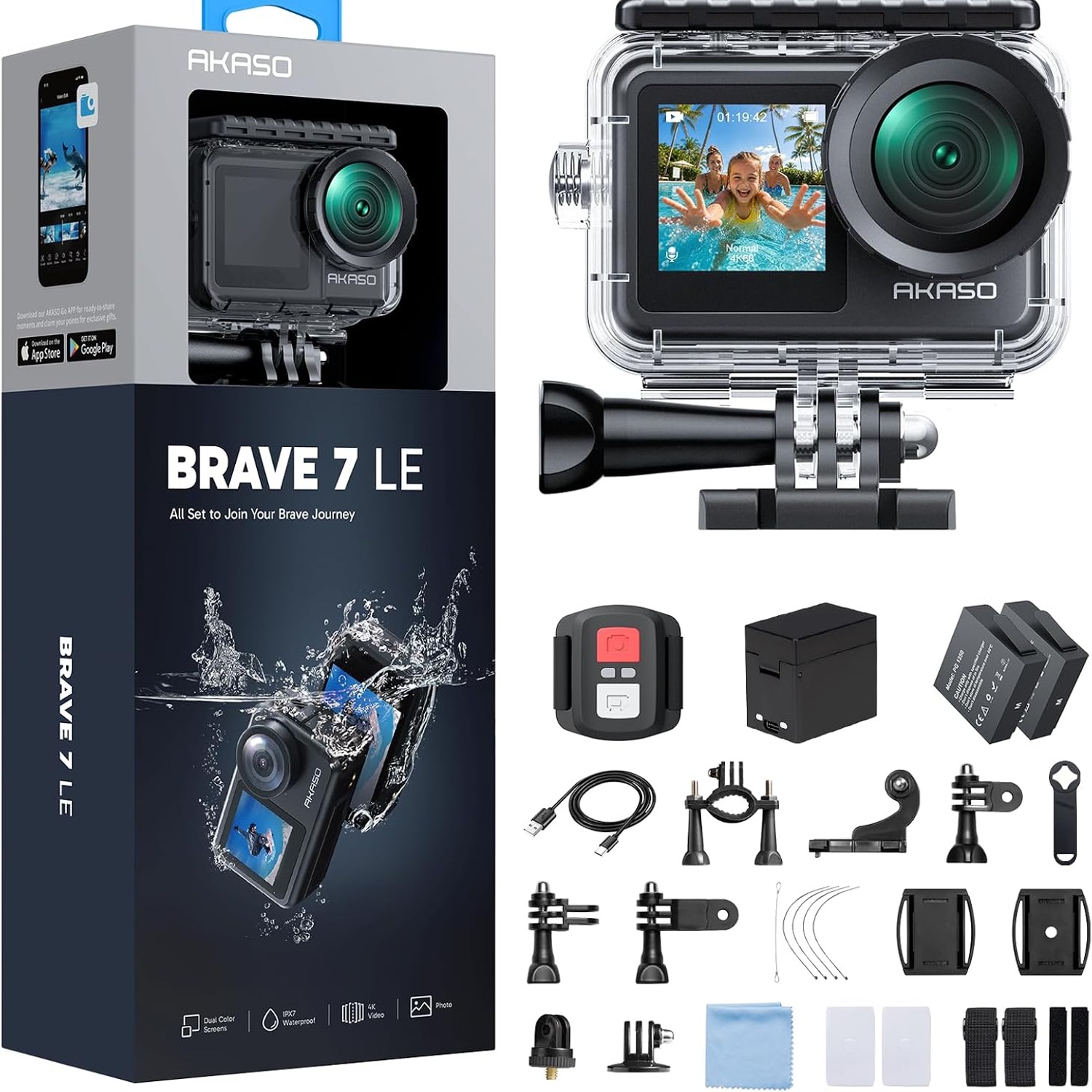
That is the exact problem a 4K action camera dual screen layout solves. One screen faces forward so you can see yourself while recording. The other sits on the back as a proper touchscreen for menus, settings and playback. You stop guessing, and you stop reshooting.
It sounds like a small thing. In practice it changes how often you actually use the camera, because the friction of setting up a shot drops away.
How a dual screen camera works
The front display shows a live preview from the lens. It is smaller and simpler than the rear screen, but it does the one job that matters, confirming you are in frame and in focus before you start talking. Hold the camera at arm's length, glance at the front, adjust, go.
The rear 2-inch touchscreen is where you do everything else. Changing resolution, switching to time lapse, scrubbing through clips you just shot. Touch controls are far quicker than button-and-menu navigation, especially with cold or wet fingers.
Underneath all of that, the recording side is straightforward. A CMOS sensor captures the image, the camera processes it, and the result lands on your memory card as an MP4 file at up to 4K. MP4 is a format every phone, laptop and editing app understands, so there is no awkward conversion step.
Why stabilisation matters more than resolution
People shop for resolution numbers and then wonder why their footage looks amateur. Usually the problem is not sharpness, it is shake.
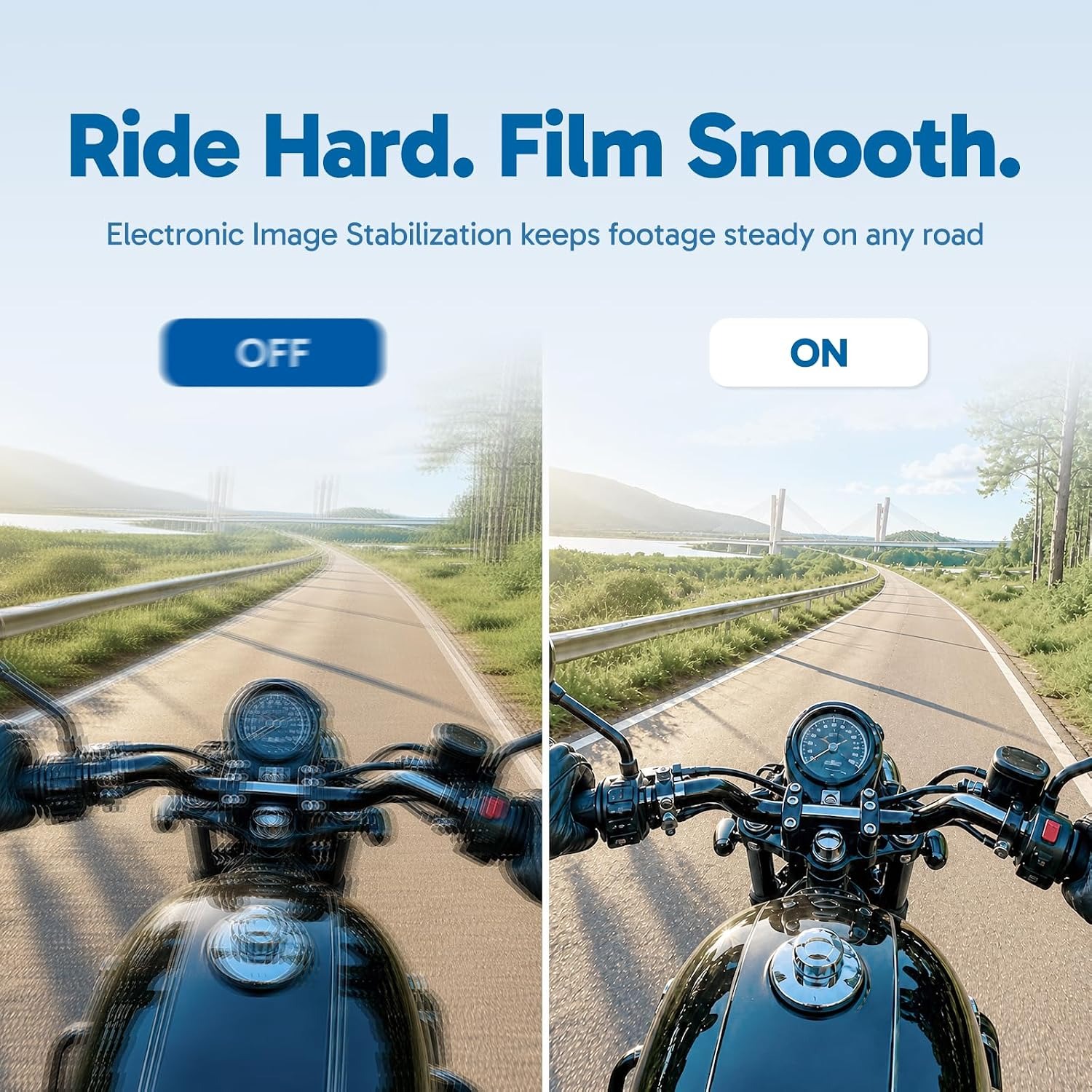
The Brave 7 LE uses electronic image stabilisation driven by a 6-axis gyroscope. The camera senses its own movement and compensates for it as it records, trimming the edges of the frame slightly to give itself room to correct. The effect is noticeable the moment you walk with the camera in hand. Footsteps turn from a bounce into a glide.
It is worth being realistic about what electronic stabilisation can and cannot do. Smooth repetitive motion, like walking, pedalling or paddling, it handles well. A hard jolt from a pothole or a bad landing will still register. Mounting the camera close to your body, low and firmly, does as much for stability as any software.
If you are weighing up the best 4k action camera options in this price range, put stabilisation performance ahead of headline megapixels. Sharp shaky footage is still unwatchable.
Going underwater
The camera body is weather resistant, which covers rain, drizzle, snow and splashes. That is enough for a kayak trip or a wet mountain bike ride where the camera gets soaked but never goes under.
For actual submersion you fit the included housing. Sealed inside, the camera is rated to 40 metres. That is a genuine underwater camera 40m rating, covering snorkelling, pool work and recreational dive depths.
A few habits make the difference between a camera that survives the water and one that does not. Check the seal before every single use, because one hair or grain of sand will let water in. Close the latch fully and feel for the click. After salt water, rinse the housing in fresh water with the camera still inside, then dry it completely before you open it, so no drips land on the camera itself.
Colour fades fast as you descend, with reds disappearing first. Shoot in bright, shallow water when you can, or plan on a colour correction pass in editing. People searching for the best underwater video camera often discover that lighting, not the camera, is what holds their footage back.
Who this camera suits
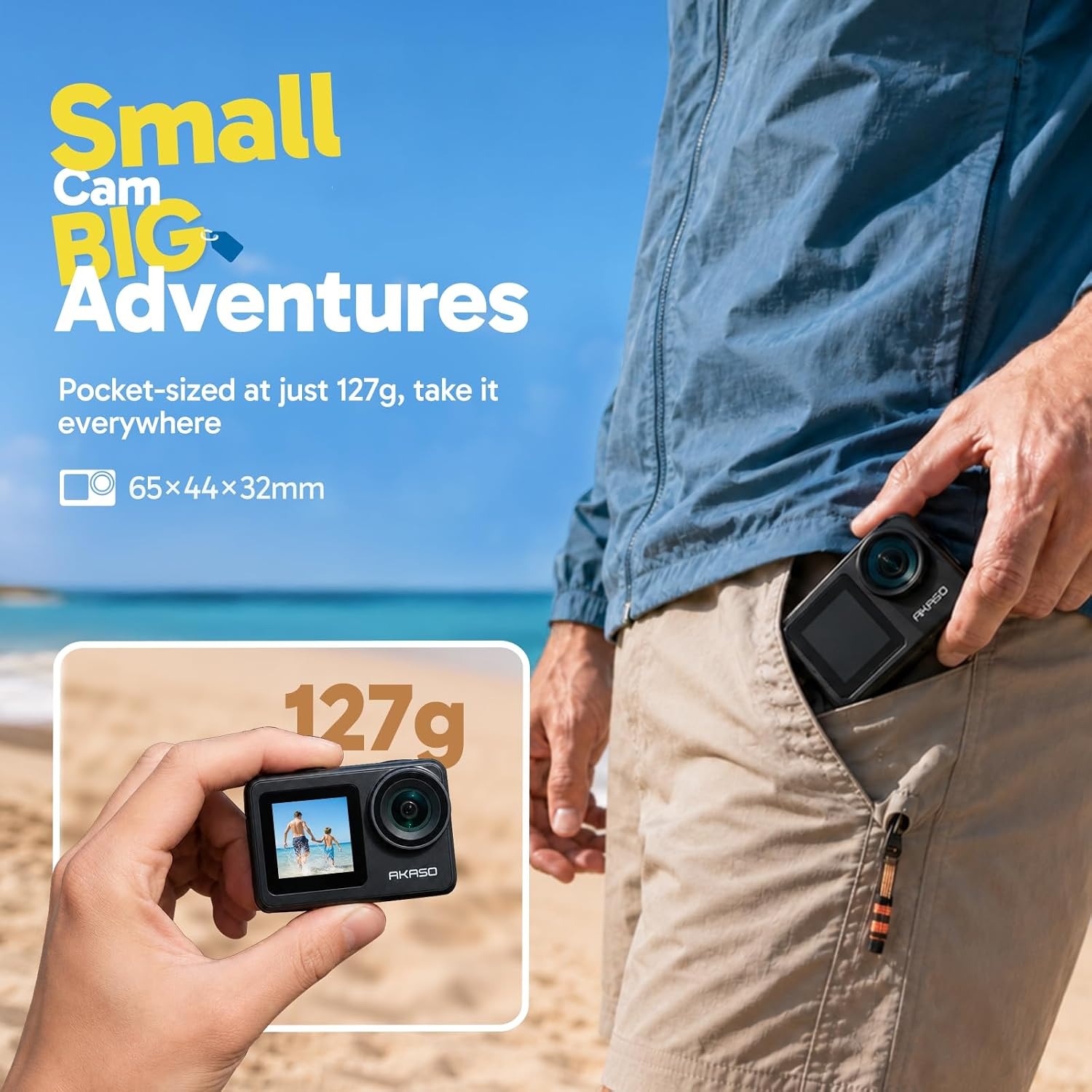
It fits people who want one small camera that handles a lot of different days.
Travellers get something that survives a backpack, films walking tours in 4K and goes snorkelling in the afternoon. Cyclists and riders get a mountable camera with stabilisation that copes with road vibration. Parents get a tough camera for pool parties and sports sidelines. New creators get a front screen that makes talking to camera far less awkward, which is why it lands on so many lists for the best dual screen action camera.
It is less suited to someone who needs professional-grade low-light video, interchangeable lenses or broadcast audio. An action camera is built around being small, tough and always with you. Those trade-offs are deliberate.
How to choose and what to add
Start with where the camera will spend most of its life. Mostly on a helmet or handlebars? Mounting options and battery swapping matter most. Mostly in your hand for vlogs? The front screen and stabilisation carry the weight. Mostly in water? The housing and your seal discipline decide everything.
Then sort out the memory card. The camera supports C10, UHS Speed Class 3 and V60 class cards. A card that meets those ratings keeps up with 4K without dropping frames. Buy from a brand you recognise through a seller you trust, because fake cards are common and they fail exactly when you are recording something you cannot repeat.
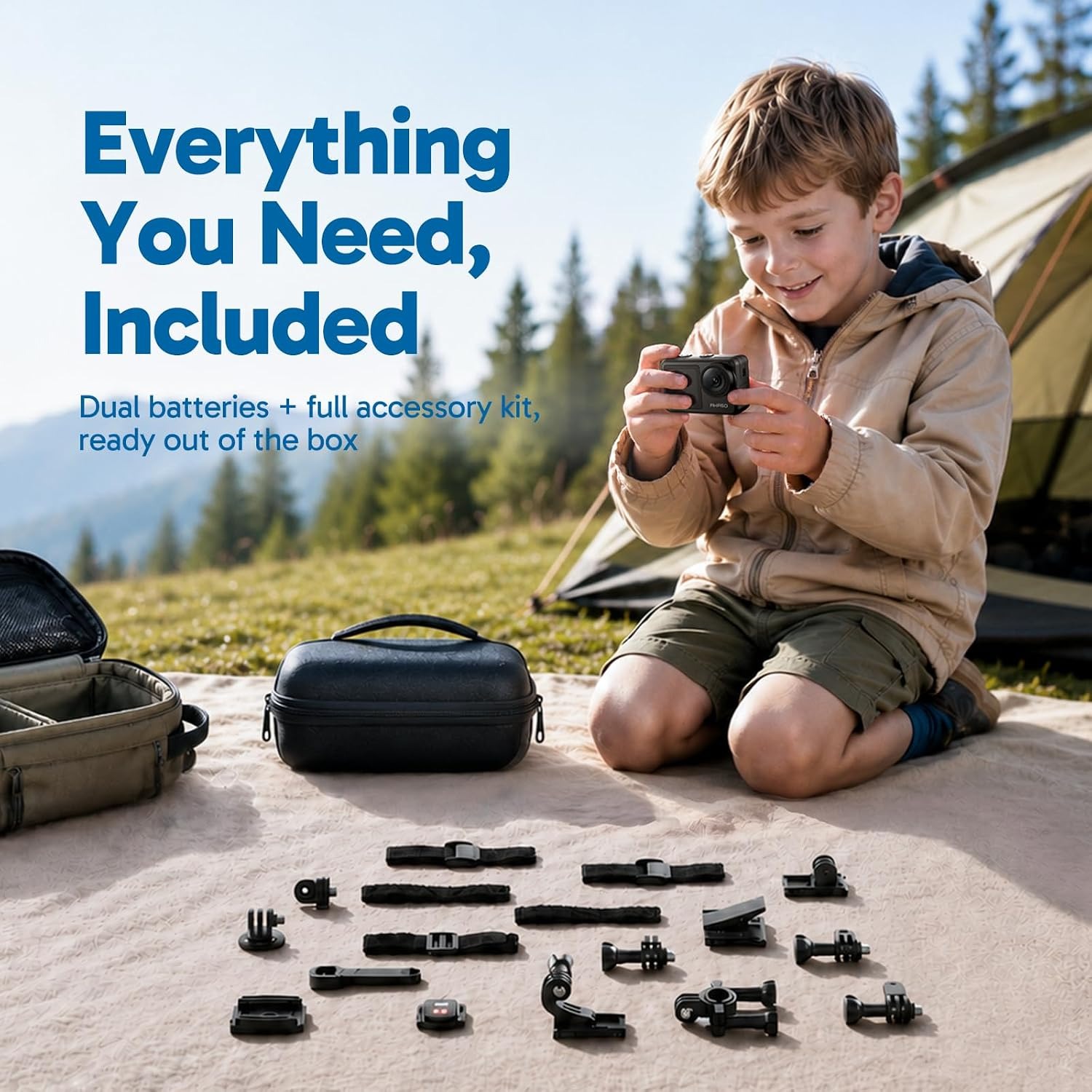
Two batteries come in the box, and that pair is enough for most half-day shoots. If you film all day, a third pack and a small power bank are sensible additions. The 2.4GHz remote is more useful than it first appears, particularly when the camera is mounted somewhere you cannot reach.
Think about the extra mount you will actually use. A chest strap gives a steadier, more natural viewpoint than a helmet mount for most sports. A simple clamp covers tripods, poles and handlebars. For anyone hunting the best action camera for cycling, a solid chest or frame mount usually beats adding more resolution.
Keeping it working
Care is simple and mostly about habit. Rinse the housing after salt and sand. Dry it before opening. Wipe the lens with a microfibre cloth, nothing else, since paper towel and shirt sleeves scratch coatings over time.
Store batteries partly charged in a cool, dry spot rather than flat or full for months on end. Keep the camera out of a hot car dashboard in summer. Check the housing gasket for wear every so often, and replace it if it looks flattened or cracked.
Back up your footage the same day where you can. Memory cards are the weakest link in any camera system, and a card reader plus a cheap external drive solves it.
The short version
This is a compact 4K camera with a front screen for framing yourself, a 2-inch rear touchscreen for everything else, electronic stabilisation to smooth your shots, and a waterproof housing rated to 40 metres. Two batteries, a remote and a mounting kit come with it, so the only thing you really need to add is a fast memory card.
If you film yourself, travel, ride or swim, the dual screen is the feature that will change how often the camera leaves the bag. Everything else is a bonus.