



The complete guide
How to Choose a 4K Action Camera Bundle That You Will Actually Use
The problem with buying a camera in pieces
Plenty of people buy an action camera, get it home, and discover it will not record anything. There is no memory card in the box. The battery lasts under an hour. The waterproof housing, the one thing that made the camera appealing in the first place, is sold separately. The mounts needed to stick it to a helmet or a handlebar are another purchase again. By the time it is usable, the price has quietly climbed by half.
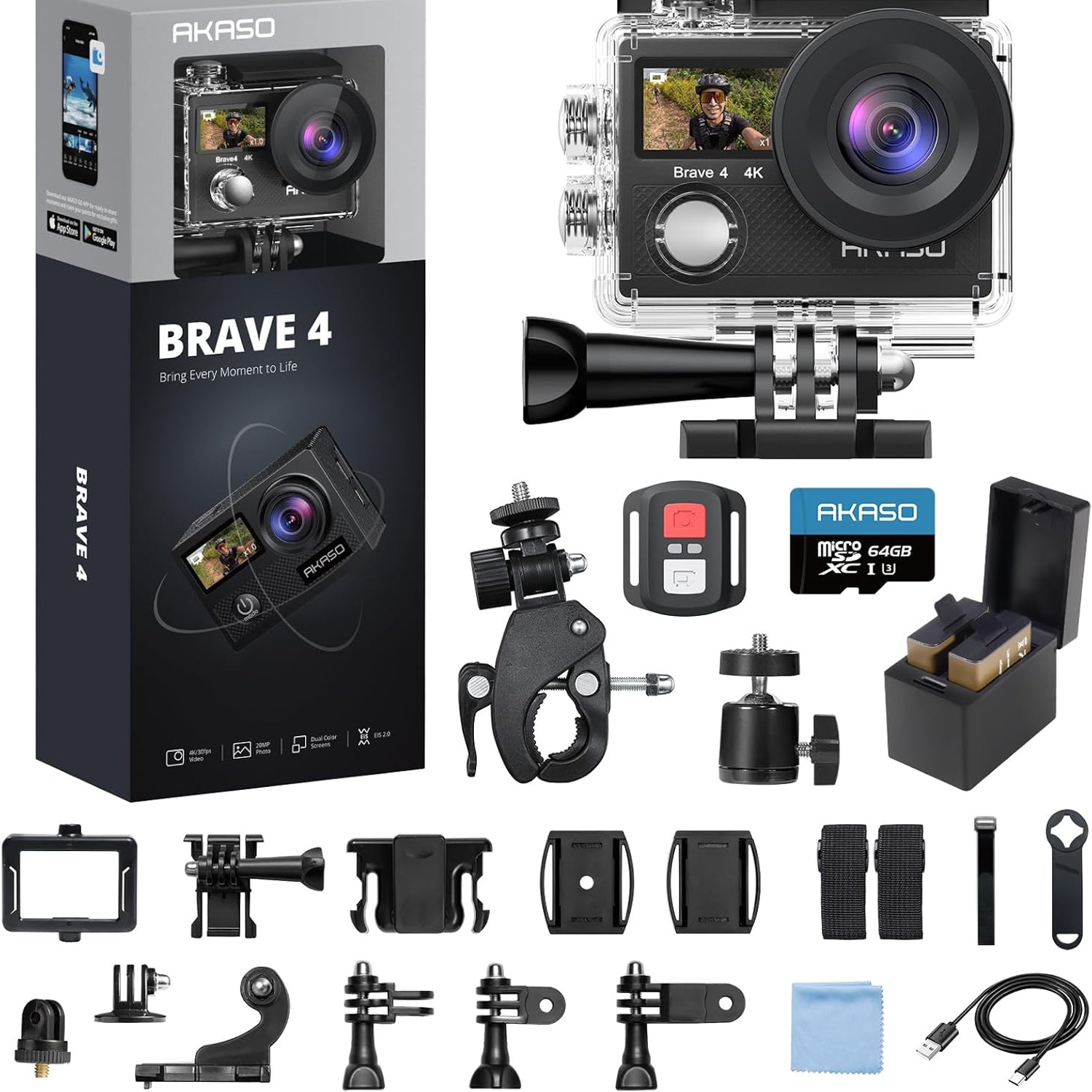
That is the gap a bundle fills. A 4K action camera with 64GB card, two batteries, a dual charger, a waterproof case and a mount kit is ready on day one. You charge a battery, slot the card in, and go. For most buyers that is worth more than an extra spec or two on a bare camera body.
What 4K actually gets you
4K means the video is recorded at 3840 pixels wide, roughly four times the detail of standard 1080p. On a phone screen the difference is subtle. On a laptop or a television it is obvious, especially with detailed scenes like water, trees or snow.
There is a second benefit that people forget. More pixels mean more room to crop. If your helmet mount sat a little low and the horizon is in the wrong third of the frame, you can crop into a 4K clip and still finish with a clean 1080p video. That flexibility is genuinely useful when you are filming things you cannot repeat.
This camera also takes 20MP stills saved as JPEG, which is enough for prints at normal sizes and plenty for sharing online. Video comes out as MP4, a format that opens in every editor, phone app and media player without any conversion step.
Stabilisation is the feature that decides whether you keep the footage
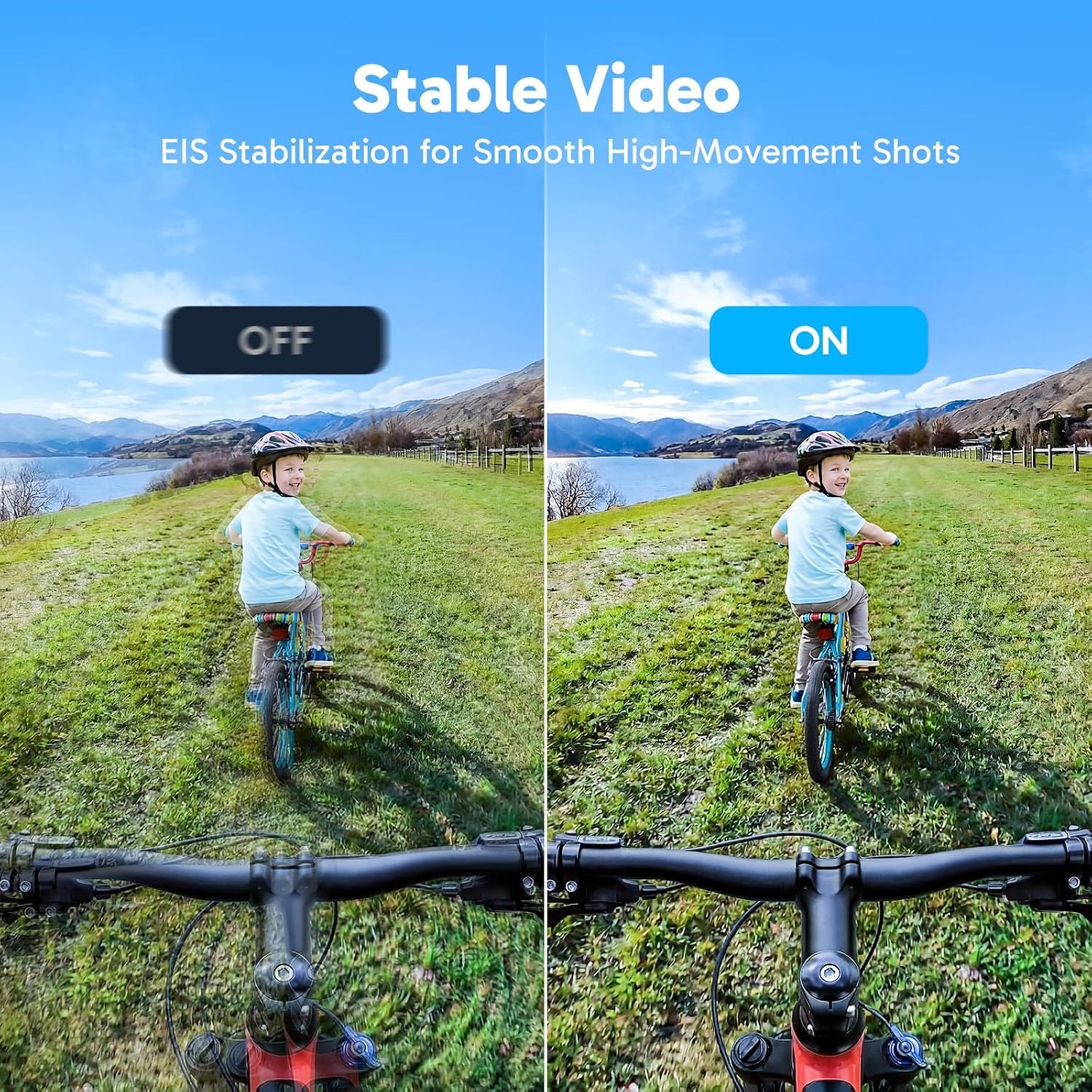
Resolution gets the headlines. Stabilisation decides whether anyone watches the result. Action cameras get strapped to things that vibrate. Bike frames buzz, helmets bob, boats slap against chop. Without some smoothing, footage comes back twitchy and hard to watch.
This model uses hybrid stabilisation with a built-in gyroscope. The camera senses small movements and compensates for them, which flattens out most of the shake you get from riding, running and handheld shooting. It will not perform miracles with a camera bolted to a rally car bonnet, but for everyday adventure use it is the difference between a watchable clip and one you quietly delete.
Mounting technique helps too. A short, rigid mount shakes less than a long flexible arm. Tighten everything properly. Check the clamp again before you set off.
Choosing your view angle
Most action cameras default to the widest setting and leave it there. You get four to choose from here, at 170, 140, 110 and 70 degrees, and knowing when to change them is a small skill that pays off.
Use 170 degrees for fast, immersive action. Downhill runs, surf, tight singletrack. Everything fits in frame and the sense of speed is exaggerated.
Drop to 110 or 70 degrees for anything where straight lines matter. Talking to camera, filming a building, shooting someone a few metres away. The fisheye curve disappears, faces look more natural, and the shot feels closer to what your eye sees. For anyone after the best vlogging action camera setup on a budget, this narrower setting is the one to learn.
Water, dust and general abuse
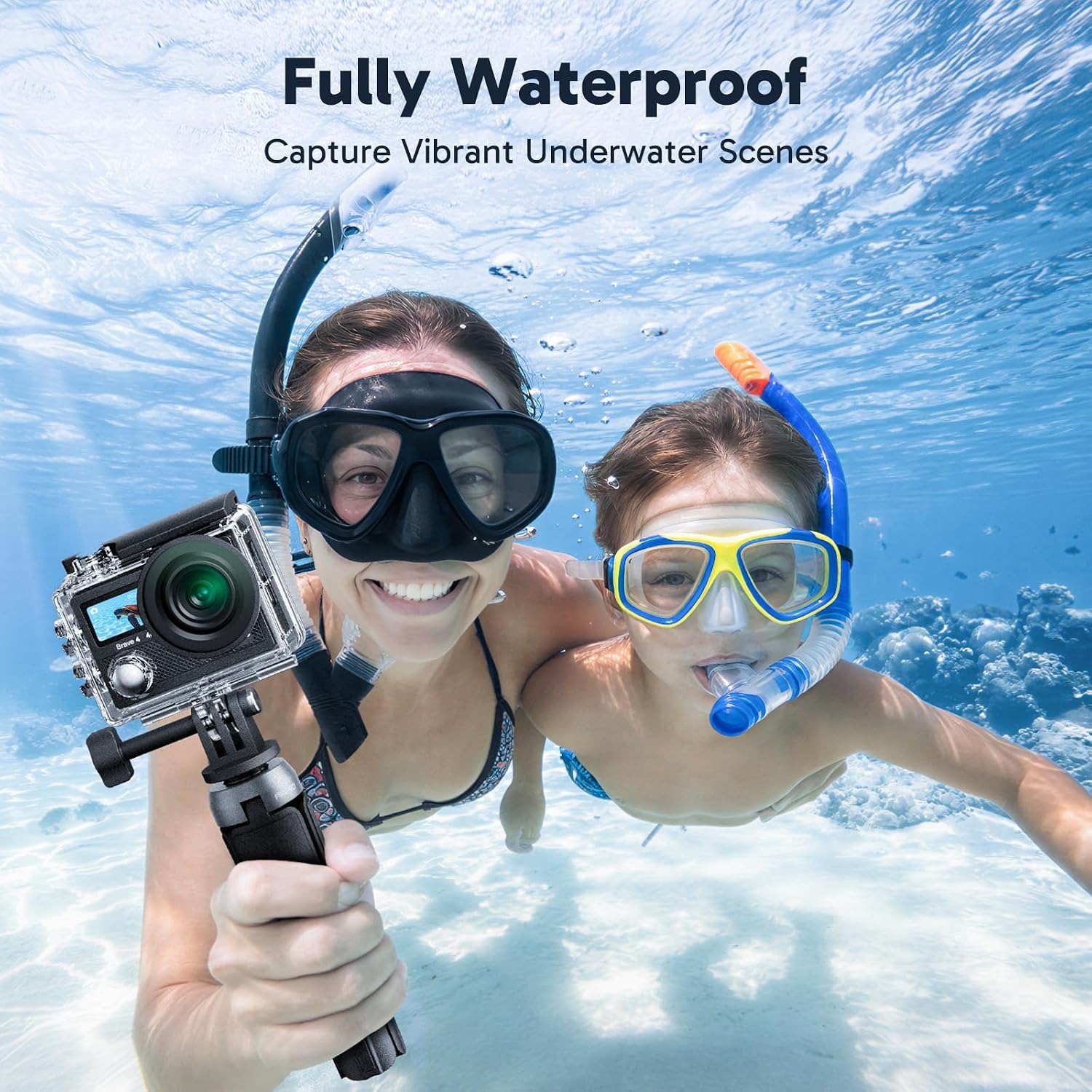
The waterproof case is what turns this from a small camera into a sports camera. Sealed inside it, the camera goes down to 40 metres, which covers pool swimming, river trips, snorkelling and recreational diving. Surfers and kayakers get splash protection far beyond what any bare camera offers.
The case also earns its keep on dry land. Mud, dust, rain and the occasional drop onto rock all hit the housing instead of the camera. On a dusty trail day, leaving it in the case is simply the easier choice.
Two rules keep a case working. Keep the seal clean, since a single hair or grain of sand will let water in. And rinse it in fresh water after any salt water or chlorine use, then dry it with the latch open. Salt crystals are what kill housings over time, not the water itself.
The two screens, and why they matter
A 2-inch rear screen handles the usual jobs of framing, playback and menus. The 0.96-inch front screen is the one that changes how you shoot. When the camera is pointed at your face, you can see yourself, which means you stop guessing whether your head is cut off or you are standing too far left.
Anyone who has reviewed a holiday's worth of clips and found their own forehead missing from half of them will understand the appeal. It is a small screen doing a genuinely practical job.
Power and the two-battery habit
Two rechargeable 1050mAh batteries come in the box, each good for up to around 90 minutes of recording. The USB dual charger tops both up outside the camera. The habit worth building is simple. One battery shoots while the other charges, then you swap at a natural break.
Real-world run time varies. Recording in 4K draws more power than lower resolutions. Wi-Fi running in the background costs you time. Cold weather hits battery capacity hardest of all, so on ski days keep the spare in an inside pocket where your body heat looks after it.
Getting footage off the camera
Wi-Fi pairs the camera with the free app on a phone or tablet. From there you can preview a shot live, check what you have recorded and pull files across for editing or posting. That removes the laptop from the process entirely, which matters when you are travelling.
For showing footage to other people, the HDMI port connects straight to a television. Clips play on the big screen with no file copying at all. It is the easiest way to run through a trip with family on the couch.
Who this suits
Riders, swimmers, divers, skiers, travellers and parents filming kids all land in the right territory here. So does anyone who wants video of something they are doing rather than something they are watching, and who does not want to risk a phone to get it.
It is also a reasonable gift. Because the card, batteries, charger, case and mounts are all included, the person opening it is not left with a shopping list. They can use it that afternoon.
Care that makes it last
Rinse and dry the case after water use. Wipe the lens with a microfibre cloth, never a paper towel. Store the camera and batteries somewhere cool and dry, and give the batteries a top-up every few months if the camera sits unused. Check mount screws before each session, because vibration loosens things slowly and you tend to notice only after something has fallen off.
The short version
This is a complete kit rather than a camera body. You get 4K video at 30fps, 20MP photos, hybrid stabilisation, four view angles, two screens, Wi-Fi, HDMI, a case rated to 40 metres, two batteries with a dual charger, a mount kit and a 64GB card. For a first action camera, or for a second one you do not mind strapping to risky places, that covers the ground without a string of extra purchases.