
The complete guide
How to Choose a Mini Tabletop Tripod That Actually Holds Your Camera
The problem with holding a camera in your hands
Modern cameras are very good at hiding small mistakes. Image stabilisation smooths out a shaky grip, and higher ISO settings rescue dim rooms. But there is a limit. Once the light drops, once you want a longer exposure, or once you need the exact same framing twice in a row, hands stop being good enough. Shots come out slightly soft, horizons tilt a degree or two, and two photos of the same object never quite line up.
The usual answer is a tripod. The usual problem with a tripod is that the good ones are big. A full sized travel tripod folds to about 40 to 50cm and weighs two kilos or more. That is fine when you planned the shoot. It is not fine when you are carrying a camera around a city, sitting at a cafe table, or setting up a quick product photo on the kitchen bench.
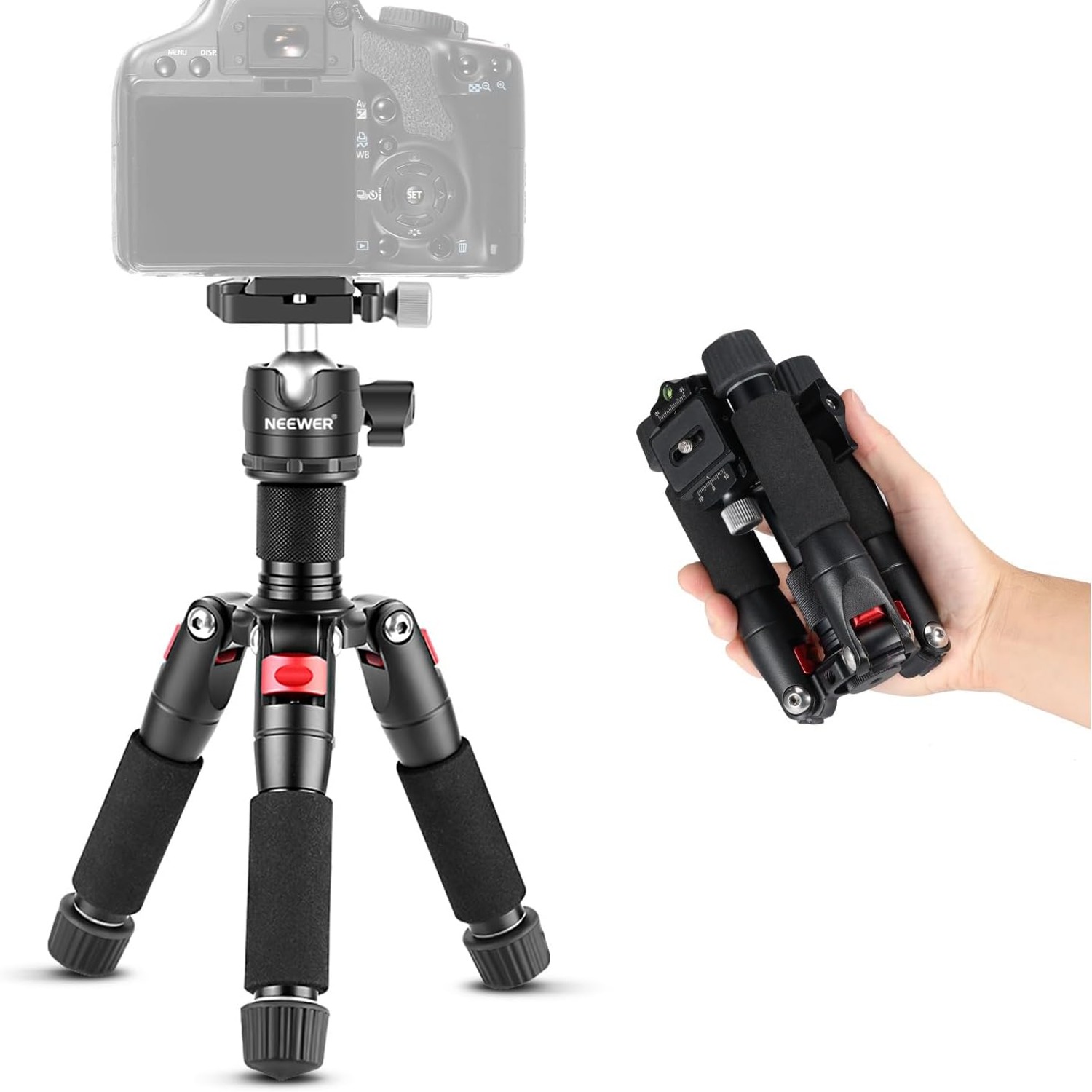
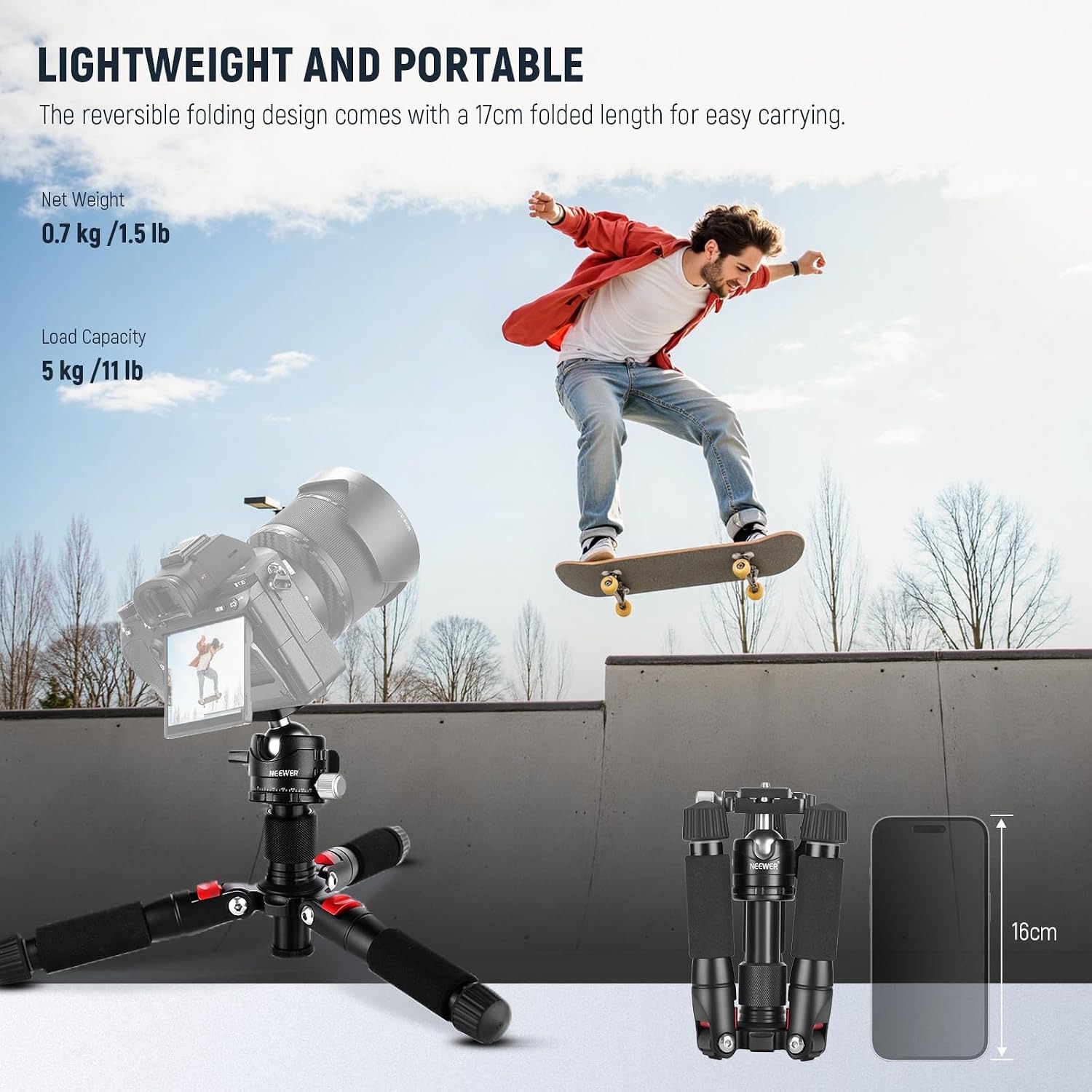
A mini tabletop tripod fills that gap. It is short, light and designed to work on whatever flat surface is near you. The trade off is reach. You are not getting standing eye level out of a stand that folds to 17cm. What you are getting is something that comes with you every single time, which is worth more than a taller tripod that lives in a cupboard.
How this one works
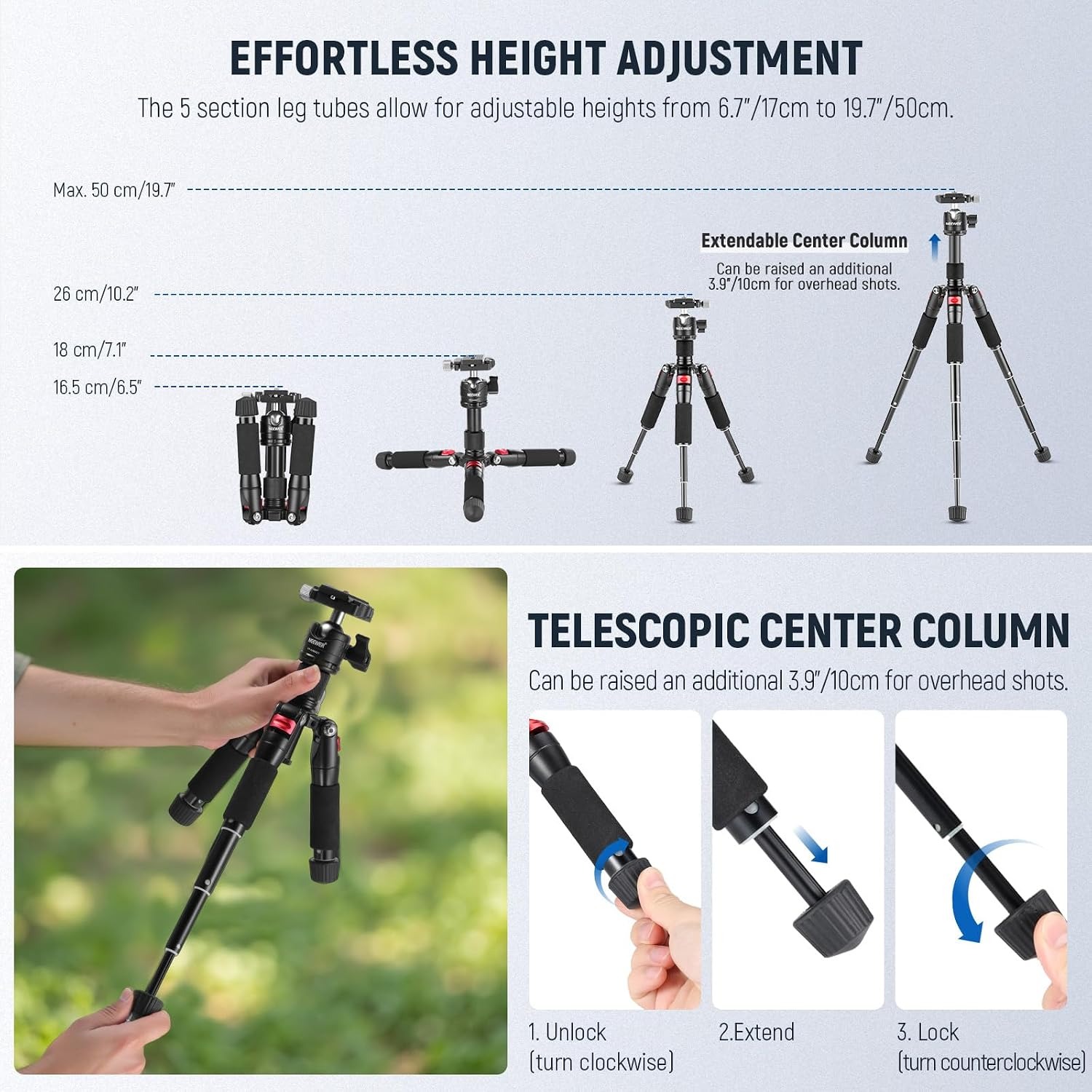
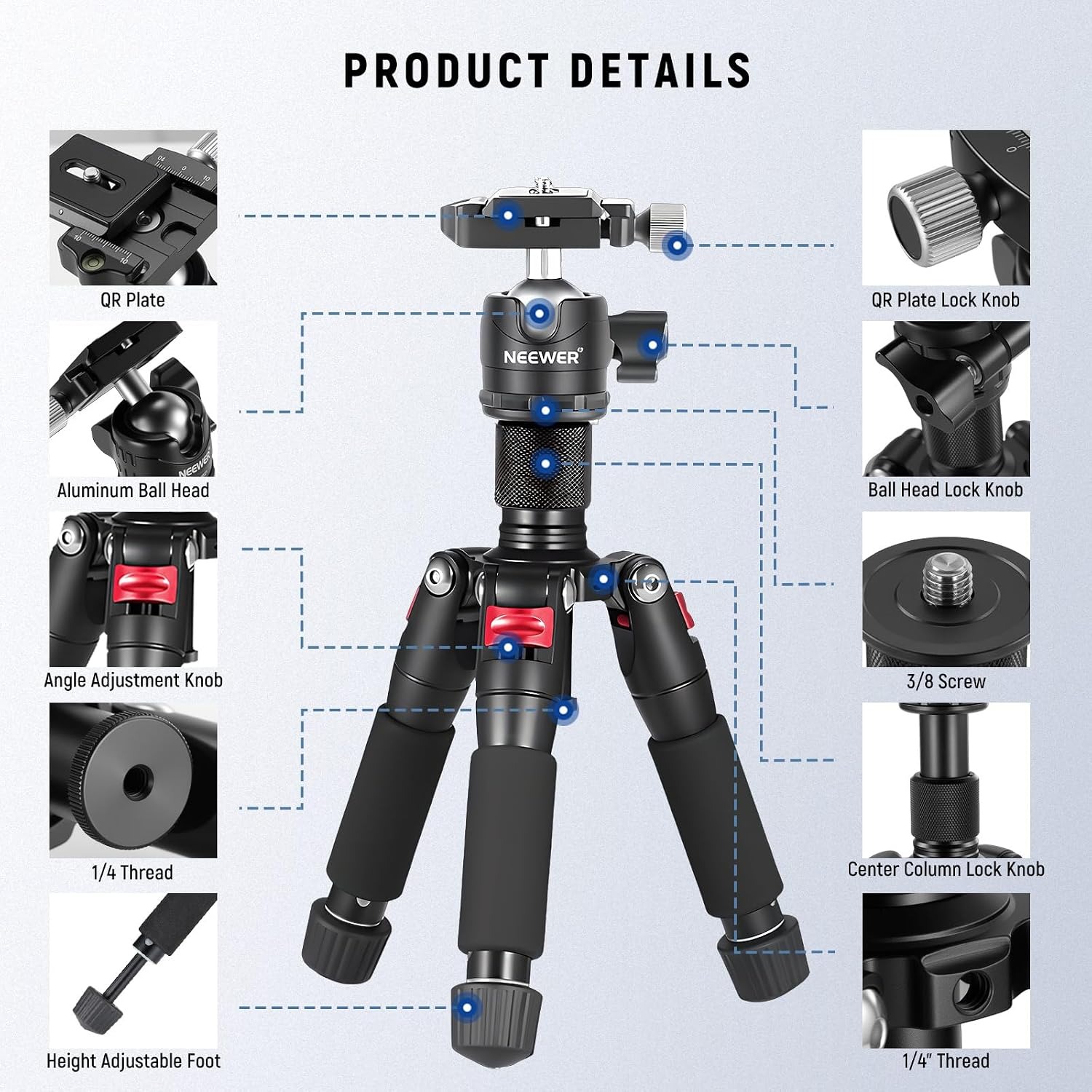
The legs are aluminium alloy, split into five sections. Five is more than most small tripods use, and it is the reason the height range runs from 17cm closed all the way to 50cm extended. Each section twists or pulls out to the length you want, so you can set the tripod low for a close up and then raise it for a wider shot without changing anything else.
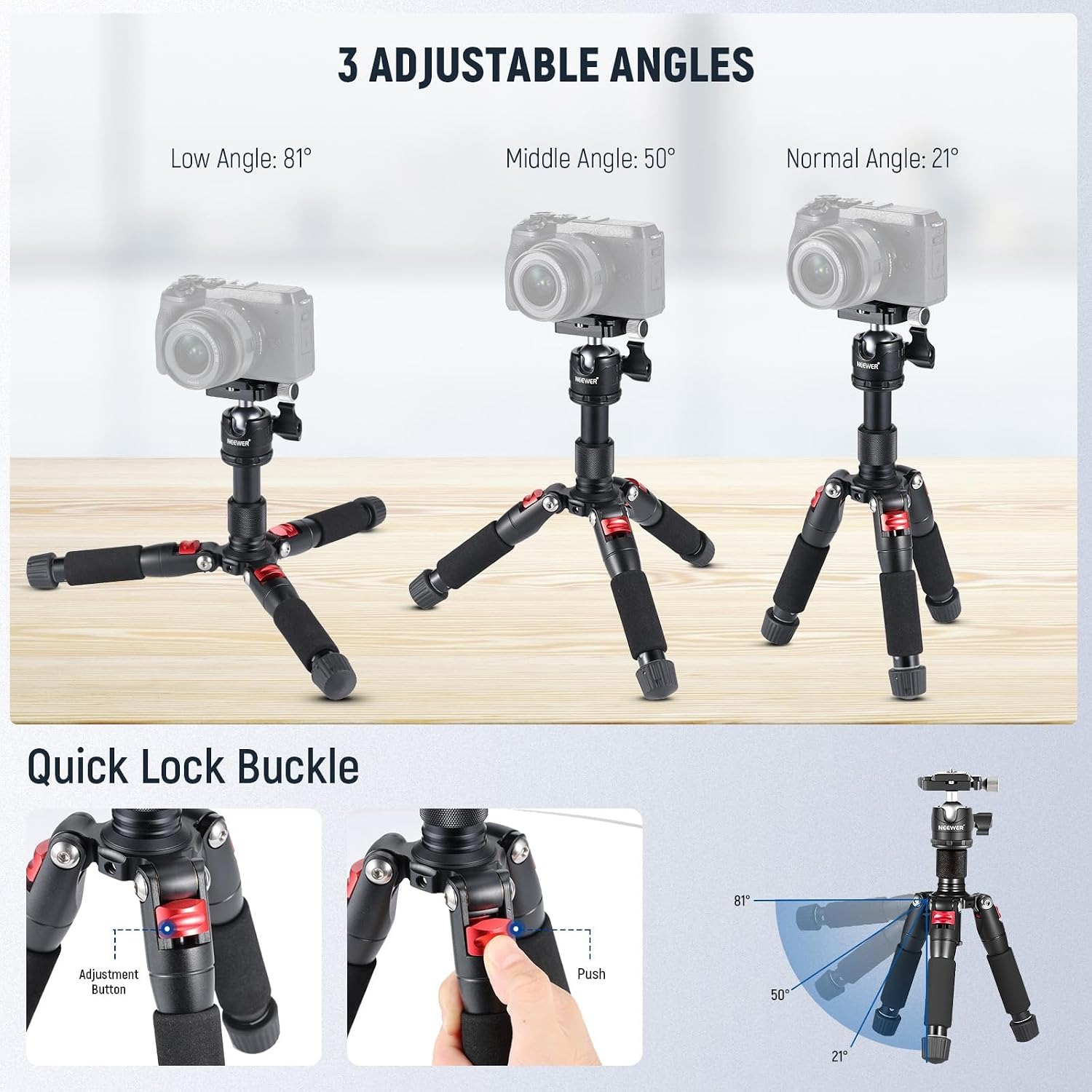
Each leg also has three angle positions. This is the feature people overlook and then rely on constantly. In the narrow setting the legs sit close to vertical and you get maximum height. The middle setting gives a wider footprint and more stability. The widest setting pushes the legs out almost flat, which drops the camera right down near the surface. That last position is how you shoot a low angle without lying on the floor.
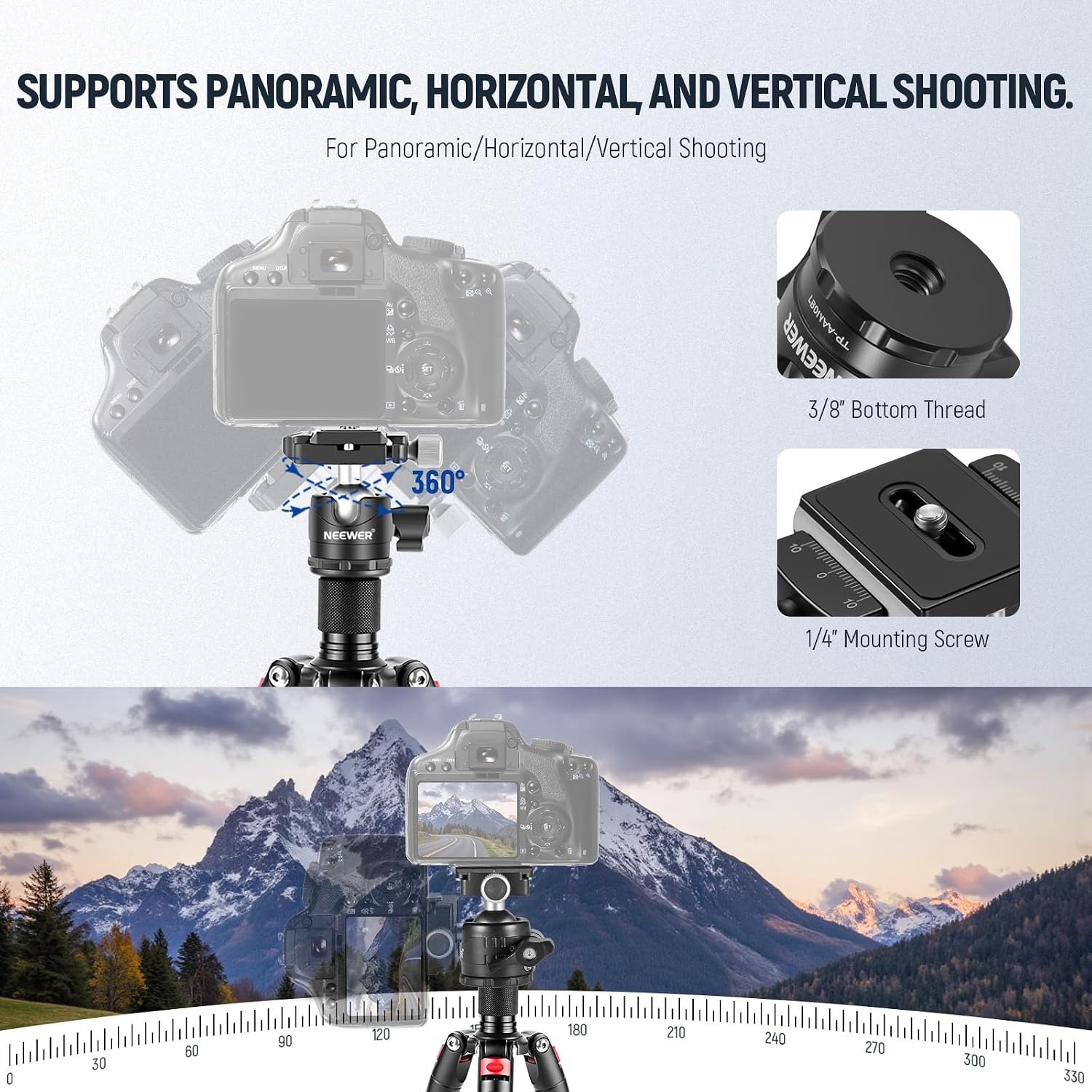
On top is a 360 degree ball head. A ball head is simply a sphere held in a socket. Loosen the knob and the camera tilts and swivels freely in any direction. Tighten it and the position locks. It is faster than the three separate handles on a pan and tilt head, and on a small tripod the speed matters more than fine control. A bubble level is built in so you can check the camera is sitting straight before you shoot.
The camera attaches through an Arca type quick release plate. The plate screws onto the base of your camera using a standard 1/4 inch thread, and then clips into the head. Once that plate is on, mounting the camera takes about a second. Most people leave the plate attached permanently.
The whole thing weighs 0.77 kg and is rated to carry up to 5kg. That rating is the number to pay attention to when deciding if it fits your gear.
Who it suits
If you shoot small things close up, this is an easy recommendation. Jewellery, food, models, plants, repair work and anything else where the camera needs to be near the subject all benefit from a stand that goes down to 17cm. A best tripod for macro photography does not need to be tall, it needs to be low and steady, and that is exactly what this does.
Desk based creators are the other obvious group. If you record videos at a desk, run a streaming setup, or take video calls with a real camera instead of a webcam, 50cm puts the camera at a sensible height next to a monitor. The quick release plate means you can pull the camera off between sessions and put it back in the same spot.
Travellers get value out of it too, just in a different way. You are not using it for landscape work from a cliff edge. You are using it on a cafe table, a wall, a bench or a car roof for self portraits, group shots and night photos where a two second exposure makes a real difference. A best portable travel tripod in this category earns its place through sheer convenience.
The people it suits least are those who need standing height outdoors, or who shoot with heavy telephoto lenses. If your usual setup is a big body plus a 70 to 200mm lens, you are at or past the 5kg limit once you add a plate and a filter, and you want a larger tripod with a bigger head.
How to choose
Start with weight. Add your camera body, the heaviest lens you use on it, and anything else that lives on top, like a microphone or a small light. If the total comes to 5kg or less, you are within the rating. If it is close to the limit, remember that load ratings assume a balanced camera sitting still rather than a long lens hanging off the front. Staying comfortably under the limit is always better.
Next, think about height honestly. Measure how high above your desk you want the camera to sit. Then check whether the surfaces you shoot from are actually available. A tabletop tripod needs a table. If half your shooting happens on footpaths and in parks with nothing to put it on, a small tripod will frustrate you no matter how good it is.
Then look at the head. Some cheap small tripods use a plastic ball that creeps under weight, meaning the camera slowly droops after you lock it. A metal head with a proper locking knob and a quick release plate avoids that. The bubble level is a small addition that saves time on every shot.
Finally, consider the leg count. More sections mean a greater height range but also more joints. Five sections, as here, is a reasonable balance for a tripod of this size. Extend the thicker upper sections first and leave the thinnest ones for last, since the top sections are the stiffest.
Looking after it
Aluminium tripods are forgiving, but a few habits keep them working smoothly. The main enemy is grit. Sand and dust get into the leg joints, and if you force a dirty section closed you grind that grit into the metal. Brush or wipe the legs down before collapsing them, especially after a beach or a building site.
Water is the other one. This tripod is not water resistant, so dry it off if it gets rained on and leave the sections extended until everything has dried through. Folding a wet tripod away traps moisture inside the legs.
Check the quick release plate screw now and then. Plates loosen gradually through normal handling, and a loose plate is the most common way a camera ends up tilting unexpectedly. A quick thumb check before each session is enough.
Store it dry, out of direct sun, and without heavy objects resting on it. That is really all it needs.
The short version
This is a 0.77 kg aluminium tripod that goes from 17cm to 50cm, carries up to 5kg, and has a 360 degree ball head with a bubble level and a quick release plate. It will not replace a full sized tripod for standing height work outdoors. It will give you steady shots on tables, benches and desks, drop low for close ups, and fit in a bag you were carrying anyway.
If you shoot small subjects, work at a desk, or just want something steady that comes with you without thinking about it, the size is the whole point. Check your camera and lens weight against the 5kg rating, make sure 50cm is tall enough for how you shoot, and you will get a lot of use out of it.