
The complete guide
How To Choose An Endoscope Inspection Camera
The problem with not being able to see
Half of the time lost on a repair job is spent getting eyes on the fault. You suspect a blockage in the trap, but you have to pull the whole thing apart to confirm it. You think a cable runs behind that section of wall, so you cut an inspection hole and hope. You want to know if a cylinder has scoring without stripping the head off. Every one of those jobs ends the same way, with you pulling something apart to answer a question that could have been answered in thirty seconds.
An inspection camera removes the guessing. You feed a lit camera into the space, look at your phone, and you know. If the answer is "it is fine", you stop. If the answer is "there is a nest of lint 1.5 metres in", you know exactly where to attack it. Either way you have stopped taking things apart speculatively, which is where most of the wasted hours go.
How a borescope actually works
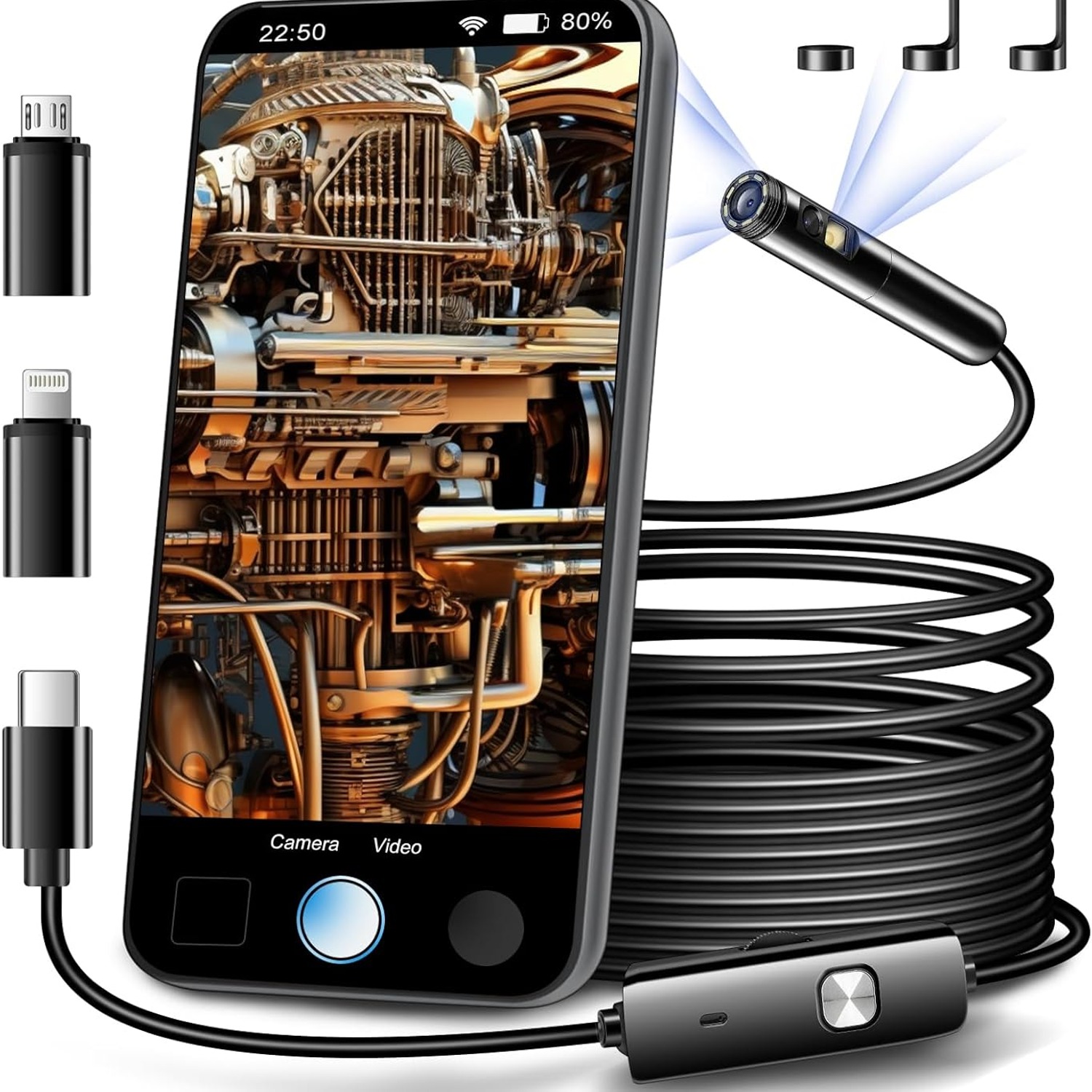
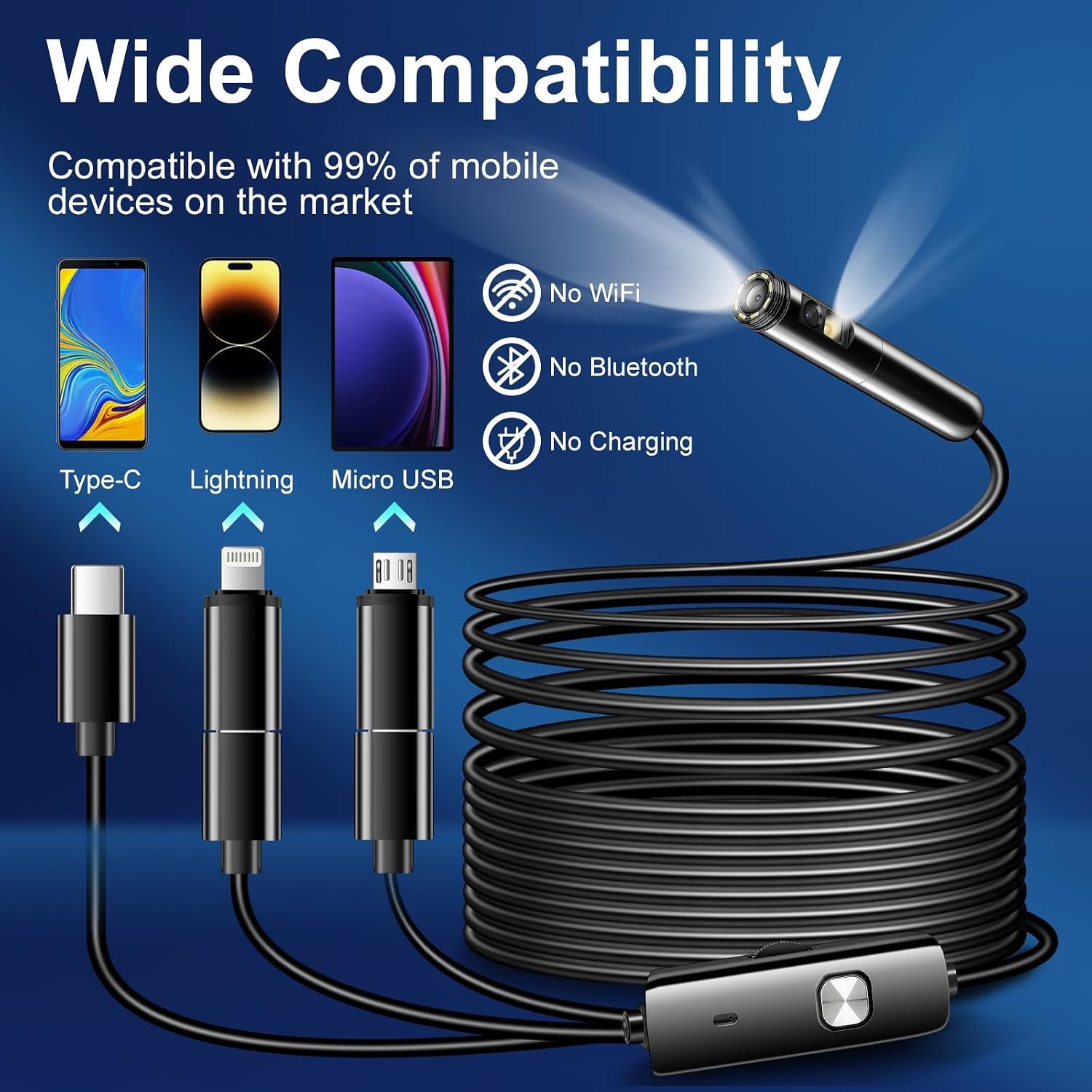
The idea is simple. A tiny CMOS sensor sits behind a lens at the end of a long cable, surrounded by LEDs so it can see in the dark. The cable carries power and data back to whatever you have plugged it into. On this model the connection is USB-C, with Micro-USB and Lightning adapters supplied, and the image appears in the Usee Plus app on your phone or tablet.
Because it is a wired connection there is no pairing, no hotspot and no lag. Wireless borescopes have their place, but they add a layer that can fail at the worst moment, usually when you are lying under a car with one arm in a wheel arch. A cable just works.
The sensor here captures 1080p video and 2.07 MP stills, with automatic exposure and an ISO range of 100 to 6400. That ISO range is the quiet detail that matters. It means the camera adjusts across a bright garage and a black drain without you doing anything. Recording saves as MP4 straight to your device, which makes it easy to send to a tradesperson for a second opinion.
Why two lenses change the job
A lot of cheap probes have one forward-facing camera. That is fine if you only ever need to look at what is directly in front of the tip. In practice, most of what you want to inspect is on the side wall of whatever you have pushed the camera into.
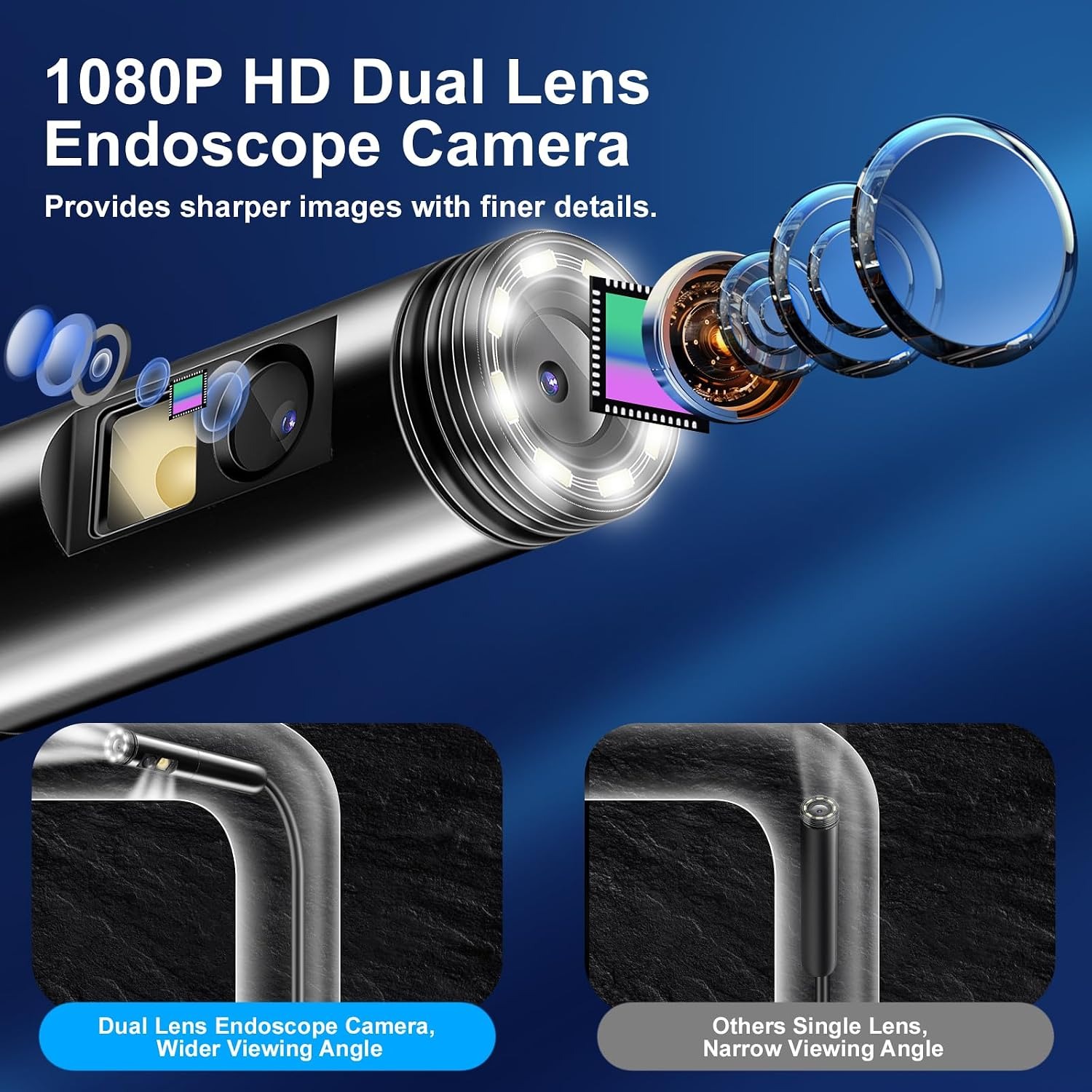
This camera has a 1080p lens facing forward and a second 1080p lens facing sideways, both in the same head. You switch between them from a panel on the cable. Inside a pipe, the front view tells you what is coming and the side view shows you the pipe wall as you pass it. Behind plasterboard, the side view reads the stud faces and the cable runs that the front lens would sail straight past. It is one of those features that sounds like a spec sheet item until the first time you use it, then it becomes the reason you reach for this tool over the old one.
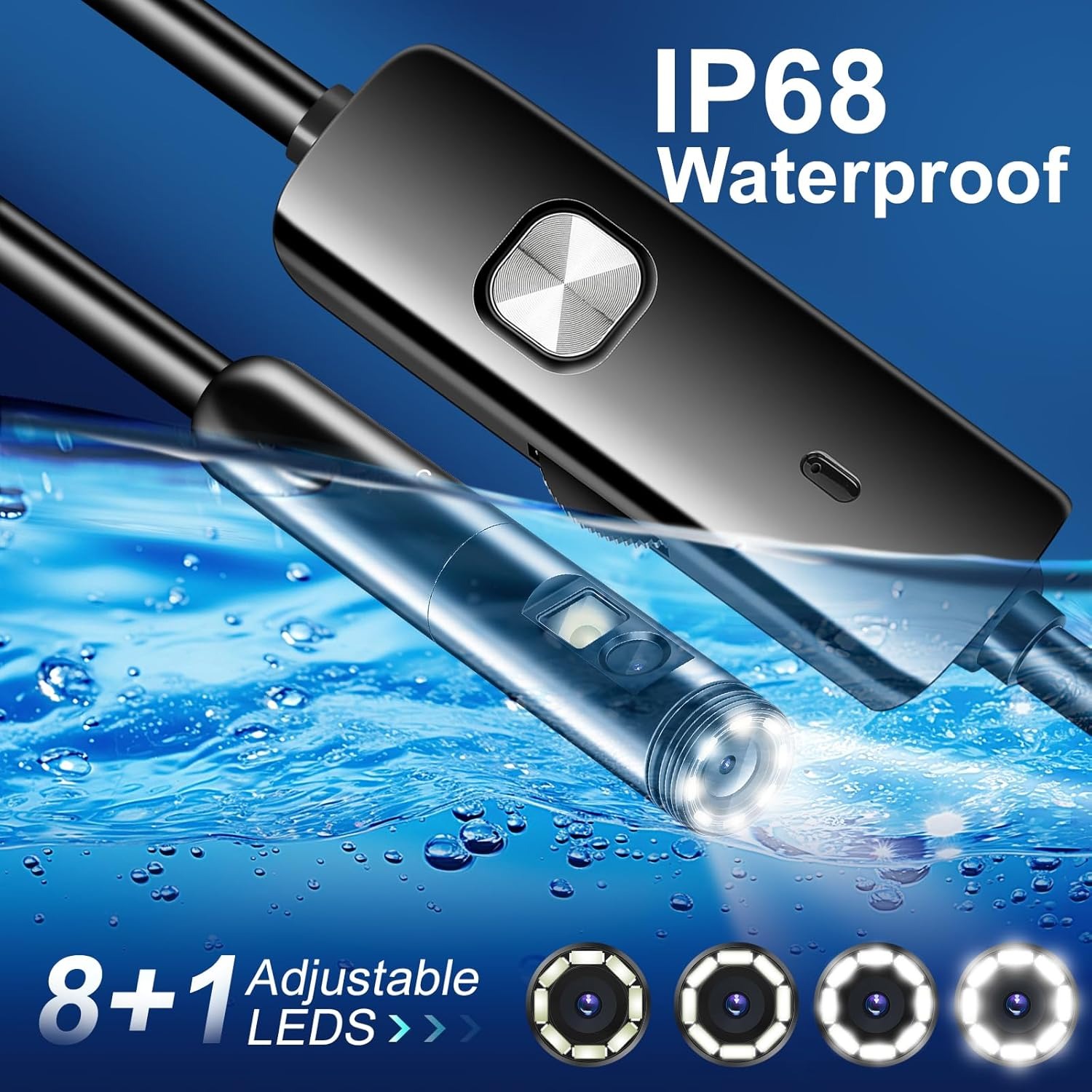
Each lens has its own lighting. Eight LEDs ring the front, and a single high-brightness LED sits next to the side lens. Both are adjustable. People often assume more light is always better, but on reflective surfaces like clean copper or white paint, full brightness just produces glare. Being able to dial it back is what gets you a readable picture.
The cable is the real difference between tools
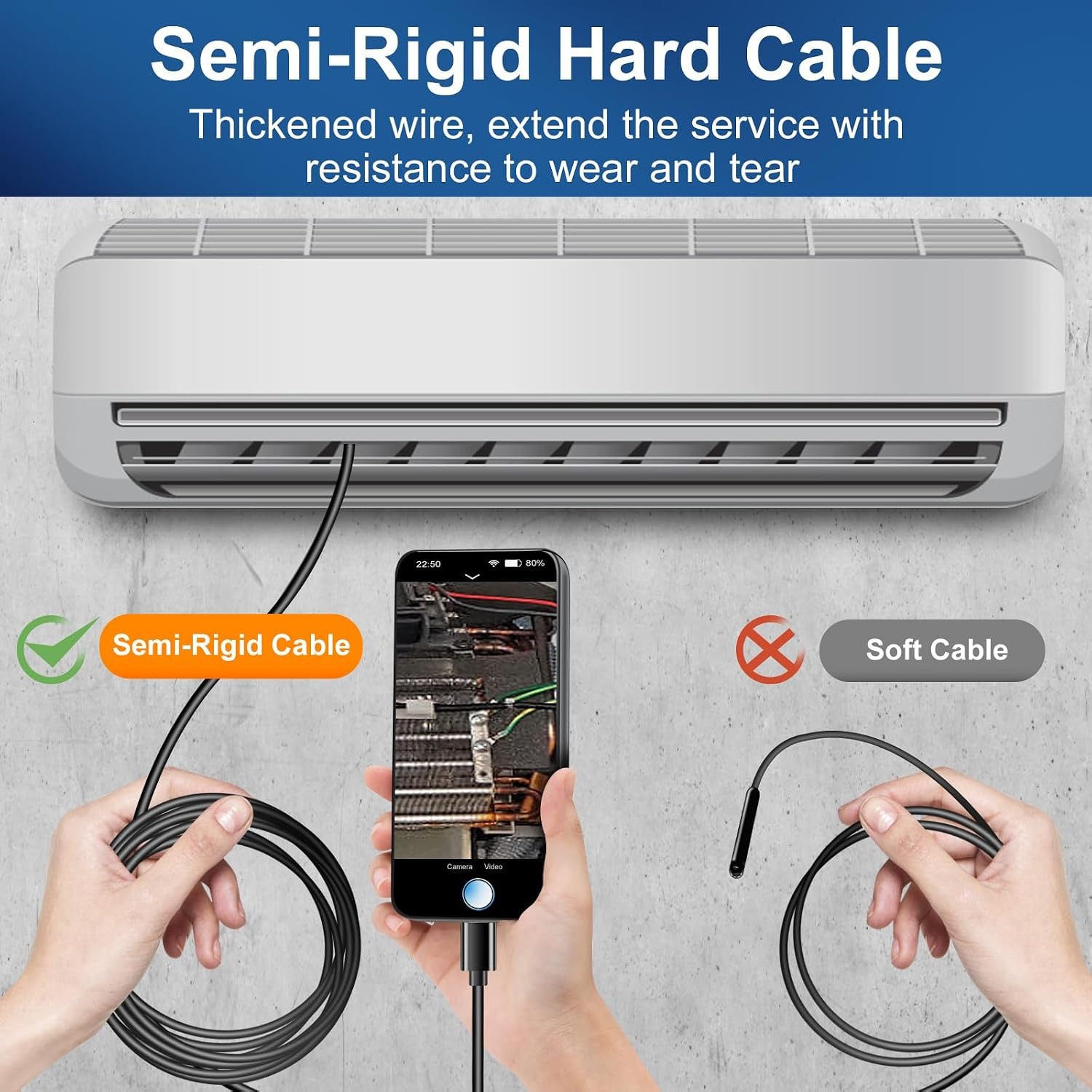
If you have ever used a floppy-cabled endoscope, you will know the frustration. You push, the cable concertinas, and the camera goes nowhere. You get it into position, let go, and it sags out of view.
A semi-rigid cable solves both problems. It is stiff enough to push without buckling and it holds the shape you bend into it. Put a soft 30 degree hook in the last section and the camera stays pointed at the thing you are looking at while you use both hands for something else. Steering around a bend in a duct becomes a matter of pre-bending the cable rather than hoping.
Five metres is a sensible length for the work most people do. It reaches the far end of a dryer vent run, gets well into a drain, spans an engine bay several times over and covers the depth of most wall cavities and floor voids. If your main need is 20 metre sewer mains, you want a different class of tool. For everything else, 5 metres is the sweet spot between reach and manageability.
Working in the wet
The camera head is IP68 waterproof, which is the part that matters for drain and plumbing work. You can run it into standing water in a trap or a sump without worrying. Afterwards, you can rinse the probe under a tap and dry it off.
One rule to remember, and it applies to every wired borescope on the market. The waterproofing covers the probe and cable, not the connector or the control panel. Keep that end out of the water and out of the rain. If you are working somewhere wet, keep your phone in a dry pocket or bag with just the cable running out to the job.
Who it suits
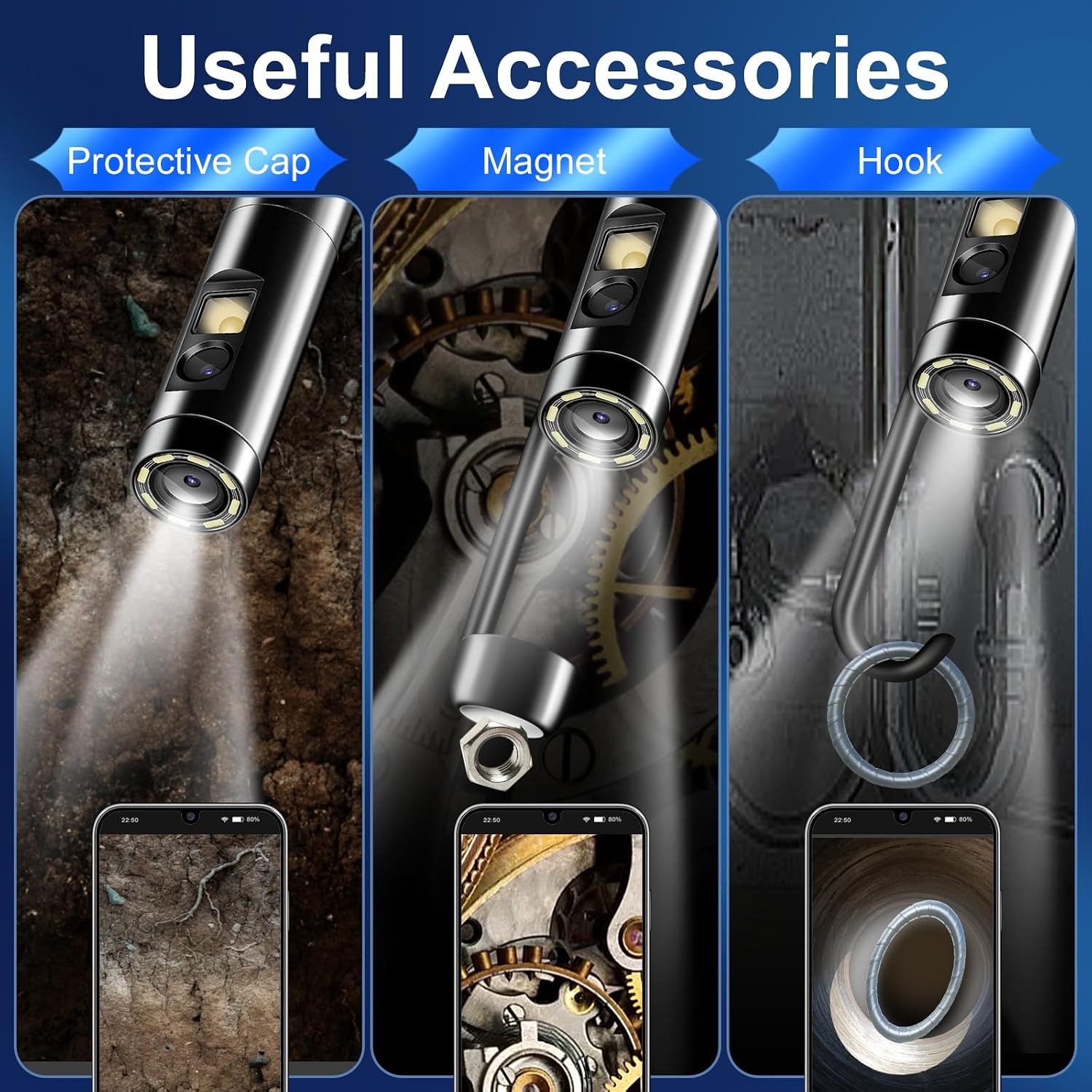
Home mechanics get the most obvious use. Cylinder bores, timing covers, the back of engine blocks, inside doors when a window regulator has failed, and the eternal hunt for the bolt that bounced into the subframe. The magnet attachment earns its keep here.
Anyone who maintains their own home gets close to the same value. Blocked traps, blocked vents, checking for leaks under a bath, confirming what is inside a wall before drilling, finding out why the dishwasher drain keeps backing up. A camera turns those from a half-day of dismantling into a quick look.
Then there are the odd jobs. Looking inside a chimney flue. Checking a roof space from the hatch without climbing in. Seeing why the heat pump is rattling. Finding a ring dropped down a basin. Once the tool is in the house, you find uses you never planned for.
What to check before you buy any inspection camera
Four things decide whether a borescope suits you.
Reach, first. Measure the longest run you realistically need and add a metre. Buying short is the most common regret.
Second, the cable type. Semi-rigid handles pushing and holding position. Fully flexible is for threading through complicated routes but will not hold a shape. Rigid is for straight access only.
Third, the connection. Wired units are simpler and more reliable, but you need the right plug for your phone. Having USB-C, Micro-USB and Lightning covered in the box means the camera still works when you change phones.
Fourth, lighting control. Fixed-brightness LEDs will frustrate you on reflective surfaces. Adjustable lighting is worth more than a higher LED count.
Looking after it
Care is undemanding. Wipe the probe down or rinse it gently after dirty work, dry it properly, and put the protective cap back on the lens. Coil the cable in loose loops when you pack it away, because repeatedly folding a semi-rigid cable in the same tight spot is the one thing that will eventually kill it. Store it somewhere dry and out of direct heat.
Lens care is the same as any camera. A soft cloth and a light touch. The lens is small, so a single fingerprint covers a lot of the image.
The short version
This is a wired, phone-connected inspection camera with two 1080p lenses in one tip, eight front LEDs plus a side LED, an IP68 waterproof head and a 5 metre semi-rigid cable that holds its bend. It plugs into USB-C, Micro-USB or Lightning devices, needs no Wi-Fi or Bluetooth, and records MP4 video and 2.07 MP stills through the Usee Plus app.
There is no zoom and no audio, which keeps it simple and keeps the price sensible. What you get instead is a tool that answers the question "what is actually going on in there" in about a minute, which for most car, plumbing and building jobs is the only thing you needed.