
The complete guide
How to Choose a Handheld Inspection Camera That Actually Earns Its Keep
The problem with not being able to see
Nearly every frustrating repair starts the same way. Something is wrong, the evidence is obvious, and the cause is somewhere you cannot look. Water stains the ceiling but the leak could be anywhere along a two metre run. The drain gurgles but you have no idea if it is a blockage, a collapse or a bad fall. The engine ticks and the only way to check the bore is to pull the head off.
So people guess. They cut an exploratory hole. They dismantle something that turns out to be fine. They spend an afternoon fixing the wrong thing, then start again.
A handheld borescope fixes that by doing the one thing you cannot do, which is see around a corner. You push a lit camera into the space, watch it on a screen, and now you know. Sometimes the news is bad, but knowing is still cheaper than guessing.
How this type of tool works
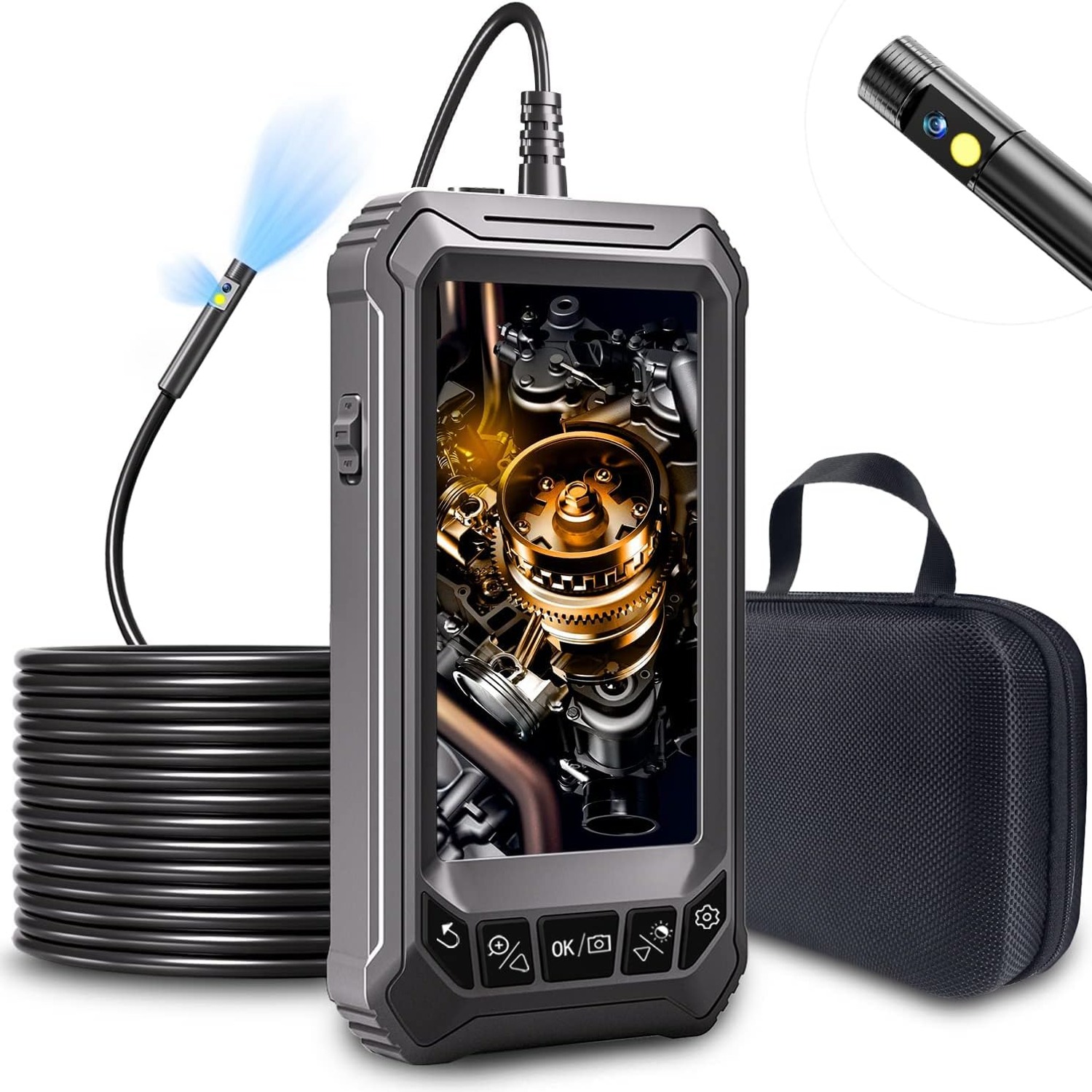
The idea is simple. A small camera sits on the end of a long cable, surrounded by LEDs so it can see in the dark. The cable carries the signal back to a handset, and the handset shows you a live picture.
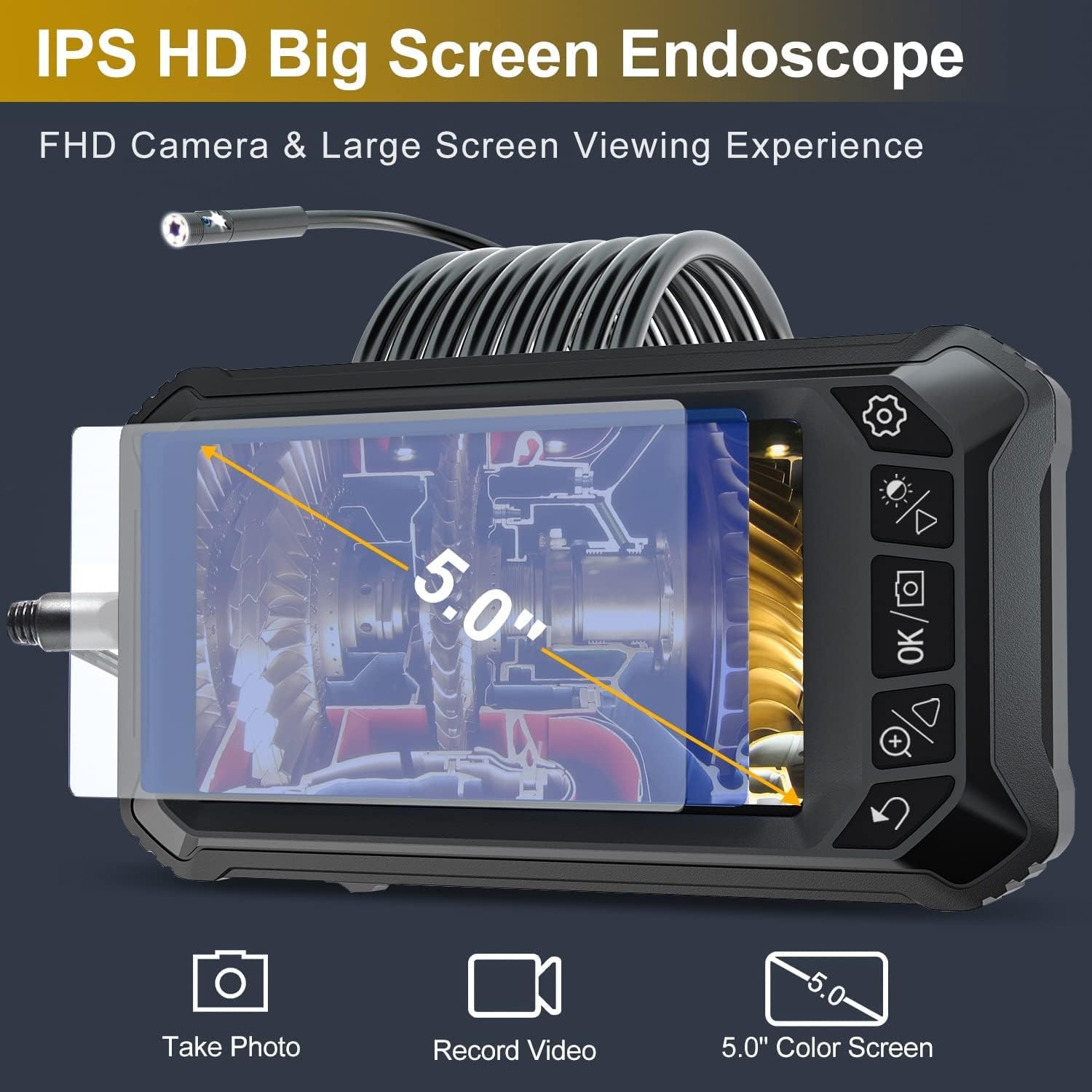
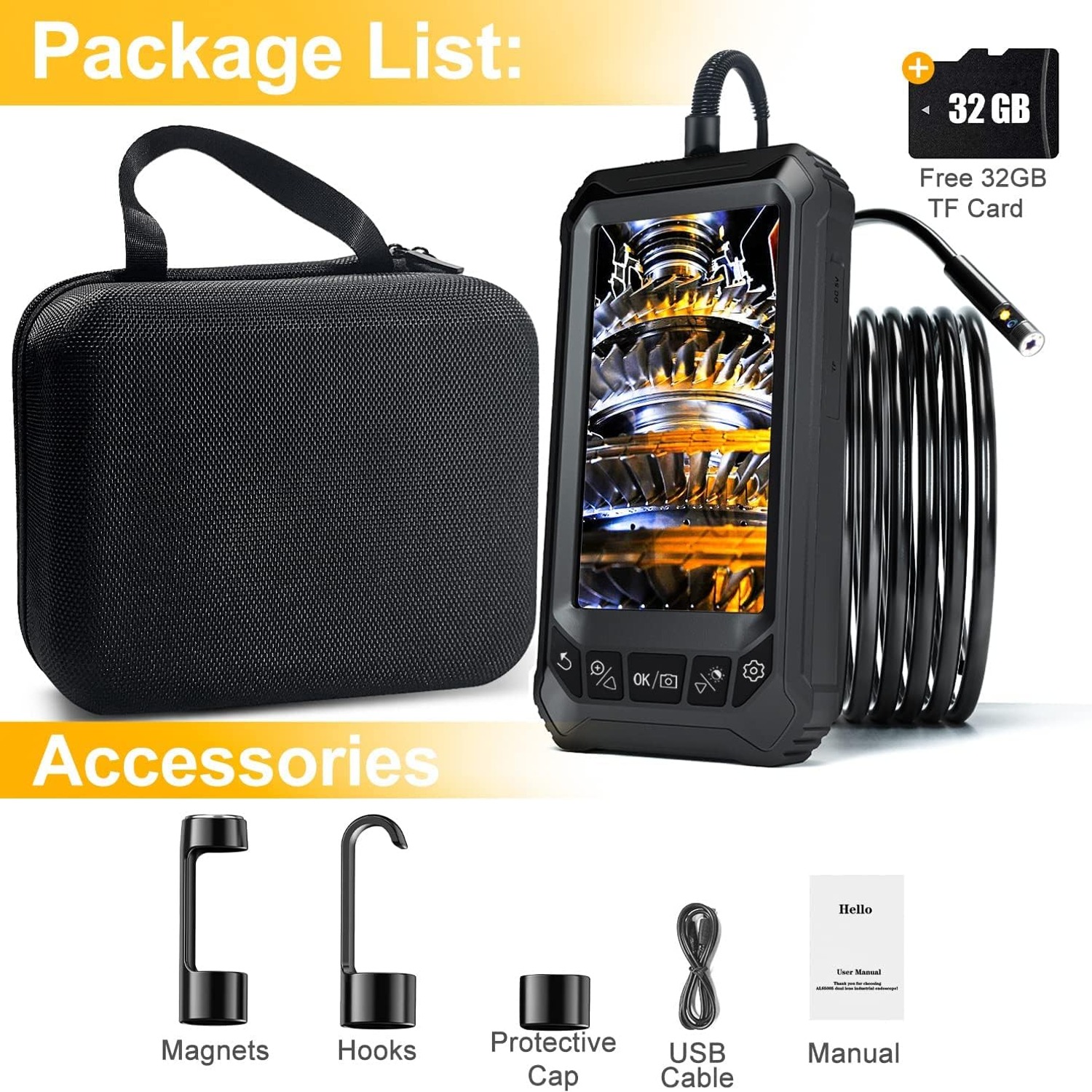
This particular unit puts a 5 inch IPS screen on the handle. That matters more than people expect. Phone-based endoscopes are cheaper, but they need an app, a wifi connection and a free hand. Under a car or halfway into a crawl space, a standalone screen is far less fiddly. There is nothing to pair and nothing to drop.
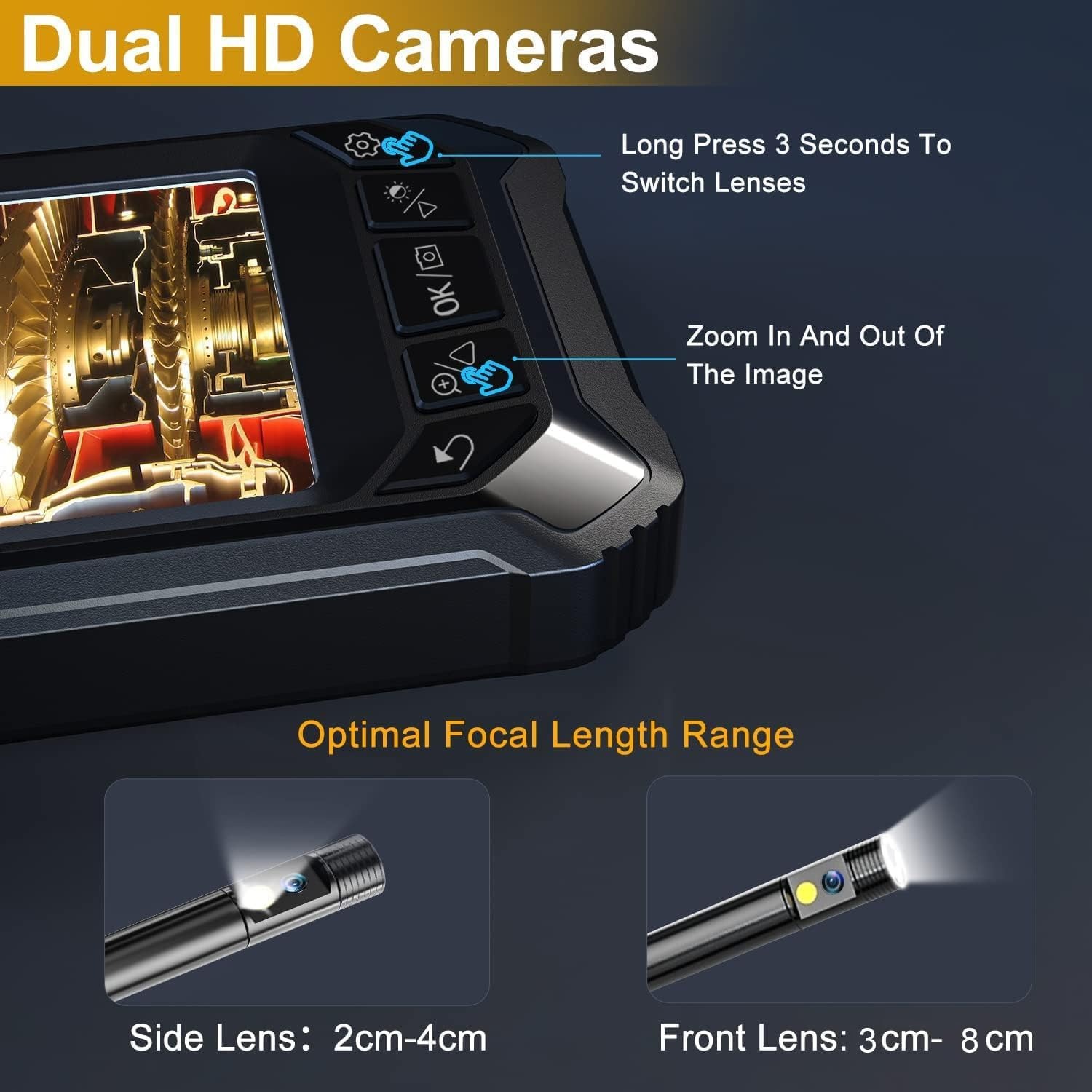
The probe head is 8mm across and carries two cameras. The front one looks ahead, which is what you want when you are travelling down a pipe or feeding into a cavity. The side one looks out at ninety degrees, which is what you want once you arrive. Blockages, cracks and scale build up on the pipe wall, not in mid air, so a camera that can only look forwards shows you the journey but not the destination.
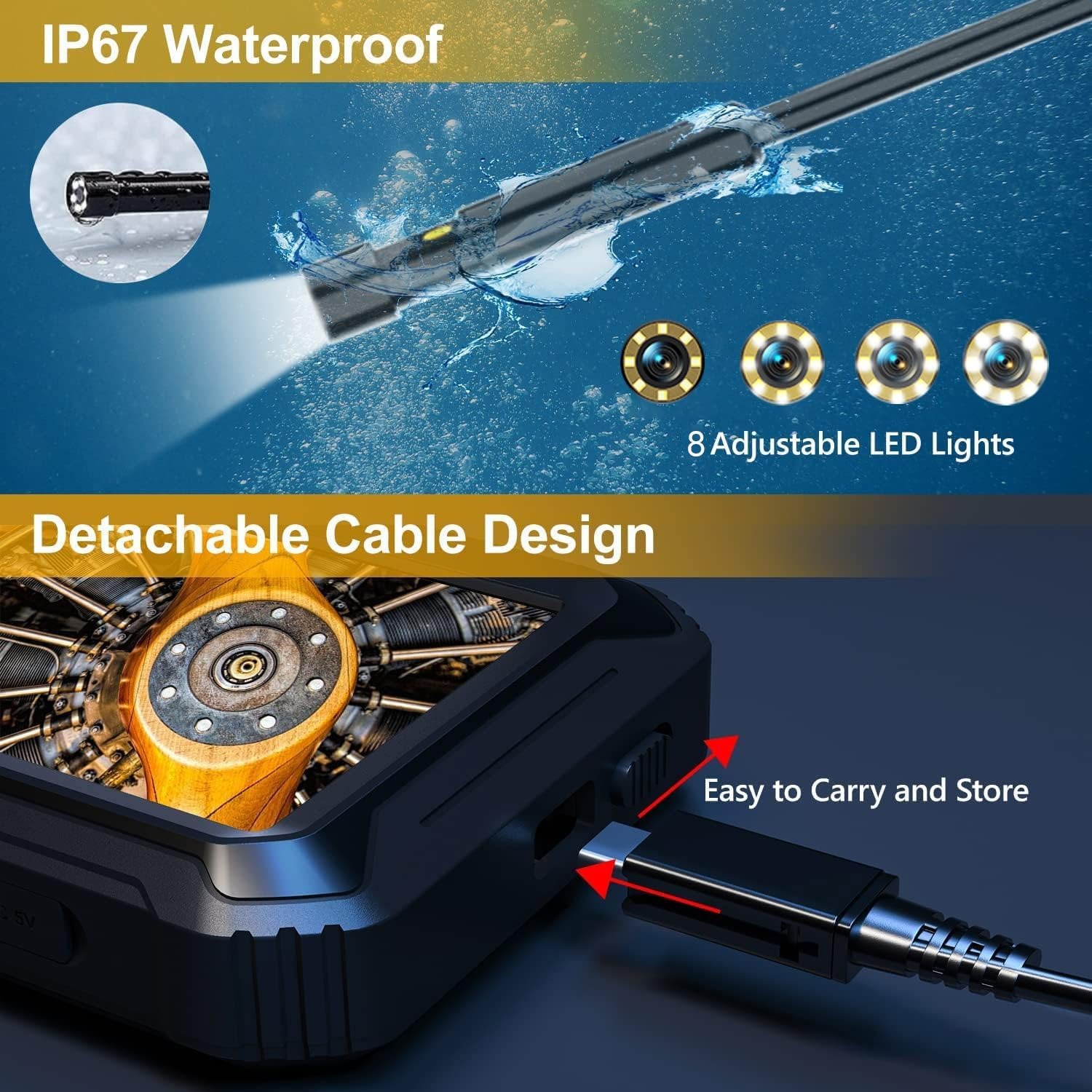
Eight LEDs ring the head and the brightness adjusts. New users often run the light at full power and wonder why everything looks white. Shiny surfaces bounce light straight back. Turn it down and detail appears.
Behind that, the cable is 5 metres of semi-rigid line. Semi-rigid is the useful middle ground. A floppy cable folds up as soon as it meets resistance, and a fully rigid rod will not go round a bend. Semi-rigid holds the shape you give it, so you can put a gentle curve on the last 20 cm and steer the head past a trap or a stud.
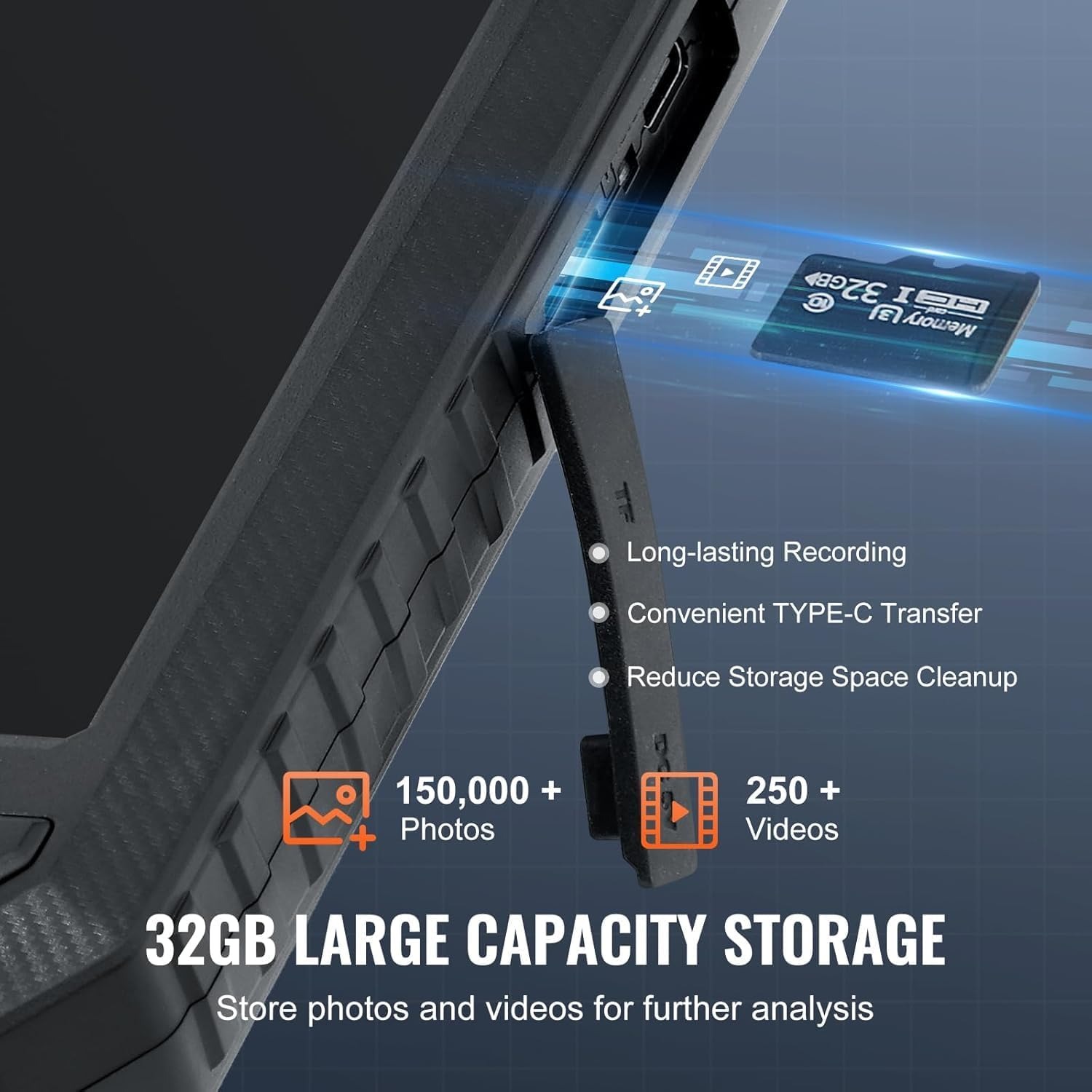
Recording happens to an SD card, video as MP4 and stills as JPEG. A USB Type C port lets you pull files onto a desktop, laptop or tablet afterwards. That is how you turn a hunch into evidence for an insurer, a landlord or a client who wants to know why the quote looks the way it does.
Who this suits
Home owners get the most obvious benefit. One blocked drain diagnosed properly, or one wall cavity checked before cutting, and the tool has already saved you the price of a call out.
Trades use these constantly. Plumbers for trap and waste checks, sparkies for tracing cable runs through cavities, HVAC techs for duct and coil inspection, mechanics for bores, wiring looms and dropped sockets. If your work involves tight spaces, you already know the feeling of needing one.
Car people in particular find a borescope for car engines useful out of all proportion to the price. Checking a cylinder through the plug hole, looking behind a dash without stripping it, finding the bolt that rolled into the subframe. These are all five minute jobs with a camera and all-day jobs without one.
It is less suited to long sewer runs. Five metres is a good length for domestic work, but a main line inspection needs a reel system with thirty metres or more and a locator. Know which job you are buying for.
Choosing between models
Screen or phone. A built-in screen costs more and is worth it if you work in awkward positions or in places with poor signal. Phone units are fine for occasional, comfortable use.
Head diameter. Smaller heads reach more places but gather less light and often have weaker optics. The 8mm size used here is a sensible all-rounder, fitting standard drains, drilled access holes and spark plug openings.
Cable length and stiffness. More length is not automatically better. A long, soft cable is hard to push, and the excess becomes a nuisance to coil. Match the length to the longest run you actually expect.
Lens count. A single forward lens is cheaper. A dual lens endoscope lets you inspect the pipe wall without rotating the whole cable, which is genuinely hard to do once you have five metres of it in a drain.
Water rating. If there is any chance of drains, condensate or standing water, the probe needs a proper rating. IP67 covers that for the probe section. The handset never should be submerged regardless of what the probe is rated for.
Power. A rechargeable internal battery like the 2000mAh cell here means no shopping for cells mid-job. Just remember that LEDs and recording both pull hard on it, so charge before a long session.
Getting a good picture
Position beats settings almost every time. Focus is fixed with a macro range of about 4 to 10 cm, so your job is to hold the head at the right distance rather than fiddling with controls. Too close and it blurs, too far and the light falls off.
Use the digital zoom sparingly. At 4x it crops into the existing image, so detail softens. Moving the head 2 cm closer gives a better result than zooming 2x.
Go slowly. Pushing a probe fast gets you lost, because everything looks the same at speed and you lose track of how far in you are. Feed it in steadily, pause at every junction, and switch to the side lens when you reach something interesting.
Record as you go rather than afterwards. Memory is unreliable when you are upside down under a sink, and a thirty second clip settles arguments later.
Looking after it
Treat the cable as the fragile part, because it is. Coil it loosely, never kink it, and never pull on it to free a stuck head. If the head will not come back, work it gently rather than yanking.
Clean the head after drain work. A wipe with a damp cloth and a proper dry before coiling is all it needs. Grease and sludge left on the lens windows will haze the picture next time.
Keep the handset dry. The probe is rated for water and the handset is not, which is a distinction worth remembering at the exact moment you are leaning over a full sink.
Store the whole kit in its case, detach the cable if you are putting it away for a while, and give the battery a top up every few months if it sits unused.
The short version
This is a self-contained inspection camera with 5 inch screen, an 8mm dual lens head, eight adjustable LEDs and 5 metres of semi-rigid cable. The probe is IP67 rated, video records to SD card in MP4, and there is no app or wifi involved at any stage.
It is well matched to domestic plumbing, wall cavities, ducting, vehicle work and general machinery checks. It is not the right tool for long mains sewer inspection.
If your repairs keep starting with a guess, this is the tool that replaces the guess with a picture.